
GILL AQUA PARKA

Reviewed by: Capt. Mike Schoonveld

How many times does a quick, passing shower threaten or you realize the choppy water you’re going to run through is going to be enough to send some spray into the boat so you grab the jacket part of your rainsuit because the drizzle or spray probably doesn’t warrant the hassle of putting on the bottoms – either having to take off your boots or try to force them through to where the slit-zipper tops out on the legs. About 87 percent of the time when I only slip into the jacket, I end up with a wet butt and wet legs from the thighs down.

When I saw the news from Gill Marine about their new Aqua Parka I was intrigued enough to order one.

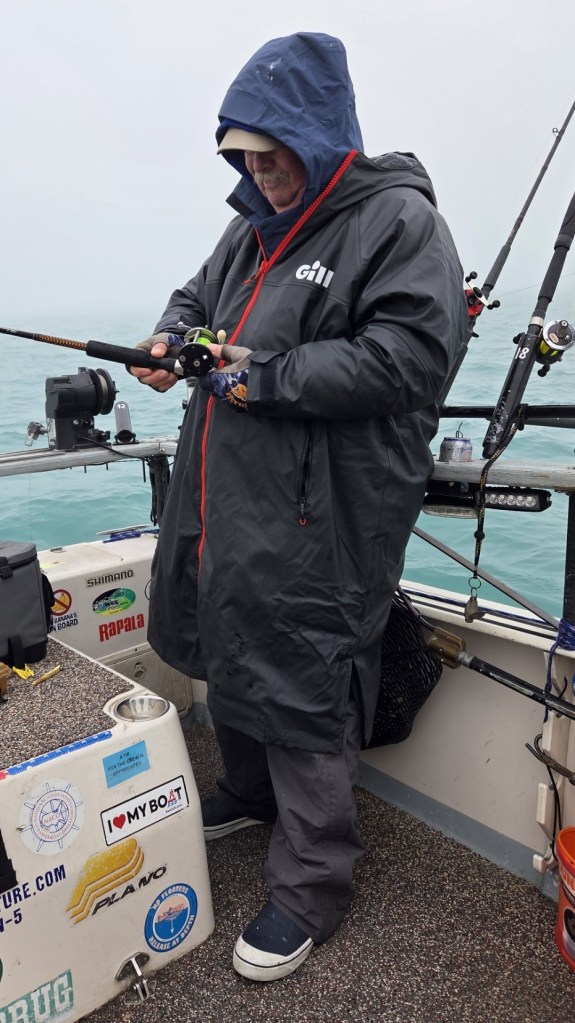
A better name would be the Aqua Trench Coat, I thought when I unrolled the package. On me, at 5-11 the bottom of the parka extends to below my knees.

Standing, any water that runs down to the bottom of the parka, drips to the floor, not to the lower leg. Sitting, the “rubber-like” shell protects my butt on the bottom and covers the top of my thighs over the knee to keep that dry. Try that with a butt-length parka.

The shell features totally welded seams – no stitching – usually the leaky culprit when DWR treated fabric is the outer layer. The outer shell has a totally waterproof  “rubbery” feel to it, but unlike rubber or PVC, it’s breathable and has a 4-way stretch. The inside is lined with a cushy, high-loft fleece for warmth – perfect for cool or cold weather – I’ll stow it away during the summer months.

Besides the working convenience, a stand-out feature is the large – two-way zipper – made of rugged nylon. Zip down from the top to access breast pockets, zip up from the bottom to access the pouch on your hoodie or the pockets on your pants.

 Available in several colors, it’s cut large to fit over sweatshirts or jackets you are wearing. Check them out at: https://www.gillmarine.com/aqua-parka/. If you purchase them from the Gill Fishing website, enter the discount code – CAPTMIKE10 – at checkout for 10% off your order.  

COBRA BLUE BOUND 150 HANDHELD MARINE RADIO

Reviewed by: CAPT. MIKE SCHOONVELD

I was 11 miles offshore one nearly calm day on Lake Michigan. Suddenly, my motor died and when I tried to restart it, the battery was so weak the starter solenoid would just “click.” I fiddled with the battery connections to no avail so I called the Coast Guard on my marine radio to report my situation.

When I pushed the microphone key, my chart-plotter screen showed a message, “low battery, powering off.” Then the unit shut off. I knew when a battery is weak, at some point, the battery would no longer operate a marine radio – especially transmit – so the first thing I did was tell the USCG dispatcher my GPS position as shown on my cell phone. Though I had zero bars, to make a call, at least that app worked.

All’s well that ends well, but we were lucky. The Coast Guard called BoatUS and they responded, but it took about two hours. By then, the radio wouldn’t even receive messages. My crew and I were concerned but the last transmission we heard was that the tow-boat was underway.

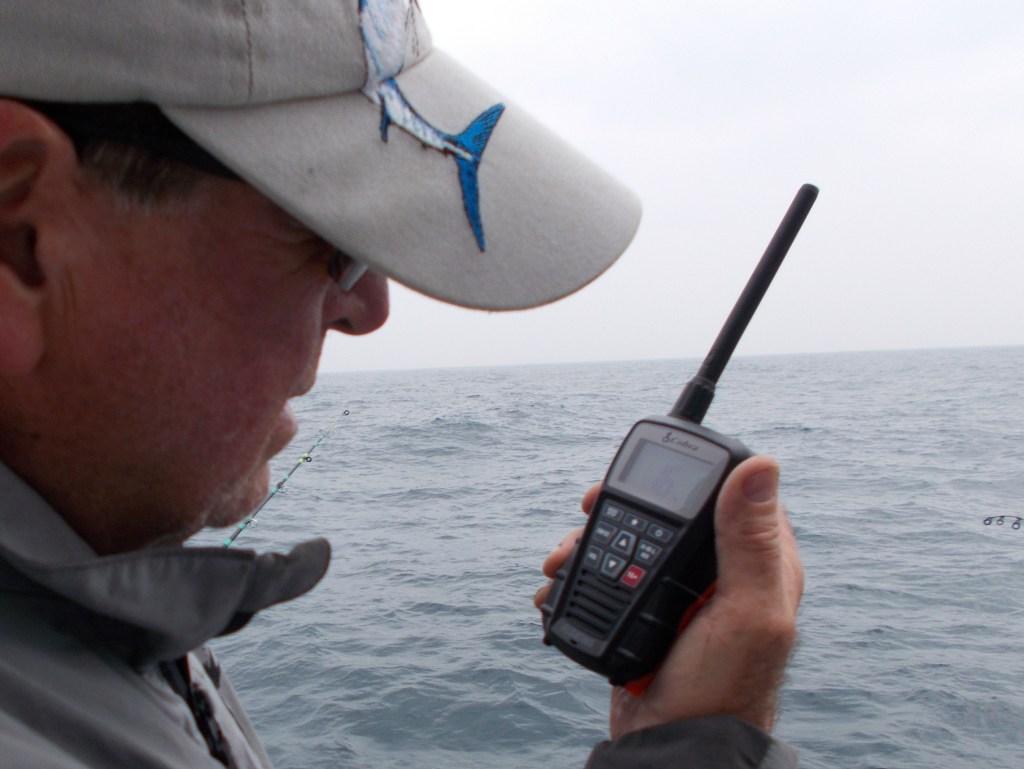
The first thing I did was buy a new alternator to fix the boat and the second thing was to get a Cobra BlueBound 150 handheld marine radio. I chose the Cobra over other brands for several features (including price) and also because my boat’s permanent VHF radio is a Cobra brand and it has given me decades of service.

Other features that sold me on this radio was that it has rechargeable AAA batteries. They charge with the same USB-C plug I use to charge my cell phones. Cobra says a full charge will last up to 11 hours. I’ve put spare AAA lithium batteries in my “necessary” box to use if BlueBound 150’s batteries ever did run down.

One feature I don’t want to test is that it floats. It won’t sink if I were to drop it overboard or off the dock. More important if (God forbid) the boat sinks or someone falls overboard.

The maximum output of this portable radio is 3 watts which isn’t going to blast a signal very far, but the height of the antenna dictates the distance a radio can send or receive more than the power. USCG stations are equipped with very tall antennas capable of reaching out 50 miles.

Since I’ve acquired the radio I’ve used it to monitor a different channel than my main is set on. I’ve carried it with me on other people’s boats – some of them don’t have a marine radio since they think they will usually have cell service. I know my cell phone is usually useless much more than five miles offshore and in some areas service is spotty even nearshore.

RAPALA GOLD MINERS

Reviewed by: CAPT. MIKE SCHOONVELD

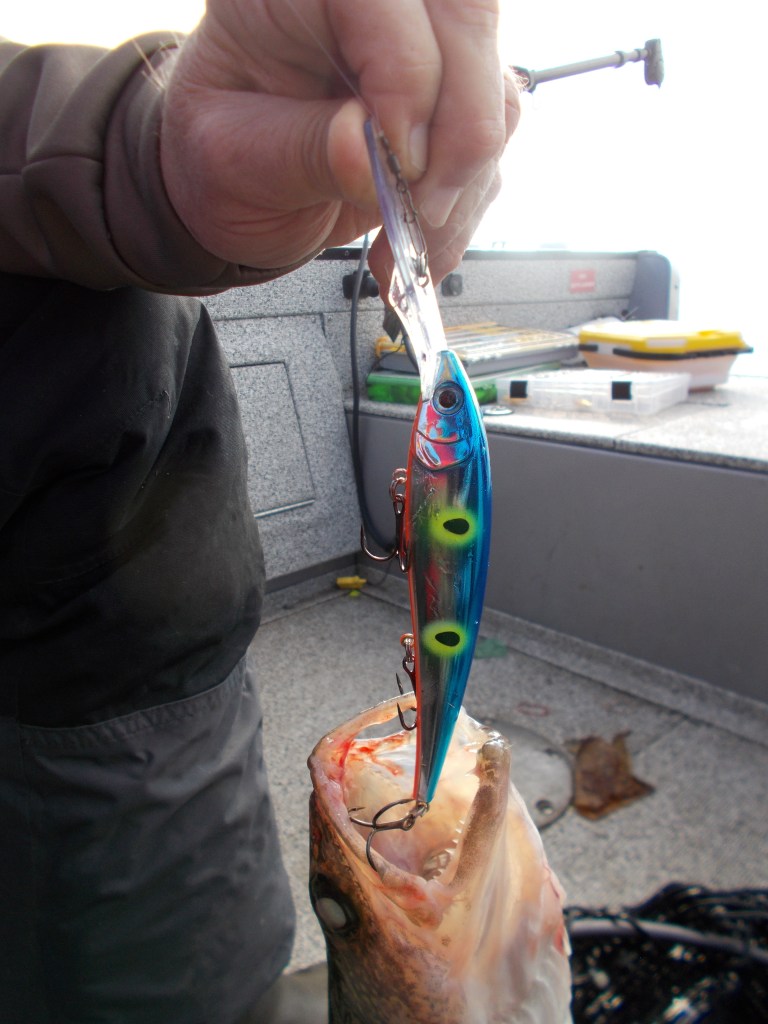
One of my most exciting finds at the 2024 ICAST show was at the Rapala booth when I spotted a new lure they call the Gold Miner. At first I thought it was another variation of the Rapala’s Deep Husky Jerk, Pradco’s deep diving Bandits and others of those types of lures, but then I noticed one thing that set them apart. The lip at the front of these lures are larger than most other deep divers and indeed they do dive deep. Like a miner digging deep to find gold nuggets or veins of ore, the Gold Miner easily dives to 30 feet to get down to walleye gold in Lake Erie and other deep lakes.

I was able to score some of the Gold Miners and put them to work during Lake Erie’s Fall Brawl in early November last year. The marks on our screen showed far more fish deeper than 30 feet than in the 20s.  The only way to get our Bandits and other deep divers down to them was to go with the 50 + 2 method and even then we were putting out 100 feet of line after clipping on the Snap Weight.

Gold Miners haven’t yet been added to the Precision Trolling Data app, so we were deploying them the old fashioned way – trial and error. The first thing in the morning the Gold Miners started scoring with only 100 feet of line behind the planers. By mid-morning we were setting them back 120 and our final fish at high noon came on a chrome/blue Gold Miner set back 140 feet.

Check out the array of available colors at www.rapala.com. They will soon be available everywhere Rapala lures are sold (if they can keep them in stock.)    

SCOTTY CELL PHONE HOLDER

A cell phone became a reality in my life at the same time I earned my first USCG Captain’s Credentials and I needed a way to contact my customers on the road or on my boat. My first phone models were flip phones or other thin-line models designed to slide into a pocket or just secure in the glove compartment. About the only thing I could do with it was call someone, if I could get a signal. Many of the places I fished had sketchy service once I was more than a mile or so from the marina.

That’s changed. From weather radar, to weather forecasts, to apps to contact the Coast Guard, BoatUS, my boat insurance company and other features, I need to have my phone front and center. A phone stuck in my pocket is no good, especially when I layer on and off outer garments depending on the weather changes during the day. A quick pat down when I need the phone reminds me it’s either buried three layers deep or it’s in the vest or sweatshirt I took off when the sun popped out.

In my car and truck I use cheap phone holders to keep the phone in easy view for general use, more so, when I have the mapping feature activated to guide me to new destinations. It took a couple of tries before I found one that would fit the space on my dashboard, that would stick where I wanted it to stick and one that wouldn’t fall off the next time I hit a bump. 

Trying to find a phone holder that would work in my boat was even more taxing. The potential mounting locations were fewer. I have an open cockpit so areas out of the weather or spray are few. The first phone holder I tried on board snapped off as I slammed over a particularly big wave. The best bet was to stick the phone in the cup holder on the dashboard, except when it was holding my morning coffee or a bottle of water.

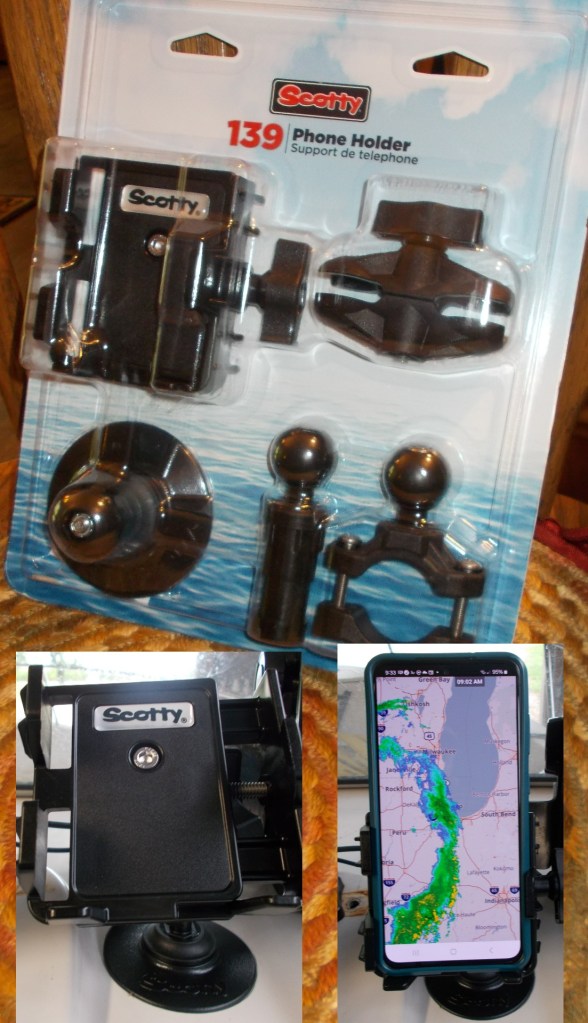
All’s well now that I have a phone holder kit from Scotty Products. I had a lot of faith in this product before I even got it out of the packaging. Scotty has been a pioneer in making fishing and boating gear (mostly from plastic) for over 70 years – good products that stand up to the use and abuse fishermen dole out both on the West Coast and on the Great Lakes.

The kit (#139) is just as tough and with more traditional suction cup mount or positioning arms that can integrate with their ball mounting system (often used for rod holders or electronics mounts) I found several options of where and how to mount the phone support. The mechanism that actually cradles the phone tightens with a wing-headed screw, not just a weak spring like car-models I tried. I haven’t hit a wave so far that moved the positioning supports or dropped the phone.

I was able to position the phone support between two other screens permanently mounted on my dash in what was previously just wasted space. I cleaned the fiberglass and the suction cup and pushed the little lever that forced down the suction disk creating the vacuum that holds it in place. It’s remained in place through wind, waves, heat and humidity. No duct tape needed.

If you want more info on this or other Scotty Products, go to www.scotty.com. They don’t sell direct from their website, but they do have a nationwide list of retailers shown on the website and Scotty Products are also available from numerous online sellers including Amazon.com   

DUBRO TRAC-A-ROD FISHING ROD RACK

Reviewed by: CAPT. MIKE SCHOONVELD

I edit a column for Great Lakes Angler Magazine called Basics and Beyond in each issue. The B&B column features tips about fishing and gear hacks submitted by readers that they use to make their life easier. Few of these tips are more frequent than the ways GLA readers have devised to store their fishing rods back home, on their boat or in their vehicles. Most of these tips feature rod storage designs made from everyday items usually used elsewhere including PVC pipe, clothespins, pool noodles, milk crates, five gallon buckets and other supplies. There are many ways to produce innovative projects to safely and compactly store fishing rods and reels.

 Face it, there are plenty of people that don’t have the time or tools to complete DIY projects. Some don’t have the skills. Luckily, there are plenty of commercially made rod racks or other storage solutions. These vary from flimsy racks that I’d never recommend to pricey racks that I’d never advise anyone to purchase.

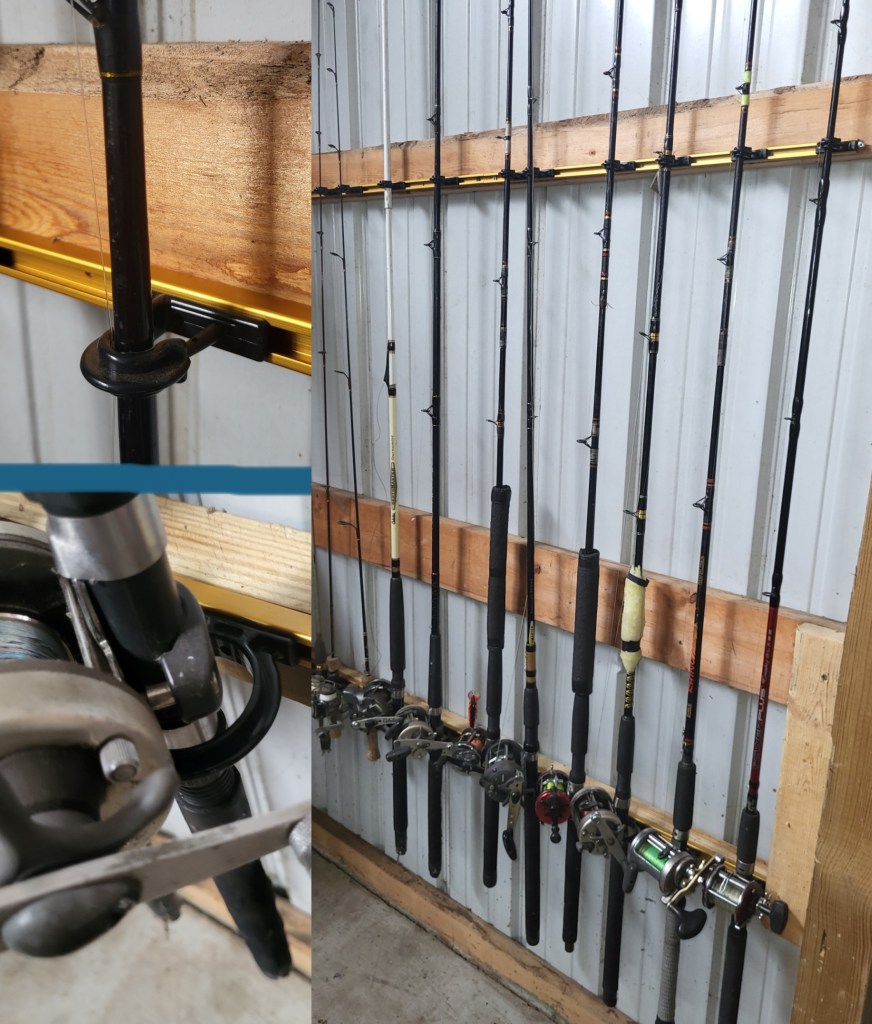
 One I’ve found that does pass my muster is the Trac-A-Rod system from Dubro. I call it a system because it comes in two-foot lengths which will hold six rod and reel combos so it’s easy to customize it to most any space you have available. If you have a large space available and lots of rods to store, they also come in four-foot lengths. I’ve put two of the four-footers to put on the pole barn wall where I store my boat.

When I say, “any space” it’s because the Trak a Rod systems will fit on ceilings, walls (either vertically or horizontal) and on any kind of surface. The actual hangers fit into an aluminum track so they are adjustable to fit combos of any size.            

If they are going in a storage area, the color of the tracks or hangers isn’t an issue most of the time, but in a den, man-cave or more public area, choose from silver track/white holder, silver/black, black/black or my favorite (as a Purdue grad) the gold track/black holders. Trac-A-Rod Fishing Rod Racks are available direct from www.dubrofishing.com, at retail outlets and many online sources including Amazon.com.