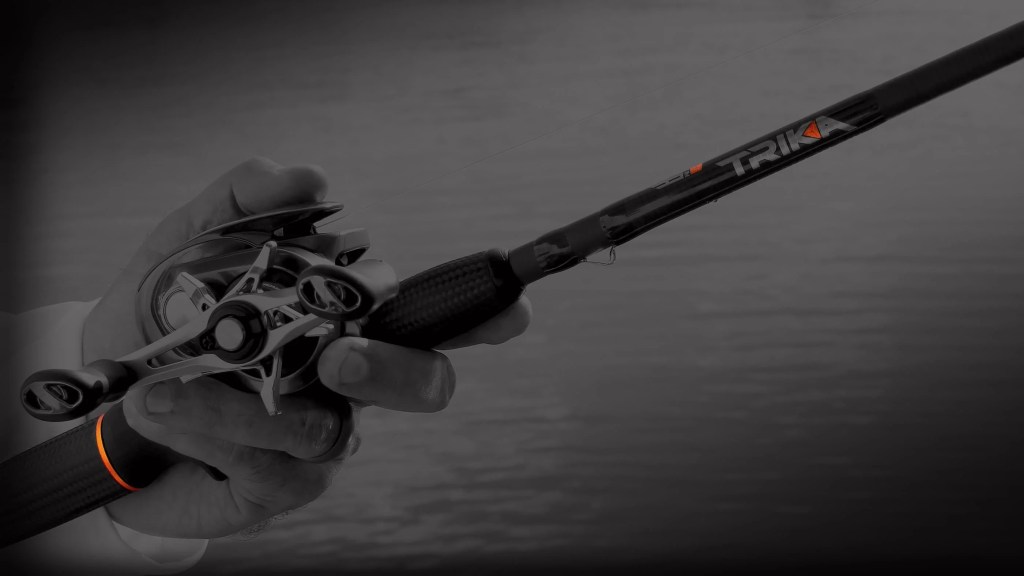
TRIKA RODS

Reviewed by: CAPT. MIKE SCHOONVELD

There are three reasons to buy a high-dollar fishing rod. In no particular order, 1) They work better. 2) They last longer. 3) They are prestigious.

To most anglers, #3 is least important. There are solid arguments for both #1 and #2. Trika rods are built to satisfy #1 and #2 – time will tell if they become a prestigious brand.

Trika is a new product from an established company – established, that is, if you are a bow or crossbow hunter. The same company makes Ravin Crossbows, often listed at the top of “best of the best” lists. Where’s the similarity? Many of the components of their hi-tech crossbows are made from the same materials – composites, carbon-fibers – and exacting processes it takes to produce the best quality fishing rods right here in the USA.

I checked this out before I said yes to accepting a pair of Trika (one casting rod, one spinning rod) to put to the test last summer and write about in this Tackle and Toys column. During the summer, a friend of mine and I put these to the test in different places, conditions and styles of fishing their builders never imagined.

One of the unique features of Trika rods is though they have seven models of casting rods and five spinning rods, each is priced at $299. The sales hype on their website (www.trika.com) states independent tests show Trikas weight slightly less than their high-end competitors, they are twice as sensitive and they cast 23% farther.  

The tests my friend and I put them to were less specific. Between us, we fished Lake Michigan, Lake Superior, Lake Erie and some inland lakes in Ontario for salmon, lake trout, walleyes, bass and pike. Some of the fishing was “conventional” where we were casting lures or jigging and getting a hands-on appreciation of the weight, feel, sensitivity and fish-fighting capabilities of the rods. Some of the test was unconventional, to say the least. I used the 7’7” casting rod as one of my downrigger sticks most of the spring for salmon and trout in Lake Michigan and on a trip to Lake Erie.

This was my best chance to see rod in action on bigger fish, and I did. It caught lakers to 18 pounds and browns to eleven pounds in that position, as well as bunches of cohos. Most telling, however, was at Lake Erie, I didn’t mention to my fishing companions there was anything “special” about the rod I positioned on the port-side out-down. My other ‘riggers had similarly sized Ugly Stick ‘rigger rods. After reeling in a solid five-pound walleye the angler commented he’d thought the fish was twice as big. “It felt like it was huge,” he said. There’s not much sensitivity in an Ugly Stick.

I too, noticed the sensitivity in both the casting and the spinning rod when I used them more conventionally. I’m sure the sensitive feel was magnified because compared to the rods I normally fish with, the Trikas were much lighter. Though whisper-light, however, neither rod felt undersized, when a good sized fish was on the line.

For scenario #1) It passed the test. Time will tell how if measures for #2, though it does carry a one-year satisfaction guarantee and lifetime warranty. Number three? That doesn’t matter to me. 
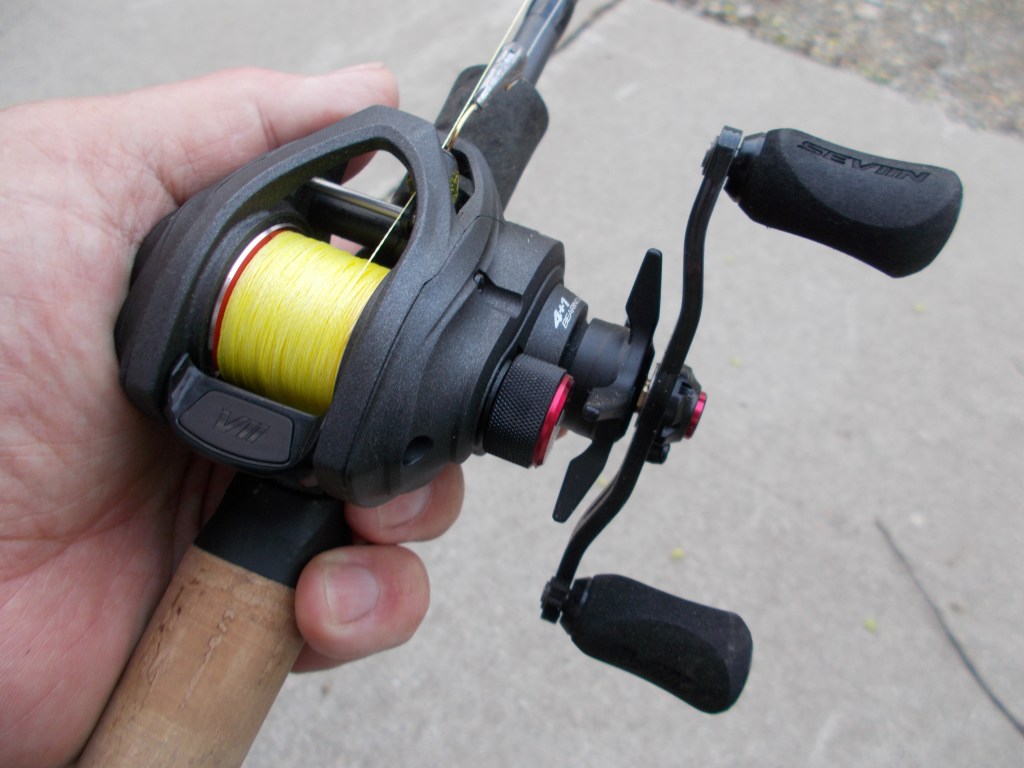
ST. CROIX SEVIIN GF SERIES CASTING REEL

Reviewed by: CAPT. MIKE SCHOONVELD

For many, Ford’s F150 is the pick-up to which other such trucks are measured. To many, walleye anglers, Lund boats are the watercraft to which other such boats are measured. To many anglers, from bluegill lovers to wicked tuna catchers, St. Croix rods are the fishing “sticks” that all other brands of fishing rods need to measure up to for quality.

So when St.Croix decided to add a line of fishing reels to match to their rods (or to be used with other rods), I had little doubt they’d measure up with the best reels available. I had little doubt, but seeing (and using) is the way to know for sure. The model I selected to pair with a St. Croix Bass X casting rod I already own is the GF Series with the 7.3:1 gear ratio. It’s also available in
6.6:1 or hi-speed 8:1:1 in left or right hand versions.

I used this combo for an early autumn trip to Minnesota inland lake where it handled baits sized for perch to pike, both casting and jigging. Later in the fall I jigged and trolled for deep water ciscos and lake trout in Grand Traverse Bay. It gave me flawless performance on every cast, every drop and on every fish reeled in.

In talking with Josh Lantz, the media rep for St.Croix, he told me, “SEVIIN Reels aspires to deliver anglers with the most reliable and dependable reels available.” He said, “St. Croix didn’t jump into the reel business, our engineering teams examined and tinkered with every component to ensure the quality would match the reputation St. Croix has established in the fishing industry.

To this end, the SEVIIN team designed and built its very own testing laboratory inside the St. Croix factory in Park Falls, Wisconsin. Here, purpose-engineered, custom testing equipment continuously performs 12 distinct tests on every production run of its GF Series baitcasting reels. Specific individual tests include 1) temperature, 2) humidity/salt spray, 3) chemical resistance, 4) ultraviolet exposure, 5) dunk, 6) trip lifecycle, 7) gear endurance, 8) drop, 9) line guide retention, 10) pinion engagement, 11) gear strength and 12) drag performance.

Number six is most impressive to me. The trip lifecycle test consists of putting GF Series low-profile baitcasting reels through 200,000 cycles on a custom-engineered and precision-constructed instrument within the testing laboratory. A cycle consists of depressing and then releasing the thumb bar, then re-engaging the spool with a partial turn of the handle. I don’t know how many casts I make on an average fishing trip, but I’m sure it will take me several years to get to the 200K cycles number and when it does, I expect it to continue on and on. Seviin Reels are now widely available at a modest price in tackle stores, at online outlets including Amazon.com or at http://www.seviinreels.com..


RAPALA 50 LB. ANGLER MODEL SCALE

Reviewed by: CAPT. MIKE SCHOONVELD

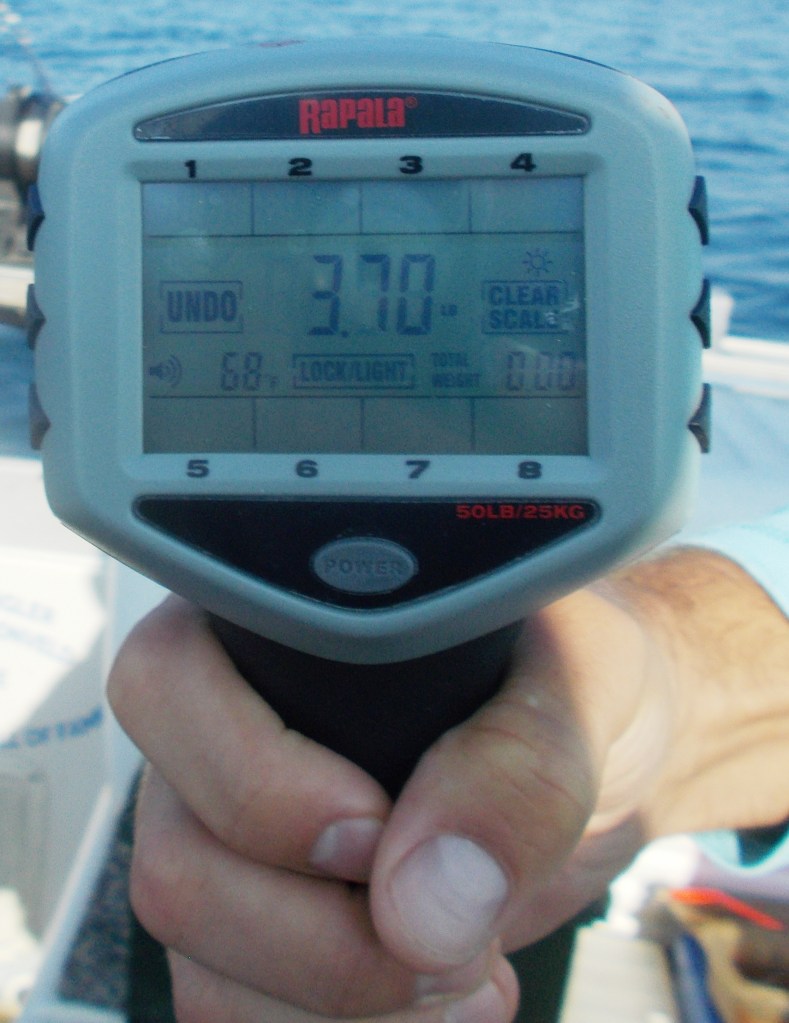
Elsewhere in this magazine is an article about fishing scales, how they work, available models and how accurate they weigh fish. I gathered several scales to use, evaluate and test for this article and while none of them are perfect for every angler, for every fish or fishing condition, one thing did come out of my tests. I replaced the spring type, mechanical scale which had been on my boat for the past several years with the Rapala Angler Model acquired specifically for the feature story.

 I’d owned digital scales in the past and they worked well when the batteries were good. Too often, I’d pull the scale out to weigh a notable catch and found the Energizer Bunny had died. That’s why I switched to a good, mechanical model, but my tests for the feature showed my spring scale was “off” for the better part of a pound and the graduations that showed the weight were so close together that weighing to anything less than to the nearest pound was pure guesswork.

 The Rapala digital was spot-on for accuracy and was easy to read. I could have chosen one of the other digitals I tested, but several features guided my selection – most notably the scale operates on AA batteries – available anywhere. Try to find one of those square, 9Vs when you need it.

 Rapala says the two AAs will run the scale for 400 hours so expect a season’s use out of each pair. The circuitry automatically turns off the scale after a few minutes eliminating the possibility of accidentally leaving the scale in the on position from one trip to the next. Should the batteries run down, there is a back-up memory to store any weights you’ve entered and want to save.

 It will store up to eight different previously weighed fish – one for each person perhaps, or save the weights for different species as the season progresses. It will also total all the stored weights for an instant cumulative weight for tournament or other purposes.

 I don’t much use those features, but maybe I will. The kicker for me, however was instead of a simple hook to hold the fish being weighed, the scale comes with a rugged “vise-grip” style lip gripper which holds the fish securely and is less injurious to the fish being weighed.

 Rapala Touch Screen Angler Model scales are widely available at retail or online merchandizers or order them straight from Rapala at: www.rapala.com

H20X CRANKBAITS

Reviewed by: CAPT. MIKE SCHOONVELD               

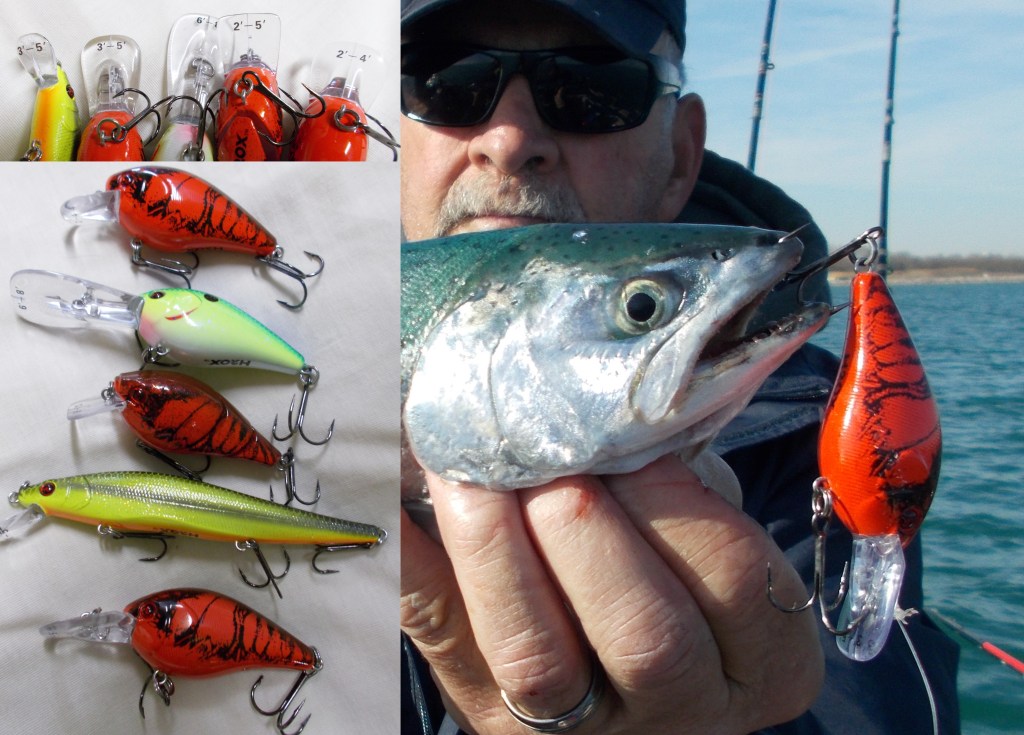
No doubt you’ve seen the price of crankbaits (and other lures) skyrocketing faster than the price of eggs and bacon during the pandemic. Crankbaits used to seem expensive when priced at five or six bucks. Now, they are often two or three times more, these days. Maybe that’s okay with your budget, but it’s not with mine and that’s what attracted me to the H20X cranks at the Academy Sports store that opened near me in Lafayette, IN last spring – the price.

Often shopping by price alone is a poor choice when it comes to fishing equipment. Cheapskates are setting themselves up for failure. I also have observed that “store-brand” knock-offs of big brand lures isn’t the same as buying a generic equivalent for other products. Far from it.

Often, just looking at the store-brand crankbaits tells the story. The molded bodies are rough, the paint or finish is notably inferior and the hooks and hardware on the lures are noticeably cheap. You know they won’t hold up, you know they won’t have the proper action and you know after a few trips you’ll be wishing you’d never bought them at any price.

I didn’t notice any of the above with the H20X (Academy Sports’ store brand) hanging on the racks. I did notice the retro price tags marked on the boxes.

Academy Sports is a chain of big-box sporting goods stores (think Bass Pro or Dick’s Sporting Goods), born in Texas and now found in states across the southeastern U.S.A.  The Lafayette store was the first one opened in a Great Lakes state. Now, they are in Indiana and Illinois. (Academy does offer online shopping, however, so even if you fish Lake Superior, H20X products are just a few clicks and a truck ride from your door.)

Naturally, the H20X cranks were designed with bass fishing in mind and the colors available reflect that. However, many crankbaits used by salmon, steelhead and walleye anglers weren’t designed specifically for those species. They were probably designed for bass guys and us Great Lakes guys learned they were equally effective on salmon or trout.

For the first two or three months of the open water season in southern Lake Michigan, crankbaits are the top producers and some Great Lakes walleye guys use cranks all season long.  So I selected an assortment of H20X cranks and tied them on last spring. Plenty of cohos and browns considered them edible and Lake Erie walleyes gave them a “fins-up” as well.