I expect to get years of use from the rubber-mesh nets I use on my boat. They are tough, nearly impervious to UV degradation and plenty strong to lift any fish swimming in the Great Lakes. That doesn’t mean they are indestructible. I once had one that got caught on the knob of a downrigger spool while it was turning and was ripped up pretty good. Most of the other times when I find a hole or broken strand I have no idea what happened. Maybe it was stepped on by someone wearing cowboy boots on board. Maybe it was repeated tiny cuts over time made by sharp hooks or sharp teeth. A black zip tie usually fixes a small hole well-good enough.
Occasionally, it’s time to replace the old with a new and then the search is on to find one sized for Great Lakes net-hoops and Great Lakes fish. There seems to be plenty of panfish or stream trout sizes – larger sizes, not so much. Some of the places that do carry them have outlandish prices.
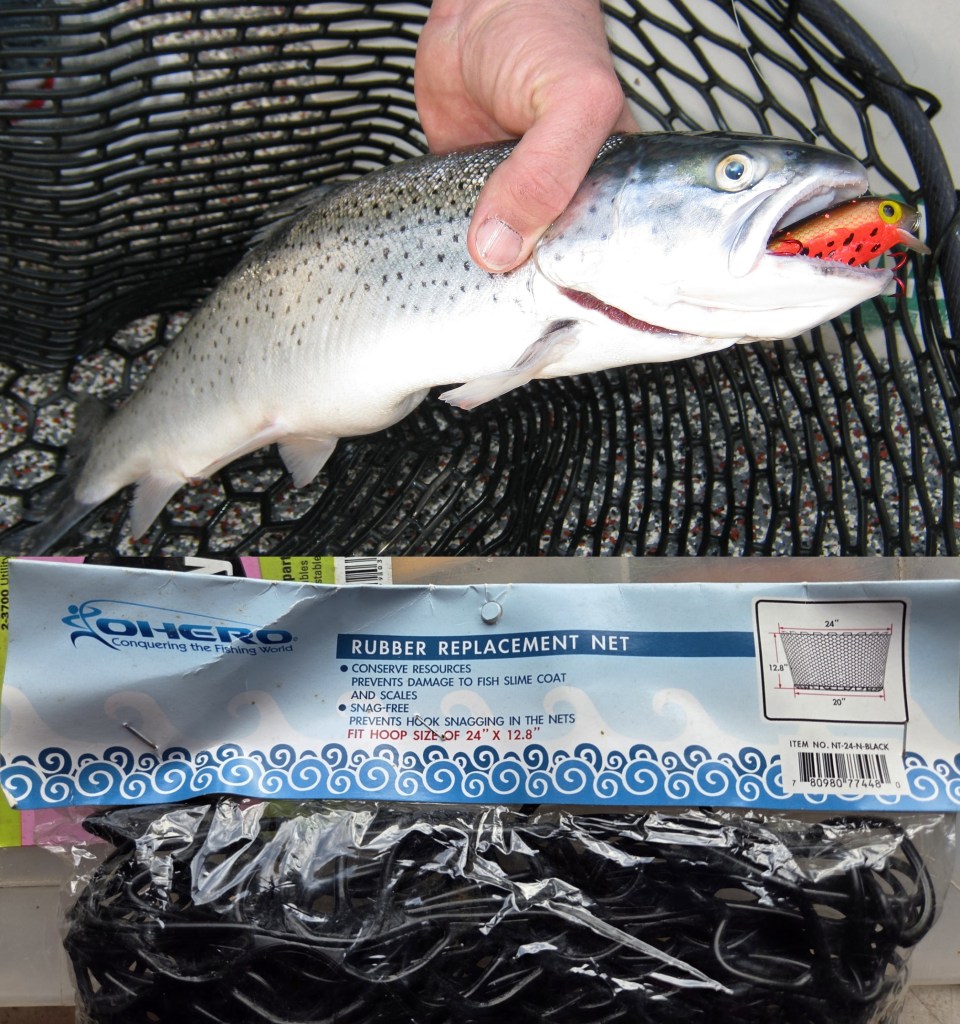
The last replacement net I got was an OHERO brand from Lee Fisher Outdoors. I chose the 26.7″ x 22.2″ size in black. They also have the same nets in white. The hoops on my nets aren’t exactly that diameter, but it’s rubber, it stretches and doesn’t have to fit perfectly. They look and feel just the same as other brands I’ve used, plenty strong and half the price. It’s a good net at an affordable price. ‘Nuff said!
Check them out and purchase them at http://www.leefishersports.com. While you are at that site, check out the other unique items listed.
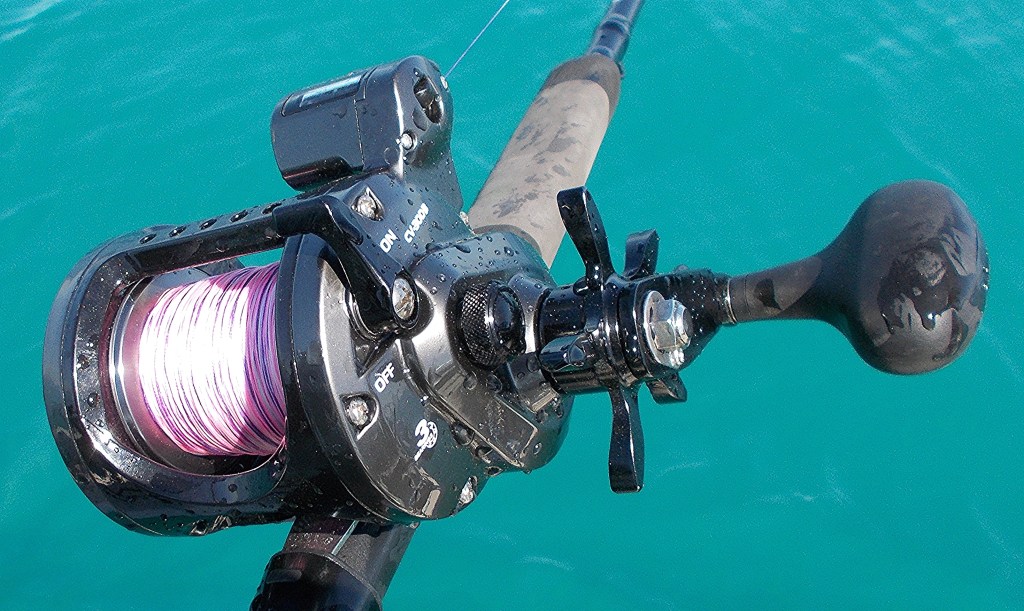
This season I’ve been using the new model of Okuma’s Convector reel – dubbed the Convector “B” Model -and I’ve been blown away by it. The original Convector has a faithful following on the Great Lakes and the redesign now makes it even better.
The improvements include larger, stronger gears, enhanced carbon-fiber drags, an updated line counter mechanism and improved handle-knob – large and easy to grip. All of this in the familiar Convector mid-level price range.
I’ve used it as it was intended on every trip I’ve fished this season (which started on March 2nd for me.) I set it most often as a downrigger line, but I “snuck” it in as a planer board reel several times since those lines were getting most of the action and I wanted to get a “feel” for how it performed. I also used it as a braided line diver reel using the standard #1 Dipsy Divers.
I don’t purposely put the gear I test to extreme conditions but this one I did. On my first offshore excursion I forgot one of my “wire-diver” set-ups I use to get laker rigs down to the shoals where lakers are stacked and gobbling up gobies. I grabbed the Convector “B,” on the Diamond Elite downrigger rod to sub for my forgotten wire-diver. I’d filled the Convector with 30# test Sufix 832 Superline. I attached a #3 Magnum Dipsy Diver pulling a dodger and Spin-N-Glow.
I sent it down, down, down, so it was just scuffing along the bottom made up of sand and pea-gravel. The big Dipsy pulled hard and even harder when it touched the bottom. The Diver’s release had to be set tight enough that just skidding along the bottom wouldn’t trip it. The reel’s drag had to be set tight enough to not slip when the diver did hit the bottom. It’s a system that has to be finely tuned.
Then, when a laker slurps onto the Spin-n-Glow, the rod has to have the backbone to allow the tight release to open and at the same time, the reel has to feed out just enough line – pulling against the drag – to keep something from breaking, losing the fish and the expensive gear. The first fish of the day showed the Convector “B” up to the task and several other trout provided several additional tests. I wouldn’t hesitate to use it with wire line as a wire-diver reel.
I had the reel sitting on a Diamond Elite Downrigger rod (DME-DR-862MHA) This is a medium heavy 8 ½ foot long downrigger rod and it functions perfectly using it in conjunction with a downrigger. It’s not a bad planer board rod, either and I would have no problem using it with medium/large planers pulling deep diving crankbaits, lead core line or copper.
I used the Diamond Elite it as a diver rod with #1 Dipsy Diver for cohos and walleye and it handled that size diver very well. It was slightly over-matched using Magnum Divers, but it got the job done.
The Diamon Elite series are all designed as trolling rods and come in sizes for walleye, up to wire-diver sizes with a roller tip line guide, They are a handsome, steel gray color, and the triangular foregrip gives extra gripping power when reeling in strong, Great Lakes fish. Pair the right Diamond Elite rod with the appropriate size of Convector “B” reel and you have a combo that will serve you well for decades.
The reels needed when fishing for big king salmon, lake trout and Skamania steelhead have to be tough to stand up to the battle, drags that are silky-smooth when a steelhead feels the sting and accelerates to high speed in an instant and have oversized washers to stand up to the heat generated when a king makes a long runs. Then the reel has to be able to stand up to the same things the next trip and the next.
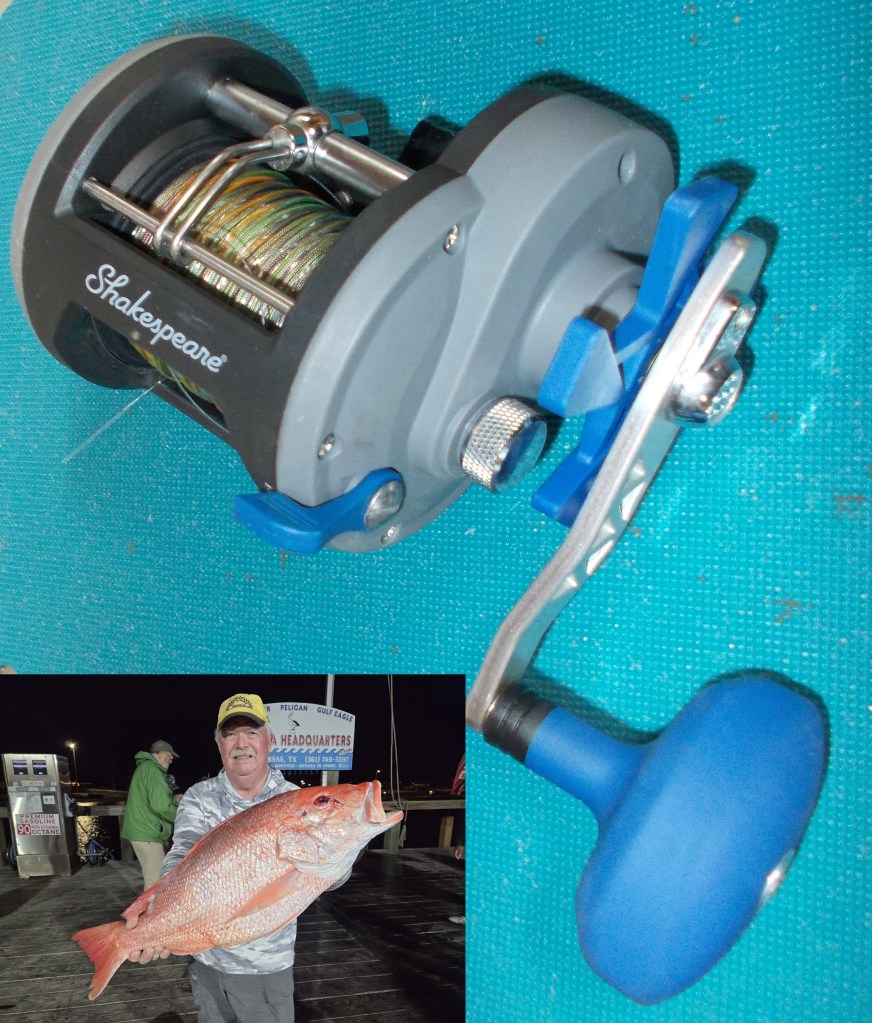
Most reels that meet these criteria are budget breakers for anglers just getting started or on a limited budget who have to balance price with quality. Shakespeare’s new Contender Conventional Reel (currently listed at $74.99 on the Pure Fishing website) tilts that balance in favor of the angler. Available as a “30” size reel, it features a graphite frame, a stainless steel levelwind, brass gears and ball bearings to make the reel run smooth the first time it’s used and will continue to perform years into the future.
“Conventional” is a term often used for reels in the saltwater market – differentiating between a revolving spool – conventional – and spinning reels. Shakespeare used this term because this reel is aimed at the saltwater market primarily, but that certainly doesn’t preclude using it in freshwater. Many of the top-quality reels found on the hardest working Great Lakes charters are “crossover” models equally at home on the lakes or on saltwater.
I got the reel during the winter months and wanted to give it a solid test before the 2026 Great Lakes open water season gets going. I took it to the Texas Gulf in February to test it on mammoth red snappers. Snappers are shaped like bass, sized like four-year-old kings and are as stubborn as any fish that swims. I spooled it with 30-pound test braided line with a 50# fluorocarbon leader.
Pulling a 20 pound plus snapper up from the bottom in 100 feet of water isn’t an easy task. Every inch of line is earned and every ten feet or so the fish pulls back and peels off eight or nine feet, even on a drag tighter than I’d ever use on salmon or trout. The reel held up, fish after fish, after fish.
I wanted to put it too the test since I plan to use it as the reel for my “secret weapon rig” – two colors of lead core deployed on the deepest downrigger to present a deep lure far behind and deeper than any of the downrigger weights. Often, the biggest fish of the day come on the “SWR.” My experience with the snappers proved to me it will be up to the task.
The Contenders will likely be available at many retailers this summer and is available now at www.purefishing.com.
Because of this, I wasn’t so surprised when I put a Flagship Travel Spinning Rod to the test and found it to be an exceptional product. I’ve owned and used a variety of travel rods in the past and the best thing I could say about them was that they could be broken down into three or four sections to make them easy to pack in a large suitcase or to tote them along on other trips where full length or even two-piece rods would be impossible or cumbersome.
A few of the travel rods I’ve previously used were so clunky I could have fished as well with a willow branch. None of the best of them felt or fished like a quality “conventional” rod.
First the “travel” part of this rod. Though it’s a three-piece rod, it comes with four pieces. There are two tip sections, one with a medium action – perfect for walleyes, bass, shore fishing for cohos or browns and similar applications. The other tip turns the rod into a medium light rod, good for stream trout, white bass, bluegills and other panfish.
It comes with a hard sided travel case which will keep the rods secure whether they are being handled by luggage handlers, stowed in an overhead bin or crammed in with other luggage in a car, truck or SUV.
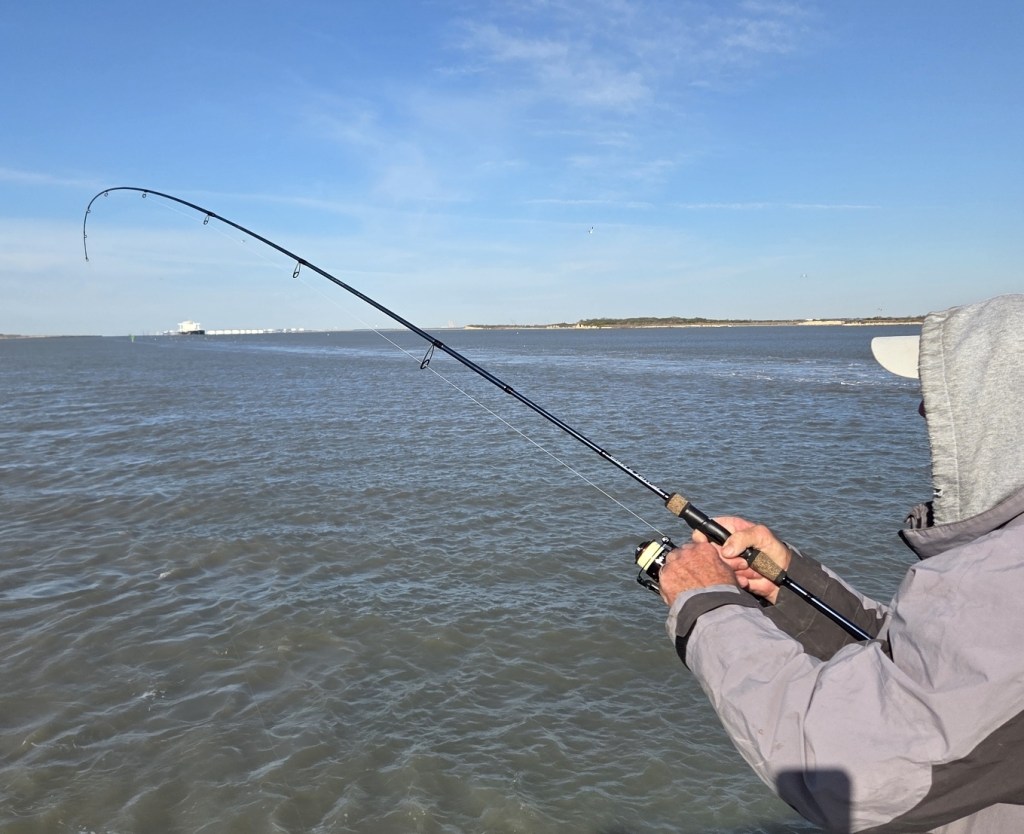
FishUSA says the travel rod is constructed with “a strategic blend of 30 and 36-ton graphite. I’m not sure what that means but I am sure fishing with this rod was a pleasure. At seven-feet long I was able to make long casts if needed to get to the fish and then control fish when I got them close to the boat. I fished with both live bait and lures. Using the medium tip, I could put extra action to the lures on the retrieve. Using live bait, I could detect the lightest bite. There was nothing clunky about the feel, action or look of the rod. Whether fishing on the Detroit River for walleyes, for perch on Lake Michigan or other fish on an inland lake, I wouldn’t hesitate to use this rod whether I needed it as a travel rod or not. Check out the Flagship Travel Spinning Rod and other FishUSA gear at www.fishusa.com.
The Great Lakes covers so much territory it’s often more convenient to travel from one lake to the next – or from one end of one lake to the other end – by plane rather than over surface roads. Or, if you are like me, you have a wanderlust to head for far away fishing adventures where travelling by air is mandatory.
If those flights require travelling with any of your personal fishing gear – in this case, fishing rods – you’ll need some way of ensuring those rods show up on the baggage carousel unscathed by their adventure. Over the years, I’ve seen or used several ploys to get my rods to far off places with me, but these days, the friendly skies aren’t so friendly to most travelers and especially to those that show up at the gate with fish a fishing rod.
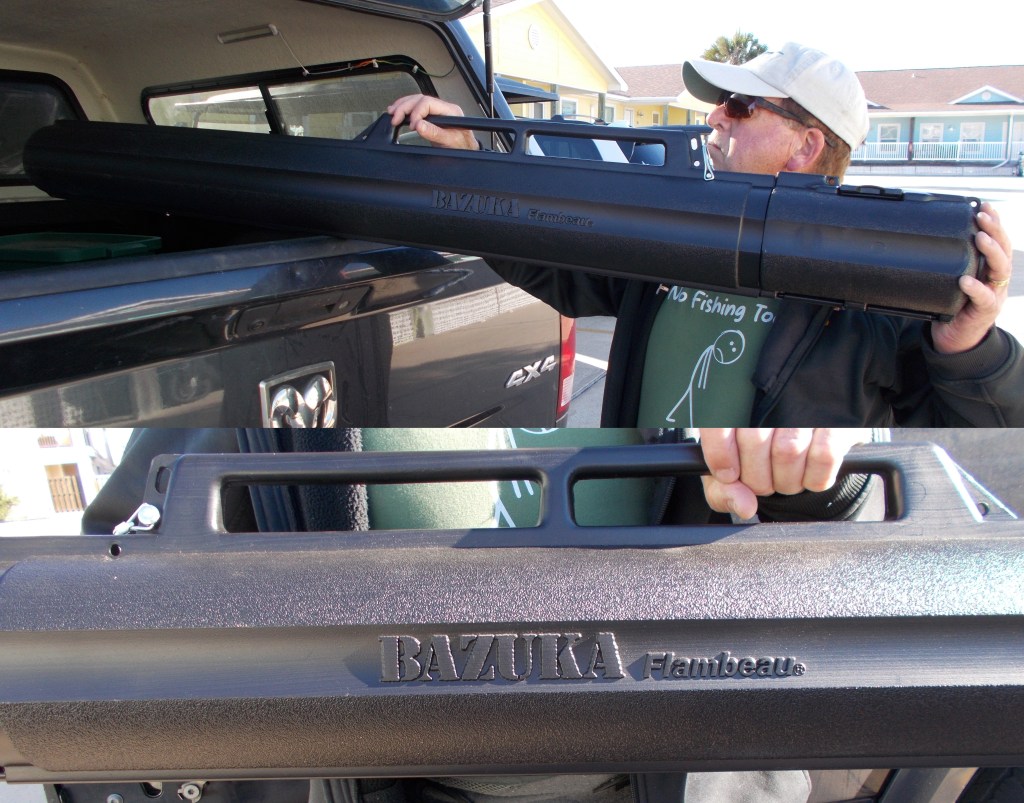
The Bazuka Rod case doesn’t make travelling any friendlier, but it does make it less worrisome. Made from a tough, rugged plastic, it won’t bend or splinter. If it shows up on the rod carousel crushed or looking like something ran over it, something has run over it. It wasn’t damaged on the plane or when being stowed.
I like the way it telescopes so I can adjust the size to fit the length of the rods I’m toting along with me. Nearly any two-piece rod will fit inside, and it will hold one-piece rods up to 8-feet. I’ve not crammed it full, but the interior diameter will easily hold four or more.
It’s not just for air travel. When I’m heading to a remote location with my boat, I use the in-boat storage. But when I’m not towing a boat, I pack my rods in the Bazuka so I can stow them over, under or beside any of the rest of my gear in the back of the truck or SUV. Bazukas are widely available at retailers or you can check them out and other Flambeau storage options at www.flambeauoutdoors.com
What if you want something that’s more than a deck shoe but not a traditional high-top deck boot? Try a comfy product made by Strike Footwear that is working merger of shoe and boot as well as style and function.
Deck shoes are built to work on wet decks in warm weather. A bit of slop or spray that overtops the low profile of the shoe makes little difference. It’ll dry and may even feel pleasant.
But I’m busy on the Great Lakes from early March to late November most years and only about three of these months are warm weather, warm water months. The rest of the season I want my feet in footwear that are warm and dry on the inside and impervious to wet decks and spray on the outside.
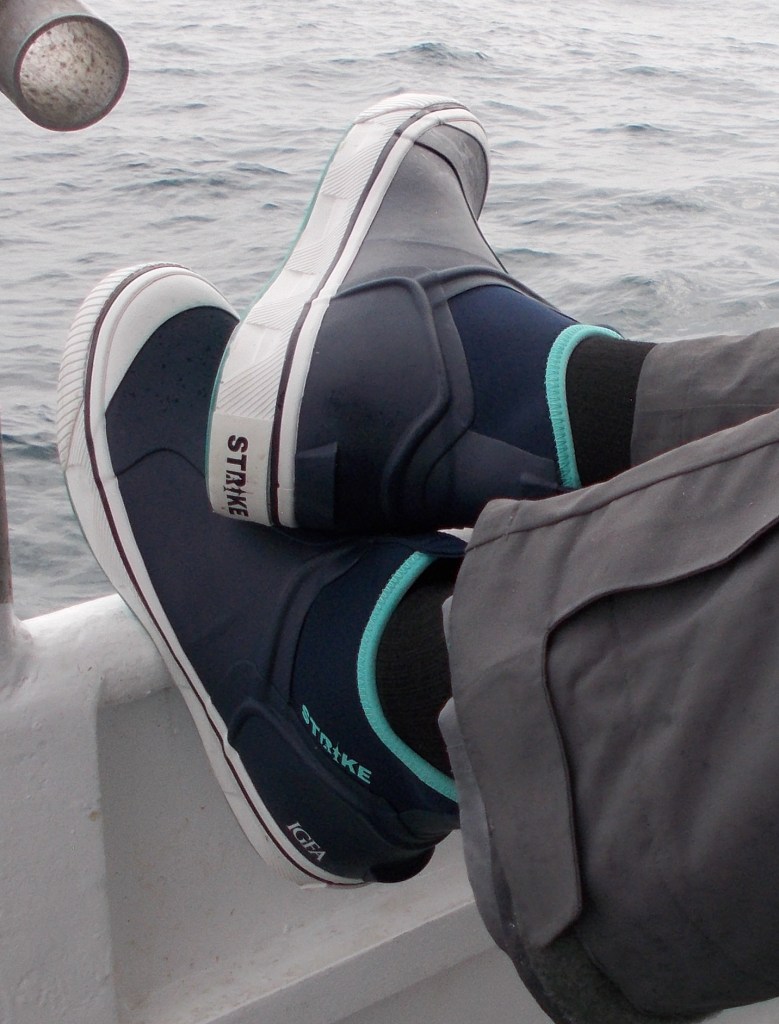
In March and April, then again in late fall, I’ll be wearing some sort of hi-top boot. The rest of the “cool” weather/water season I don’t need a full “boot.” The Bigeye Boot by Strike Footwear isn’t a tall or even a medium tall boot. It covers my feet to just above my ankle.
That’s the perfect height most of the time and the design makes even that much “boot” deceiving. The “rubber” part of the Bigeye is like a shoe. However, the “shoe” part transitions to a stretchy neoprene “upper” that fits over the ankle. The neoprene ankle material extends into the boot as an inner lining so when I’m only wearing a thin sock or no-socks my feet aren’t rubbing on the inside of the rubber shoe. A padded insole cushions the bottom of my foot for “walking on a cloud-like” comfort.
Okay, these boots look good, feel good and work good. They also include interesting extras not often included on other deck boots or shoes. One is a molded on lip at the heel making the shoe easy to slip off and a pair of pull loops – one at the rear, the other ahead of the ankle, to make pulling the Bigeye Boots fast and easy.
Bigeye Boots are endorsed by the IGFA for Strike’s reliance on eco-friendly materials in their construction. They come in black, white or navy. Look for them and other Strike Footwear at: https://www.strike-footwear.com/.
When it’s “glove weather” in the Great Lakes area you know there’s some fabulous fishing available. Every ice-fishing fan knows that last-of-the-season ice can produce the best action of the season. Every ice-out angler knows those March days can feature hungry walleyes, northerns, cohos, browns and other species in many places. So put on some warm gloves (along with warm clothes) and go fishing! Don’t forget Lake Erie walleye that bite until boats are frozen off the lake.
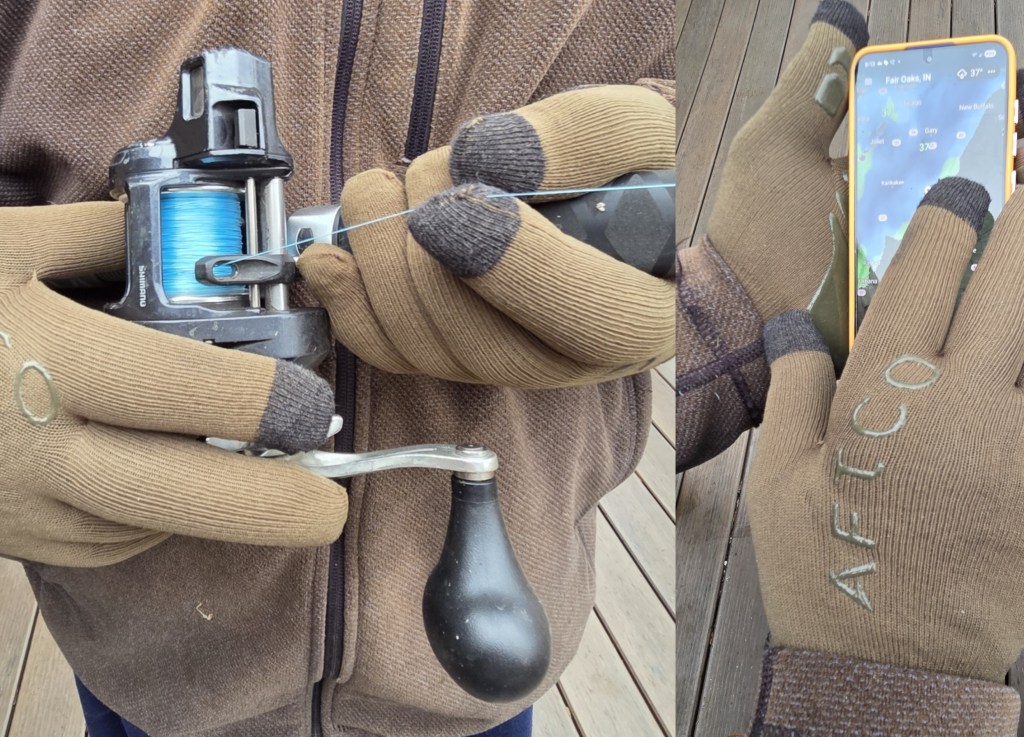
It seems AFTCO understood this when they designed their Breakwater model gloves with features every cold water/weather angler needs. Though there are many types of waterproof gloves, few are versatile. The rubber or plasticized versions ward off water but most aren’t supple enough to allow fishing maneuvers like gripping a reel handle or grabbing a minnow. Some gloves are warm and flexible, but bulky. None are perfect, but the Breakwater model I used late last fall during late winter-type weather are as close to perfect and all-purpose as I’ve ever used.
I couldn’t clip walleye spoons onto snap swivels or tie fishing knots with cold fluorocarbon, but I could deploy the lures on divers or attach the lines to planer boards using the same gloves I used to grip the steering wheel when heading to the fishing area. I didn’t have to peel the gloves off to do most work or sacrifice gripping power due to a slippery, warmth-only glove on the throttle or steering wheel.
AFTCO started with a quick-drying stretch knit fabric to provide a snug fit and warmth. Inside, there’s a waterproof membrane to prevent water and wetness from getting through to the soft, fleece inner layer that makes the glove extra-warm. I was able to handle wet, slippery fish and grip cold-handled pliers to remove the fishhooks.
The palm and inside of the fingers have a tough, silicone-like coating to make the gloves more durable and give a non-slip grip. The thumb and first finger have a touchscreen-compatible fingertips that allow me to swipe my cellphone screen and move the cursor around on my sonar/plotter screen.
AFTCO Breakwater Gloves are widely available in either black or olive color at retailers and online sources including Amazon. You can also check them out and/or purchase at www.aftco.com along with all the other top-of-the-line fishing products from AFTCO.
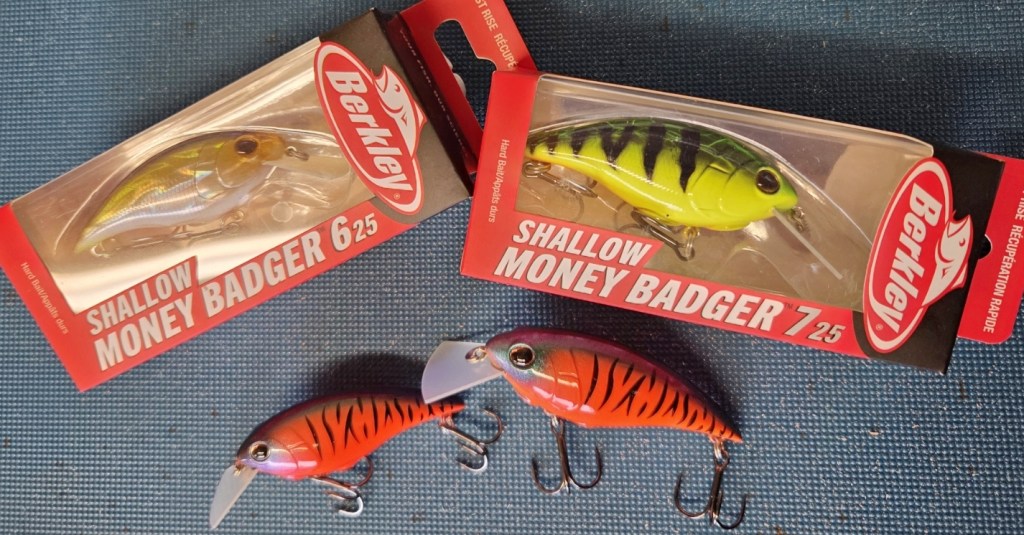
Berkley’s Money Badger crankbait has been a hit (mostly on the bass fishing scene) for the past couple of years at the times and places where a long-casting, quick diving plug banging off rip-rap or digging along sandy bottoms where either large or smallmouths are present. I captured a couple of them to use on my boat as trolling lures for fall walleyes on Lake Erie and cohos on Lake Michigan. There’s just a short window when deep diving cranks are right for early-season cohos. To keep the original Money Badgers from diving under the salmon, I got the best results by letting them out only 25 feet and using 20# leaders to keep them from diving too deep. That’s why, when Berkley perfected a Shallow Money Badger, I was intrigued.
Stock up on these and have them in hand when the early season cohos, and spring brown trout invade the shallows. In early March where I fish,the Shallow Money Badgers quickly joined the other shallow-diver crankbaits in the A-Team of lures I fish with utmost confidence. The 6.25 and the slightly larger 7.25 versions both swim right in the zone when browns and cohos are stacked in warm water outflows or swimming just off the beaches and breakwalls seeking warmth and forage fish.
Like most Berkley lures, I expect them to run true right out of the box and stay that way fish after fish. I also expect them to be salmon tough, unlike some small crankbaits that break or get mangled after catching a few fish.
The action features “an aggressive tail wag and high body roll” according to Berkley, and has a click-like rattle to pull in fish from a distance. High action, ample noise and bright colors are common to all my best-coho cranks. I’m betting the Blaze color (hot red with black squiggles) will be the star on my boat, with the FireTiger a solid option on the days when the fish want something different. I’ll also be including the FireTiger and other, more “walleye” patterns, on late spring trips to Erie to use with Dipsey Divers or downriggers to get them down to the action zone.
Shallow Money Badgers should be in most well-stocked tackle stores . They can be purchased at many online sites or check out or purchase all of Berkley’s lures and other tackle at www.berkley-fishing.com
Thousands of fish are caught using tip-ups every ice fishing season. No doubt, they work. No doubt most of them feature technology not much different than the same gear ice-anglers were using 100 years ago. The line is basically “hand-lined” down to the level of the fish; once the fish bites and swims off the simple spool of line on the tip-up rotates and a spring-loaded flag pops up showing it’s time to bring in the fish. Grab the line, wait for the line to tighten, give it a jerk to set the hook and then hand-over-hand pulling the fish up to the surface.
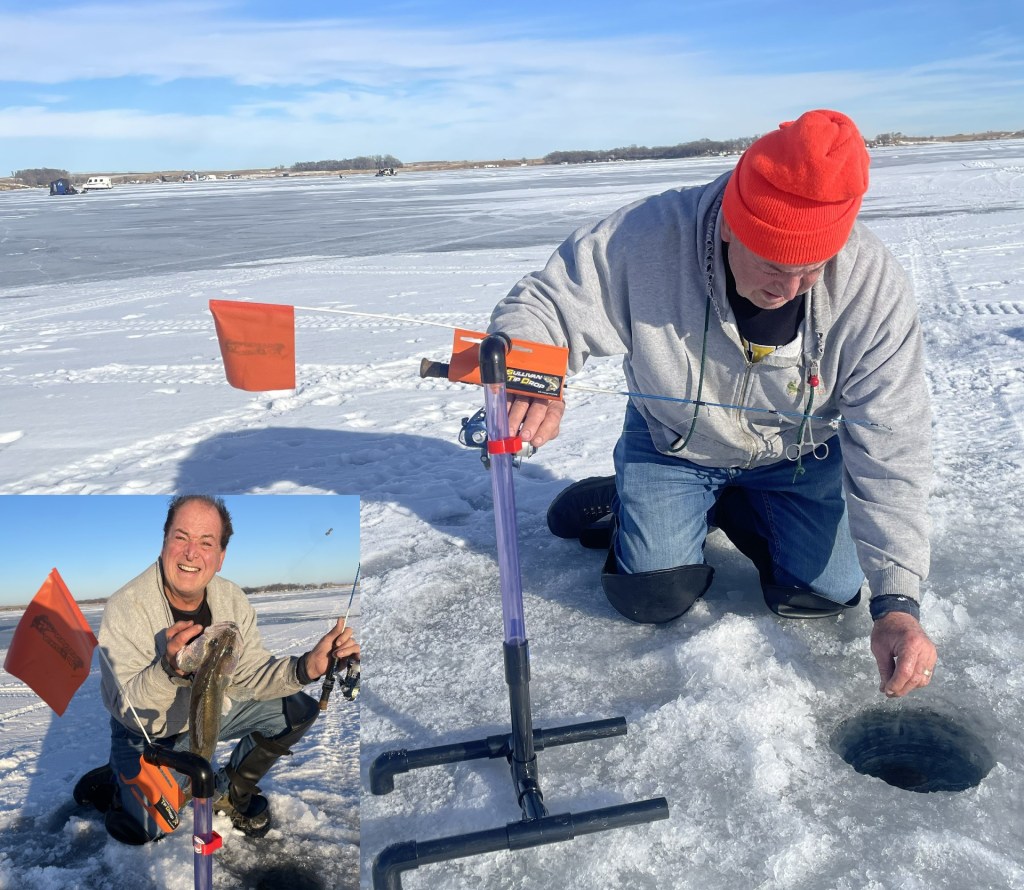
There’s a certain “primitive” satisfaction to handlining a fish, but by and large, most anglers prefer to use a rod and reel. I’ve seen and used some tip-up designs that “MadGyvered” a standard tip-up to allow a modern rod and reel to be connected to it, but Jim Sullivan perfected a design that allows matching almost any rod and reel with his “Tip Down.”
The frame of the Tip Down is made from colorful PVC pipe (allowing it to be disassembled for transport). Once it’s assembled and positioned next to the hole, it’s ready. Just open the reel’s bail and lower the bait down the hole. Now, set the rod in the rod cradle on the Tip Down and adjust the cradle to balance the rod and reel so it’s positioned horizontal to the ice. Loosen the drag on the reel so it’s just tight enough to keep an active minnow from pulling line against the drag. The Tip Down is fishing.
When a fish inhales the bait and swims off, the rod tips down and the flag tips up signaling a bite. Grab the rod, tighten the drag as needed, set the hook and reel in the fish! On the first trip my Tip Downs were used they caught average sized perch and crappies as well as above average sized walleyes.
The Tip Downs are available at www.sullivantipdown.com in several colors. The website lists some add-ons to fit the Tip-Downs. One is an LED light that will light the Tip Down both to be able to detect bites after dark and also to light it up so snowmobilers can see them in the distance. Another allows attaching Tip Downs to the walls of portable or permanent shelters and wheel-houses. Check out the informational videos at this site as well.
Many big box sporting goods retailers produce any number of products with their own label on them. They don’t manufacture the gear – Bass Pro, Dicks Sporting Goods, Sheels and other major retailers including FishUSA don’t own factories. Instead, they contract with companies that do have manufacturing facilities, perhaps Shimano, Daiwa or others to build rods, reels, lures, and dozens of other products for them and then adorn them with the FishUSA or other company’s label.
Don’t expect these private labels to be identical with the name brand models, but that doesn’t mean they are inferior. In many cases they are made to exacting specifications and (at least to most anglers) they perform similarly to the brands from well-known manufacturers. In general, however, they don’t carry the price demanded by the well-known equipment makers. That’s important to value-minded anglers, whether they are newcomers and can’t afford to invest in multiple set-ups all at once or for seasoned charter captains who are often putting their gear in the hands of rank amateurs prone to abusing tackle just due to unfamiliarity with handling any sort of gear.
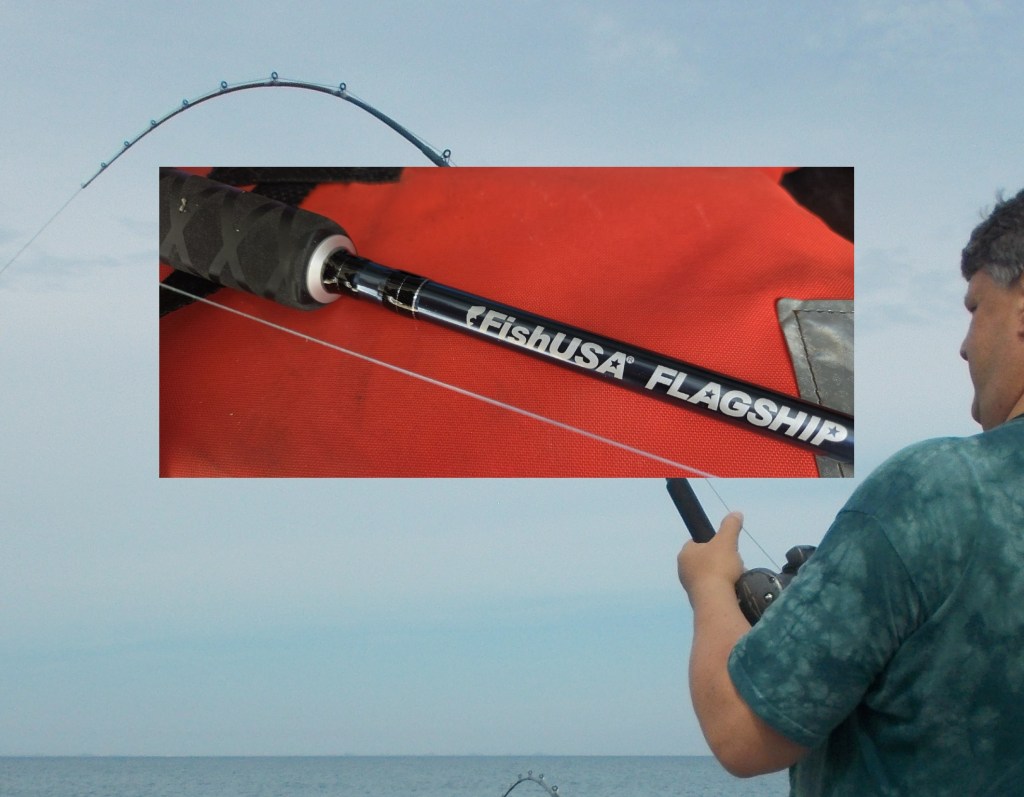
I was pleasantly surprised by the Flagship Trolling Rod I got from FishUSA in late summer in every aspect. It looks good and performs great. The 802M model I tested has a pleasing metallic steel-blue finish – not so flashy that it looks out of place among the other rods in my array; but even if it was some gaudy color, I’d still like it for how it feels in my hands and how it performs both when I’m trolling or when it’s being bent by a Great Lakes fish.
In hand, its graphite composite blank is noticeably lighter than many of the “well-seasoned” major brands I use daily and the triangular shaped foregrip gives it a firm feel, comfortable in my hands and I’m sure it will be easier to grip for novice customers to handle. The 802M is eight feet long, two-piece construction for easy storage and is rated for 10-to-20-pound line. It will fit well with the rods I use when trolling for cohos on Lake Michigan or walleyes on Lake Erie using planer boards. It would work well with a downrigger for these species, but if I planned to use it when targeting kings, steelhead or lakers, I’d select one of the medium-heavy Flagship versions offered by FishUSA with a bit more backbone.
If you are looking for a mid-priced rod with top-level looks, quality and performance, look no further than the Flagship trolling rods from FishUSA. See them all at http://www.fishusa.com.