
DEXTREME DUAL EDGE 7” FILLET KNIFE

Reviewed by: CAPT. MIKE SCHOONVELD

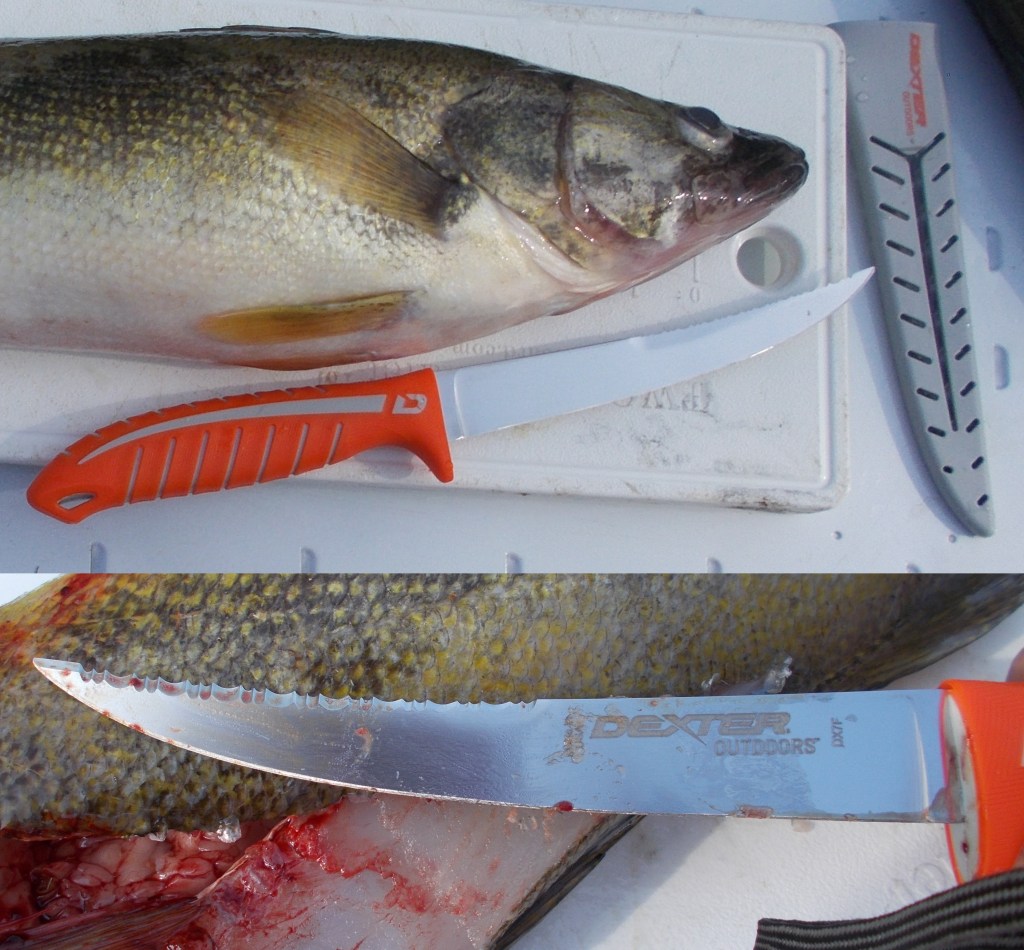
Look in the places where “professionals” are cleaning fish (or avid recreational anglers) you’ll see a Dexter knife in the hands of many of them. Look in my fish cleaning kit and you’ll see a Dexter knife in mine, for sure. I couldn’t guess the number of fish that tool has dissected. Now, look in my kit and you’ll see a second Dexter knife in it – not the familiar white-handled version most use – this one sports a bright orange, comfortable, non-slip handle. The orange handle looks good but that’s not what makes this knife unique.

The blade is made from Dexter’s proprietary (American made)  “Dexsteel,” the perfect blend of hardness to allow cleaning a limit of fish without needing sharpened, but not so hard that it takes an expert to put the edge back to factory sharp. Most of Dexter’s fillet knives are made from Dexsteel stainless, each one designed to provide just the right flex to produce perfect fillets. What’s unique on the Dual Edge is the tip-end on top side of the blade has a serrated, ultra sharp edge.

Dexter makes serrated bladed knives with what they call a Tiger Edge to use on frozen fish, extra boney fish or those with tough cartilage. Perfect if that’s kind of fish you encounter regularly, but it’s a specialty tool. The serrations on this dual edge knife isn’t there to be used all the time on most fish found in the Great Lakes, but occasionally, so when it’s needed, it’s there. I’ve used the serrations to cut through the wire-like bones on big walleyes and to cut through backbone on salmon I want to dress out as “steaks” rather than fillets. Mostly, however, if I miss a spot when cutting a fillet, or skinning it off, the top of the blade is sharp and I can finish the job with just a flick of the blade instead of having to change the angle or my grip to hit the spot with the regular sharp side. I selected the 7-inch blade, the perfect size walleyes and coho salmon – the fish that come aboard my boat most of the time. The 7-incher isn’t too long for perch or white bass, and it will handle the biggest kings and lakers we manage to hook when Lady Luck smiles our way.

I can’t say I’ve ever selected a knife just for the sheath that comes with it. Don’t buy this one just because of the sheath, either, but when you get one, you’ll love the fit. It’s plastic (not unusual) but when you slide the blade into the sheath, the handle sort of snaps in place just tight enough to keep the sheath in place as it rattles around in your cleaning kit, boat or the back of your tow vehicle.

Check out all of Dexters Knives and other products at www.dexteroutdoors.com. You can purchase them there, at retailers everywhere or at Amazon.com. 

MERCER SPORT KNIVES and TRUE 7″ SYK FILLET KNIFE

Reviewed by: CAPT. MIKE SCHOONVELD

COLORFUL CUTTERS

There’s no reason a bland looking knife can’t be the best knife you’ve ever used. Whether the handle is black, white, or any color of the rainbow is about 99 times less important than how it fits the hand gripping it. Fillet knife blades are usually stainless steel and have either a bright, polished finish or perhaps a duller, brushed finish. Older fish cleaning knives I’ve used were high-carbon steel and sometimes had a blued look; but again, the color or finish of the blade takes a distant backseat to other factors like sharpness, shape, flex and length.

 But recently, I have been using some “colorful cutters” when I show up at the fish cleaning table. They are all great knives. If they only looked cool but under-performed, they wouldn’t have “made the cut” and ended up on these pages. These knives do look great and more importantly, they do the job.

MERCER SPORT KNIVES


The first couple of knives I used late last summer sported a bright orange, textured non-slip handle with a comfortable feel when holding them. I used the 9” “regular” blade for large trout and salmon and found it to be perfect for this purpose. The blade was razor sharp and stayed that way fish after fish. I haven’t had to sharpen it yet, but I steel my fillet knives regularly when I’m using them – like after every couple three fish. Most of my knives only get sharpened on a whetstone or other abrasive sharpener once a season, or until I loan it out to someone who uses it until it gets dull.

The other Mercer knife I used was the Utility Slicer with the same exact handle and blade length. The difference is this blade is serrated which makes it a specialty knife for fish cleaning.

Several years ago I switched to electric knives when cleaning lake trout and walleyes because I’m a “cut through the rib bones” fillet maker. Once the fish is slabbed, step two is to remove the ribs by cutting just under them and lifting at the same time. I find that technique much easier, quicker and I get more of the “rib meat” doing it that way than to cut around the ribs when separating the meat from the bones. 

            Walleyes and lake trout have ribs that seem to be made from steel wires when trying to cut through them with a smooth bladed fillet knife. The electric knife snips them off effortlessly. So does the utility slicer. I make the first cut behind gills down to the backbone with a fillet knife, then switch to the Utility Slicer. The serrated blade acts like a saw and easily cuts through the wiry ribs, then I switch back to the fillet knife to finish the chore, removing the fillet down to the tail, removing the ribs and skinning the fillets.

 I also use the Utility Slicer to make both lake trout and salmon steaks from larger fish. My wife and I think these bone-in, skin-on steaks have a better flavor than skinless, boneless fillets when grilled or in other recipes. In this case, I use the Utility Slicer to “saw” through the backbone with just a couple of strokes. Check them out at www.mercersport.com.

TRUE 7” SYK FILLET KNIFE

The handle of this seven-inch fillet knife is a pleasing, if not gaudy bright blue handle. It too has an easy-to-grip textured, well contoured handle. What makes this knife colorful is the avocado green blade – True says it was inspired by one of the colors on a yellowfin tuna. Other than in ceramic knives, I’ve never seen blades of this color. The color is actually a special corrosion preventing, micro-coating often used in firearms called Ceracote. Under the coating is hard, high-carbon stainless steel that will sharpen to a razor like edge. The hardness makes it a long lasting edge, as well.

Available in a 9” version, I found the seven-incher a good all-around size and I cleaned perch, coho, cisco and walleyes with it handily. It has a medium flex which I like better than a more flexible blade since I try to leave as much of the red-meat lateral line on the skin as possible when skinning trout and salmon. It also has a bit more sweep to the cutting edge which makes it easier to cut out the ribs whether cutting through them or cutting around them. Check them out at www.true.acgbrands.com/en-US.