
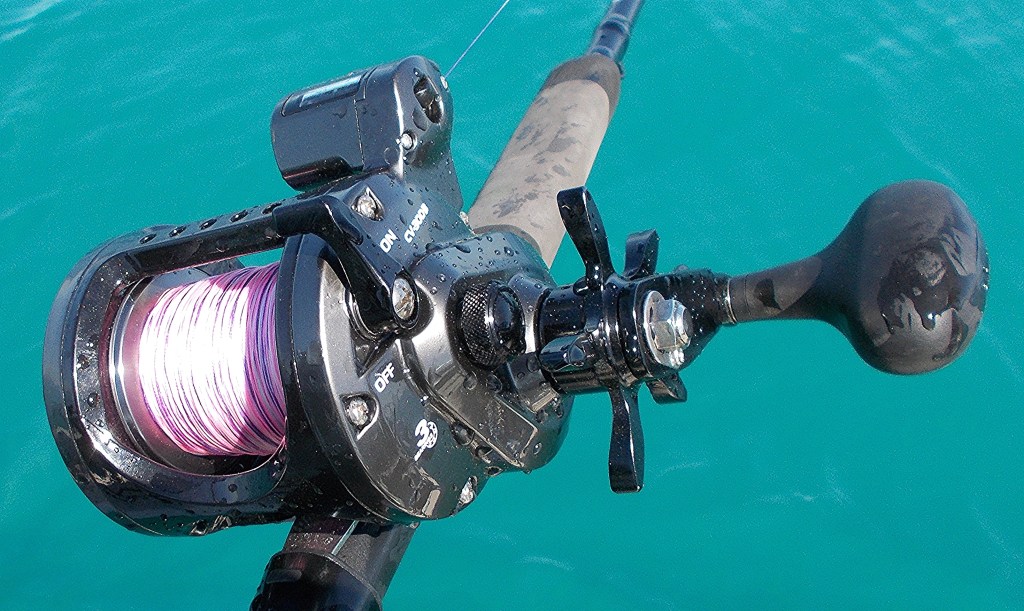
OKUMA CONVECTOR “B” REEL/DIAMOND ELITE ROD

Reviewed by: CAPT. MIKE SCHOONVELD

This season I’ve been using the new model of Okuma’s Convector reel – dubbed the Convector  “B” Model -and I’ve been blown away by it. The original Convector has a faithful following on the Great Lakes and the redesign now makes it even better.

The improvements include larger, stronger gears, enhanced carbon-fiber drags, an updated line counter mechanism and improved handle-knob – large and easy to grip. All of this in the familiar Convector mid-level price range. 

I’ve used it as it was intended on every trip I’ve fished this season (which started on March 2nd for me.)  I set it most often as a downrigger line, but I “snuck” it in as a planer board reel several times since those lines were getting most of the action and I wanted to get a “feel” for how it performed. I also used it as a braided line diver reel using the standard #1 Dipsy Divers.

I don’t purposely put the gear I test to extreme conditions but this one I did. On my first offshore excursion I forgot one of my “wire-diver” set-ups I use to get laker rigs down to the shoals where lakers are stacked and gobbling up gobies. I grabbed the Convector “B,” on the Diamond Elite downrigger rod to sub for my forgotten wire-diver. I’d filled the Convector with 30# test Sufix 832 Superline. I attached a #3 Magnum Dipsy Diver pulling a dodger and Spin-N-Glow.

I sent it down, down, down, so it was just scuffing along the bottom made up of sand and pea-gravel. The big Dipsy pulled hard and even harder when it touched the bottom. The Diver’s release had to be set tight enough that just skidding along the bottom wouldn’t trip it. The reel’s drag had to be set tight enough to not slip when the diver did hit the bottom. It’s a system that has to be finely tuned.

Then, when a laker slurps onto the Spin-n-Glow, the rod has to have the backbone to allow the tight release to open and at the same time, the reel has to feed out just enough line – pulling against the drag – to keep something from breaking, losing the fish and the expensive gear.  The first fish of the day showed the Convector “B” up to the task and several other trout provided several additional tests. I wouldn’t hesitate to use it with wire line as a wire-diver reel.

I had the reel sitting on a Diamond Elite Downrigger rod (DME-DR-862MHA) This is a medium heavy 8 ½ foot long downrigger rod and it functions perfectly using it in conjunction with a downrigger. It’s not a bad planer board rod, either and I would have no problem using it with medium/large planers pulling deep diving crankbaits, lead core line or copper.

I used the Diamond Elite it as a diver rod with #1 Dipsy Diver for cohos and walleye and it handled that size diver very well. It was slightly over-matched using Magnum Divers, but it got the job done.

The Diamon Elite series are all designed as trolling rods and come in sizes for walleye, up to wire-diver sizes with a roller tip line guide, They are a handsome, steel gray color, and the triangular foregrip gives extra gripping power when reeling in strong, Great Lakes fish. Pair the right Diamond Elite rod with the appropriate size of Convector “B” reel and you have a combo that will serve you well for decades. 
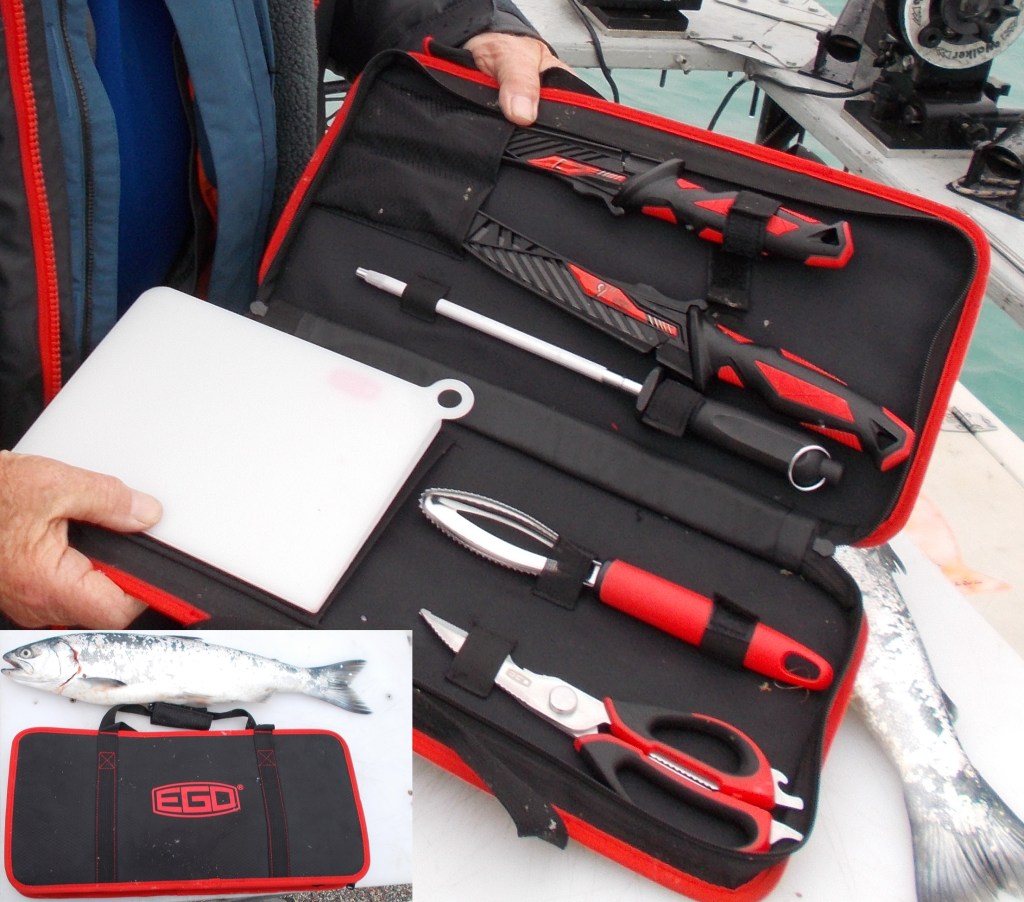
EGO TIDEWATER TOOL KIT – FISH CLEANING

Reviewed by: CAPT. MIKE SCHOONVELD

Every angler should have a fish cleaning kit that includes the essentials for cleaning the size and type of fish you plan to catch and keep. For me, a kit that has a couple of different sized fillet knives is important. I’ve cleaned large fish with small knives, small fish with large knives, but cleaning any fish with the appropriately-sized knife makes the job simpler and the finished product better. Each knife should be in a sheath, as well. That protects the user, it keeps the knives from cutting the case in which all the tools are stored and the sheath also protects the knives’ razor edges from clacking together or rubbing on other items inside the case. That could damage the sharp edges.

I’ve learned that keeping a knife sharp is simple. Rather than using (abusing) the knife until it’s dull, simply “steel” the knife, after every fish or two and it will never get dull. I include a honing steel in the fish cleaning kits that I put together. The steel doesn’t have to be large, it has to be used.

When I’m cleaning walleye, I always wear a glove with a tough, rubber palm on my left hand. (I’m right-handed.) The fins on walleye have sharp spines, the gill plates are razor sharp and even the scales on a walleye are abrasive. So there’s a glove for my left hand in my kit.

The only downside to this is when I’m skinning the fillet, the glove makes it tough to grip the end of the fillet when I’m skinning the fillet. That’s why I always have a homemade pick in the kit I take on walleye fishing trips to pin the tail of the fillet in place with my gloved, left hand. 

When I saw the Tidewater Tool Kit from EGO, I noticed it had all the tools I consider to be essential – and more! Included in the kit is a folding cutting board measuring 8 ¾”X12 ¾” and a pair of scissors. The cutting board is a bit small, but better than nothing. I don’t often use scissors to clean the fish I catch, but they’d be handy for catfish anglers to cut off the spines. I have been known to pop the top off a longneck when I’m cleaning a fish and there is a bottle opener on the end of the scissors.

There’s also a fish scaler. I actually do scale some of the fish I clean because skin-on fillets have a depth of flavor missing on skinned fillets. The fish scaler easily takes the place of the pick I use to hold the fillet in place when I’m skinning it.

The coolest extra feature is the sheaths for both the seven and nine-inch knives have a locking tab on them so once the knife is sheathed, it stays sheathed. I’ve never seen that on any knife sheath I’ve owned. All this in a convenient carrying case and an extra right-hand glove you can offer to a left-handed fishing partner giving him one less excuse for not helping you to clean the fish. The EGO Tidewater Tool Kit is sold exclusively online at: http://www.egofishing.com. 

TRUE TI POCKET MULTI TOOL

Reviewed by: CAPT. MIKE SCHOONVELD

The first “multi-tool” I ever owned was a Boy Scout Pocketknife I got to fulfill the Boy Scout motto, “Be Prepared.” Besides the knife blade that folded open, it included a flat screwdriver/bottle opener blade, both of which worked pretty well. I needed the bottle opener since twist-off caps were yet to be invented. It had a can opener which did a poor job of opening metal cans and a poker tool which was seldom used.

I carried it through high-school and college and the most memorable use I recall was when I was far away from a wilderness camp with a reluctant 9.9 Mercury outboard on the back of a 14-foot rowboat. I don’t remember exactly what was wrong with the Merc, but I do remember that without the Boy Scout knife, the repair would have been impossible.

It was years later before I saw the first non-pocketknife multi-tool. I bought a few, had a few mini-versions given to me as “bling” with some company’s name stenciled on the handle and was handed many others that unfolded to reveal a pair of pliers, wire cutters, flat and Phillips screwdrivers. Most had a knife blade, several had a tiny saw blade and a variety of can openers, poking tools, bottle openers all that would cleverly fold into a compact unit.

I’ve never had or used one that worked as well as a “real” screwdriver or pliers or any of the other included tools. I don’t fault that, the variety of tools does make the multi-tool handy in “emergency” use or for small jobs that would take less time to complete with the multi-tool than it would take to dig a screwdriver out of a tool box.

What I do fault is how many of them, marketed as stainless steel, end up being rusting to some extent. I fault the ones built so tight, I need to use a regular tool to open or close the blades. Almost as bad are the ones so flimsy the individual blades or tools open on their own or with screwdrivers that are so flimsy that they bend with moderate torque. I’m talking “name brand” models, not just cheap-China knock-offs of name brand models.

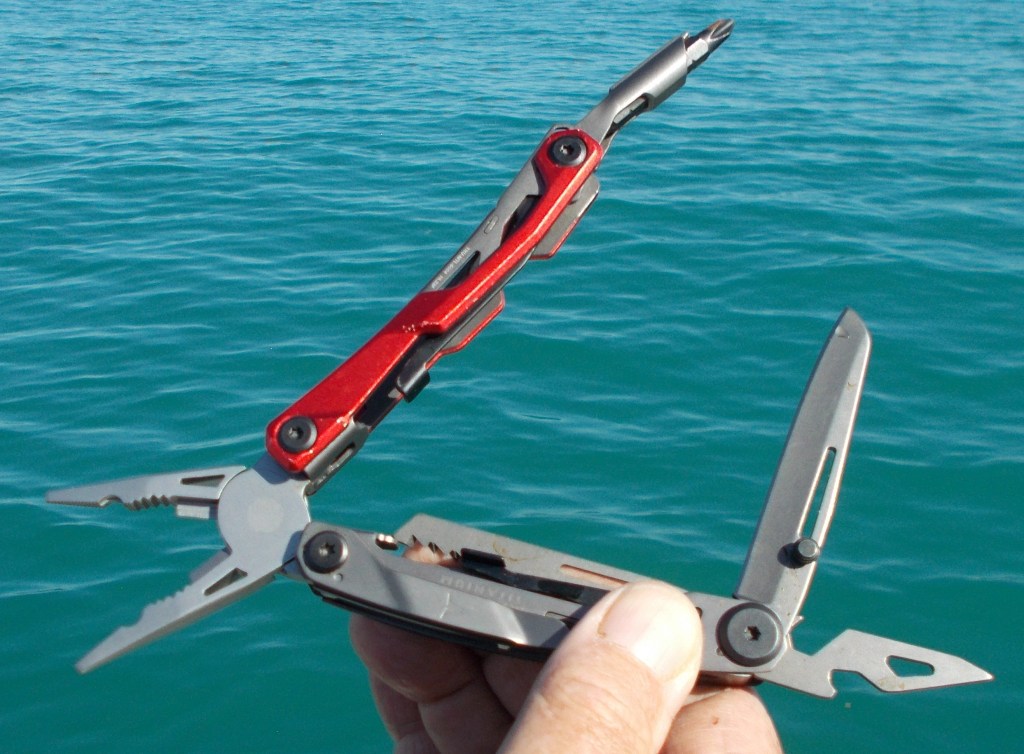
I’ve used several models of knives from True, one of AGC Brands product lines. All have proven to be well designed and well built so when they came out with the TI Pocket Multi-Tool, I got one to see if it was one worth having and relying on. I’ve had it on my boat for several months, purposely stowed in a convenient TackleWeb pocket where it is handy where the work is being done and is exposed to the weather, spray and road/dust when the boat is being trailers. I wanted to see how it “ages.” I’ve often purposely used it instead of the “single” use tools I keep on my boat, just to see how it measured up.

I’ve used it to unhook dozens of salmon, walleye and lake trout. The pliers work well and thought a lot of the pressure of hook removal is twisting, the pliers are still tight. I don’t fillet fish with the knife blade, but I’ve cut fishing line, dock ropes and cut several chunks of summer sausage. I’ve used the screwdrivers (both Phillips and flat blades to unscrew various screws including adjusting Dipsey Divers. I’ve yet to use or need the saw blade or open a tin can with the can opener.

Though I haven’t (and probably won’t) carry it in my pocket, it wouldn’t be cumbersome to carry in your jean pockets if your everyday duties occasionally require using small hand tools. I can easily see how having it as standard equipment on my boat and/or in my pick-up’s glove compartment.

Widely available in stores, both online and retail, at Amazon or check them out and other AGC brands at: https://acgbrands.com/

COBRA BLUE BOUND 150 HANDHELD MARINE RADIO

Reviewed by: CAPT. MIKE SCHOONVELD

I was 11 miles offshore one nearly calm day on Lake Michigan. Suddenly, my motor died and when I tried to restart it, the battery was so weak the starter solenoid would just “click.” I fiddled with the battery connections to no avail so I called the Coast Guard on my marine radio to report my situation.

When I pushed the microphone key, my chart-plotter screen showed a message, “low battery, powering off.” Then the unit shut off. I knew when a battery is weak, at some point, the battery would no longer operate a marine radio – especially transmit – so the first thing I did was tell the USCG dispatcher my GPS position as shown on my cell phone. Though I had zero bars, to make a call, at least that app worked.

All’s well that ends well, but we were lucky. The Coast Guard called BoatUS and they responded, but it took about two hours. By then, the radio wouldn’t even receive messages. My crew and I were concerned but the last transmission we heard was that the tow-boat was underway.

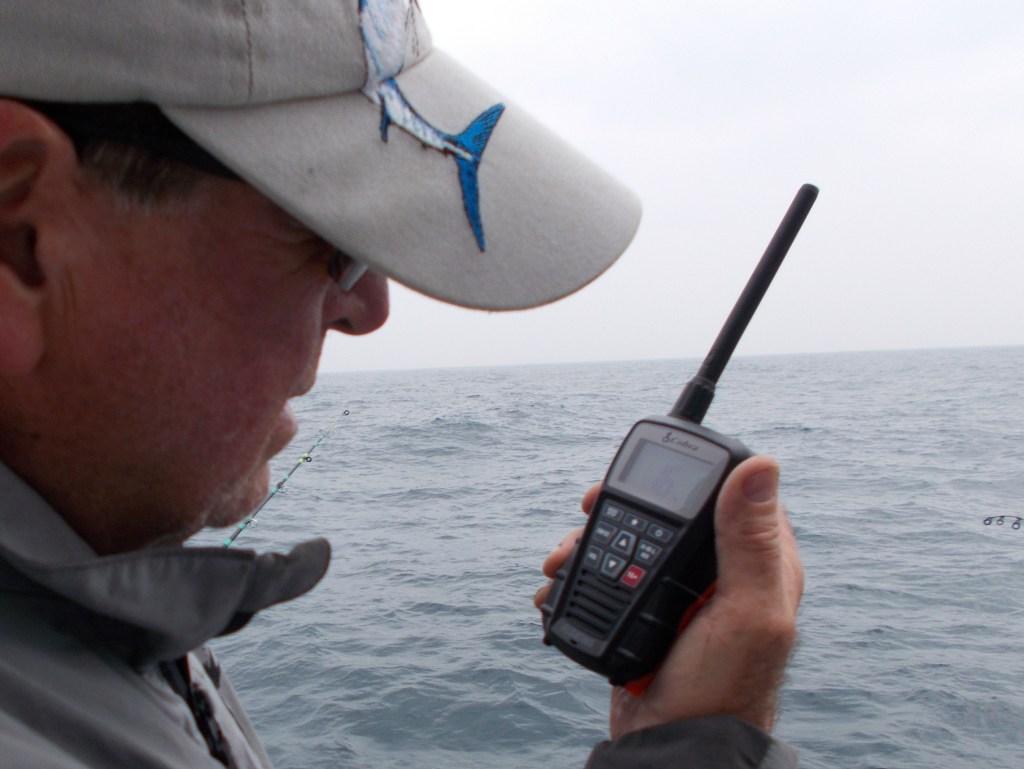
The first thing I did was buy a new alternator to fix the boat and the second thing was to get a Cobra BlueBound 150 handheld marine radio. I chose the Cobra over other brands for several features (including price) and also because my boat’s permanent VHF radio is a Cobra brand and it has given me decades of service.

Other features that sold me on this radio was that it has rechargeable AAA batteries. They charge with the same USB-C plug I use to charge my cell phones. Cobra says a full charge will last up to 11 hours. I’ve put spare AAA lithium batteries in my “necessary” box to use if BlueBound 150’s batteries ever did run down.

One feature I don’t want to test is that it floats. It won’t sink if I were to drop it overboard or off the dock. More important if (God forbid) the boat sinks or someone falls overboard.

The maximum output of this portable radio is 3 watts which isn’t going to blast a signal very far, but the height of the antenna dictates the distance a radio can send or receive more than the power. USCG stations are equipped with very tall antennas capable of reaching out 50 miles.

Since I’ve acquired the radio I’ve used it to monitor a different channel than my main is set on. I’ve carried it with me on other people’s boats – some of them don’t have a marine radio since they think they will usually have cell service. I know my cell phone is usually useless much more than five miles offshore and in some areas service is spotty even nearshore.

DUBRO TRAC-A-ROD FISHING ROD RACK

Reviewed by: CAPT. MIKE SCHOONVELD

I edit a column for Great Lakes Angler Magazine called Basics and Beyond in each issue. The B&B column features tips about fishing and gear hacks submitted by readers that they use to make their life easier. Few of these tips are more frequent than the ways GLA readers have devised to store their fishing rods back home, on their boat or in their vehicles. Most of these tips feature rod storage designs made from everyday items usually used elsewhere including PVC pipe, clothespins, pool noodles, milk crates, five gallon buckets and other supplies. There are many ways to produce innovative projects to safely and compactly store fishing rods and reels.

 Face it, there are plenty of people that don’t have the time or tools to complete DIY projects. Some don’t have the skills. Luckily, there are plenty of commercially made rod racks or other storage solutions. These vary from flimsy racks that I’d never recommend to pricey racks that I’d never advise anyone to purchase.

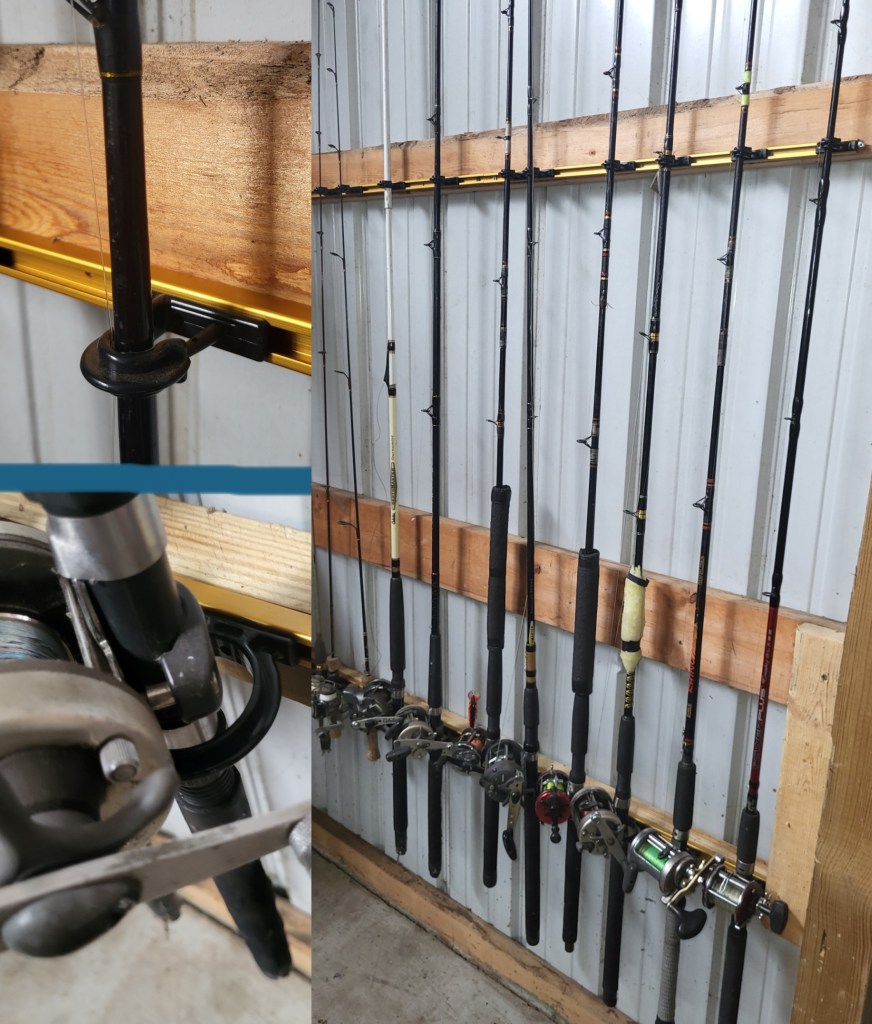
 One I’ve found that does pass my muster is the Trac-A-Rod system from Dubro. I call it a system because it comes in two-foot lengths which will hold six rod and reel combos so it’s easy to customize it to most any space you have available. If you have a large space available and lots of rods to store, they also come in four-foot lengths. I’ve put two of the four-footers to put on the pole barn wall where I store my boat.

When I say, “any space” it’s because the Trak a Rod systems will fit on ceilings, walls (either vertically or horizontal) and on any kind of surface. The actual hangers fit into an aluminum track so they are adjustable to fit combos of any size.            

If they are going in a storage area, the color of the tracks or hangers isn’t an issue most of the time, but in a den, man-cave or more public area, choose from silver track/white holder, silver/black, black/black or my favorite (as a Purdue grad) the gold track/black holders. Trac-A-Rod Fishing Rod Racks are available direct from www.dubrofishing.com, at retail outlets and many online sources including Amazon.com.