BREAKWATER WATERPROOF GLOVES BY AFTCO

Reviewed by: CAPT. MIKE SCHOONVELD

When it’s “glove weather” in the Great Lakes area you know there’s some fabulous fishing available. Every ice-fishing fan knows that last-of-the-season ice can produce the best action of the season. Every ice-out angler knows those March days can feature hungry walleyes, northerns, cohos, browns and other species in many places. So put on some warm gloves (along with warm clothes) and go fishing! Don’t forget Lake Erie walleye that bite until boats are frozen off the lake.

It seems AFTCO understood this when they designed their Breakwater model gloves with features every cold water/weather angler needs. Though there are many types of waterproof gloves, few are versatile. The rubber or plasticized versions ward off water but most aren’t supple enough to allow fishing maneuvers like gripping a reel handle or grabbing a minnow. Some gloves are warm and flexible, but bulky. None are perfect, but the Breakwater model I used late last fall during late winter-type weather are as close to perfect and all-purpose as I’ve ever used. 

 I couldn’t clip walleye spoons onto snap swivels or tie fishing knots with cold fluorocarbon, but I could deploy the lures on divers or attach the lines to planer boards using the same gloves I used to grip the steering wheel when heading to the fishing area. I didn’t have to peel the gloves off to do most work or sacrifice gripping power due to a slippery, warmth-only glove on the throttle or steering wheel.

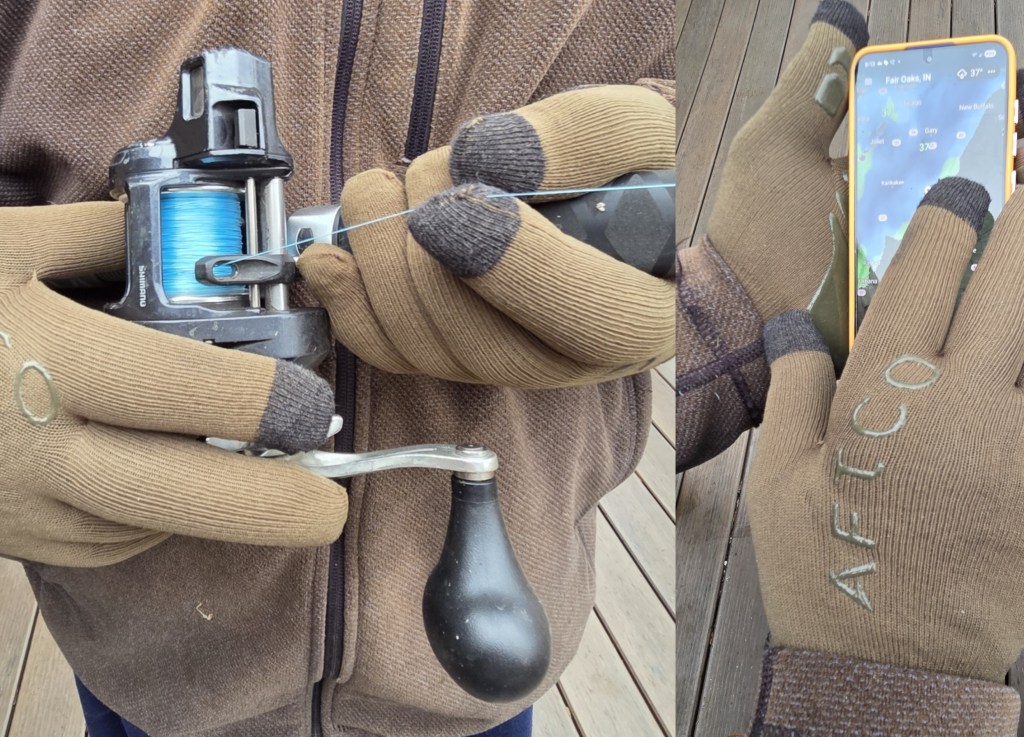
 AFTCO started with a quick-drying stretch knit fabric to provide a snug fit and warmth. Inside, there’s a waterproof membrane to prevent water and wetness from getting through to the soft, fleece inner layer that makes the glove extra-warm. I was able to handle wet, slippery fish and grip cold-handled pliers to remove the fishhooks.

 The palm and inside of the fingers have a tough, silicone-like coating to make the gloves more durable and give a non-slip grip. The thumb and first finger have a touchscreen-compatible fingertips that allow me to swipe my cellphone screen and move the cursor around on my sonar/plotter screen. 

 AFTCO Breakwater Gloves are widely available in either black or olive color at retailers and online sources including Amazon. You can also check them out and/or purchase at www.aftco.com along with all the other top-of-the-line fishing products from AFTCO. 
SHALLOW MONEY BADGER

Reviewed by: CAPT. MIKE SCHOONVELD

Berkley’s Money Badger crankbait has been a hit (mostly on the bass fishing scene) for the past couple of years at the times and places where a long-casting, quick diving plug banging off rip-rap or digging along sandy bottoms where either large or smallmouths are present. I captured a couple of them to use on my boat as  trolling lures for fall walleyes on Lake Erie and cohos on Lake Michigan. There’s just a short window when deep diving cranks are right for early-season cohos. To keep the original Money Badgers from diving under the salmon, I got the best results by letting them out only 25 feet and using 20# leaders to keep them from diving too deep. That’s why, when Berkley perfected a Shallow Money Badger, I was intrigued.

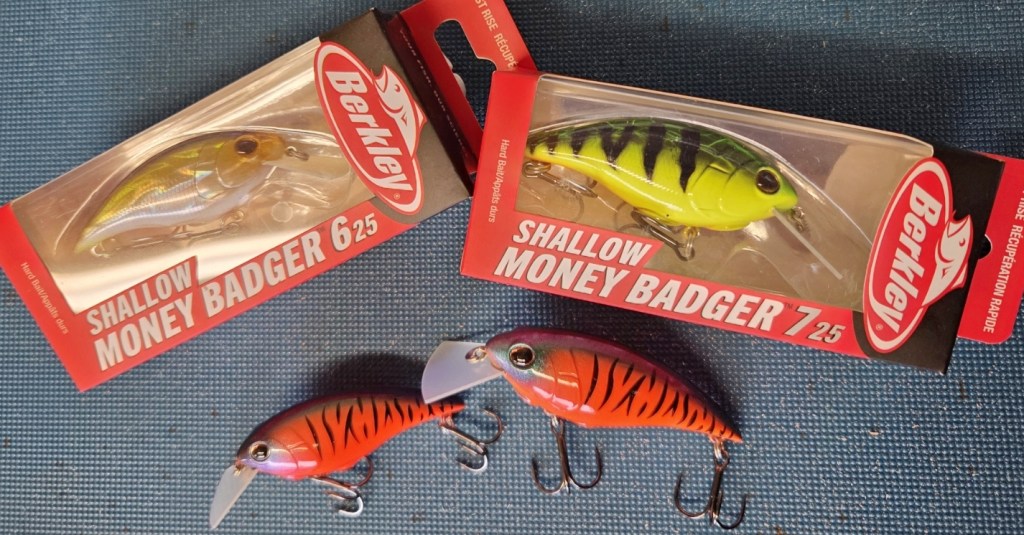
Stock up on these and have them in hand when the early season cohos, and spring brown trout invade the shallows. In early March where I fish,the Shallow Money Badgers quickly joined the other shallow-diver crankbaits in the A-Team of lures I fish with utmost confidence. The 6.25 and the slightly larger 7.25 versions both swim right in the zone when browns and cohos are stacked in warm water outflows or swimming just off the beaches and breakwalls seeking warmth and forage fish.

Like most Berkley lures, I expect them to run true right out of the box and stay that way fish after fish. I also expect them to be salmon tough, unlike some small crankbaits that break or get mangled after catching a few fish.  

The action features “an aggressive tail wag and high body roll” according to Berkley, and has a click-like rattle to pull in fish from a distance. High action, ample noise and bright colors are common to all my best-coho cranks. I’m betting the Blaze color (hot red with black squiggles) will be the star on my boat, with the FireTiger a solid option on the days when the fish want something different. I’ll also be including the FireTiger and other, more “walleye” patterns, on late spring trips to Erie to use with Dipsey Divers or downriggers to get them down to the action zone.  

Shallow Money Badgers should be in most well-stocked tackle stores . They can be purchased at many online sites or check out or purchase all of Berkley’s lures and other tackle at www.berkley-fishing.com

SULLIVAN’S TIP DOWN – TIP UP

Reviewed by: Capt. Mike Schoonveld

Thousands of fish are caught using tip-ups every ice fishing season. No doubt, they work. No doubt most of them feature technology not much different than the same gear ice-anglers were using 100 years ago. The line is basically “hand-lined” down to the level of the fish; once the fish bites and swims off the simple spool of line on the tip-up rotates and a spring-loaded flag pops up showing it’s time to bring in the fish. Grab the line, wait for the line to tighten, give it a jerk to set the hook and then hand-over-hand pulling the fish up to the surface.

There’s a certain “primitive” satisfaction to handlining a fish, but by and large, most anglers prefer to use a rod and reel. I’ve seen and used some tip-up designs that “MadGyvered” a standard tip-up to allow a modern rod and reel to be connected to it, but Jim Sullivan perfected a design that allows matching almost any rod and reel with his “Tip Down.”

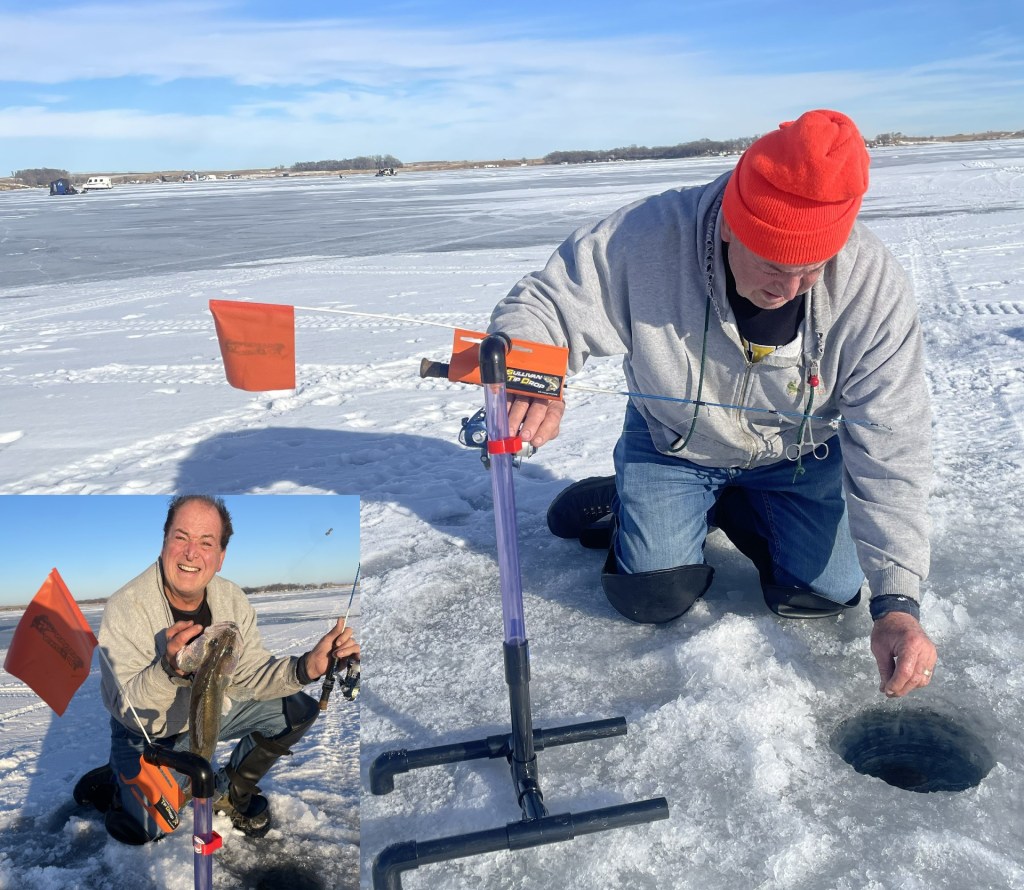
The frame of the Tip Down is made from colorful PVC pipe (allowing it to be disassembled for transport). Once it’s assembled and positioned next to the hole, it’s ready. Just open the reel’s bail and lower the bait down the hole. Now, set the rod in the rod cradle on the Tip Down and adjust the cradle to balance the rod and reel so it’s positioned horizontal to the ice. Loosen the drag on the reel so it’s just tight enough to keep an active minnow from pulling line against the drag. The Tip Down is fishing.

When a fish inhales the bait and swims off, the rod tips down and the flag tips up signaling a bite. Grab the rod, tighten the drag as needed, set the hook and reel in the fish! On the first trip my Tip Downs were used they caught average sized perch and crappies as well as above average sized walleyes.

The Tip Downs are available at www.sullivantipdown.com in several colors. The website lists some add-ons to fit the Tip-Downs. One is an LED light that will light the Tip Down both to be able to detect bites after dark and also to light it up so snowmobilers can see them in the distance. Another allows attaching Tip Downs to the walls of portable or permanent shelters and wheel-houses. Check out the informational videos at this site as well.    

FLAGSHIP TROLLING RODS BY FISHUSA

Reviewed by: CAPT. MIKE SCHOONVELD

Many big box sporting goods retailers produce any number of products with their own label on them. They don’t manufacture the gear – Bass Pro, Dicks Sporting Goods, Sheels and other major retailers including FishUSA don’t own factories. Instead, they contract with companies that do have manufacturing facilities, perhaps Shimano, Daiwa or others to build rods, reels, lures, and dozens of other products for them and then adorn them with the FishUSA or other company’s label.

Don’t expect these private labels to be identical with the name brand models, but that doesn’t mean they are inferior. In many cases they are made to exacting specifications and (at least to most anglers) they perform similarly to the brands from well-known manufacturers. In general, however, they don’t carry the price demanded by the well-known equipment makers. That’s important to value-minded anglers, whether they are newcomers and can’t afford to invest in multiple set-ups all at once or for seasoned charter captains who are often putting their gear in the hands of rank amateurs prone to abusing tackle just due to unfamiliarity with handling any sort of gear.

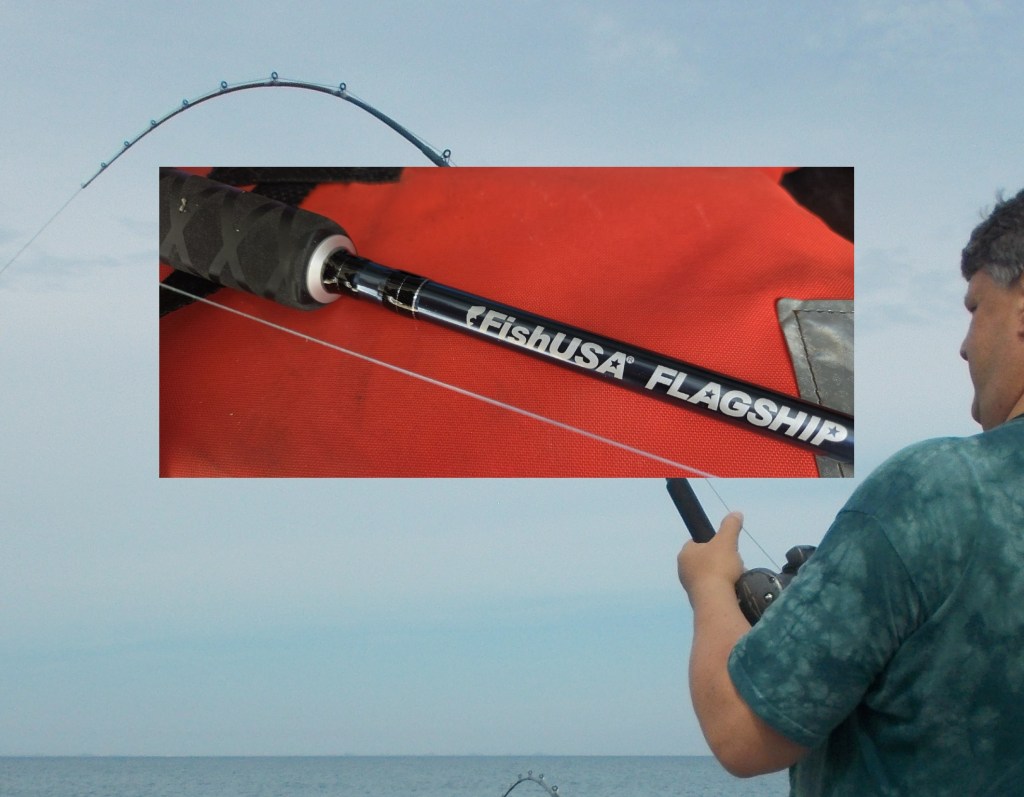
I was pleasantly surprised by the Flagship Trolling Rod I got from FishUSA in late summer in every aspect. It looks good and performs great. The 802M model I tested has a pleasing metallic steel-blue finish – not so flashy that it looks out of place among the other rods in my array; but even if it was some gaudy color, I’d still like it for how it feels in my hands and how it performs both when I’m trolling or when it’s being bent by a Great Lakes fish.

In hand, its graphite composite blank is noticeably lighter than many of the “well-seasoned” major brands I use daily and the triangular shaped foregrip gives it a firm feel, comfortable in my hands and I’m sure it will be easier to grip for novice customers to handle. The 802M is eight feet long, two-piece construction for easy storage and is rated for 10-to-20-pound line. It will fit well with the rods I use when trolling for cohos on Lake Michigan or walleyes on Lake Erie using planer boards. It would work well with a downrigger for these species, but if I planned to use it when targeting kings, steelhead or lakers, I’d select one of the medium-heavy Flagship versions offered by FishUSA with a bit more backbone.

If you are looking for a mid-priced rod with top-level looks, quality and performance, look no further than the Flagship trolling rods from FishUSA. See them all at http://www.fishusa.com.

THAW RECHARGEABLE HANDWARMERS

Reviewed by: CAPT. MIKE SCHOONVELD

I’ve nearly passed out two different times when my hands got so cold my brain shunted all my blood to my inner organs. I suppose this was to keep them working while I froze to death. One time was when I was duck hunting, once I was ice fishing and both times I was equipped with a hand-warmer that was supposed to keep that from happening.

One of these handwarmers produced heat by burning cigarette lighter fluid – it ran out of fuel. The other warmer had charcoal “stick” inside that was ignited, placed in a flameproof metal box the size of a cell phone. The fire went out.

I didn’t die, and I never relied on handwarmers again to keep my hands warm. Both of these events occurred decades ago, so when I heard of a company called THAW that was producing rechargeable electric hand warmers, I thought, “Perhaps it’s time I revisit handwarmers, now that hi-tech technology has replaced stone age methods to provide a bit of finger-warmth on cold days of fishing.”

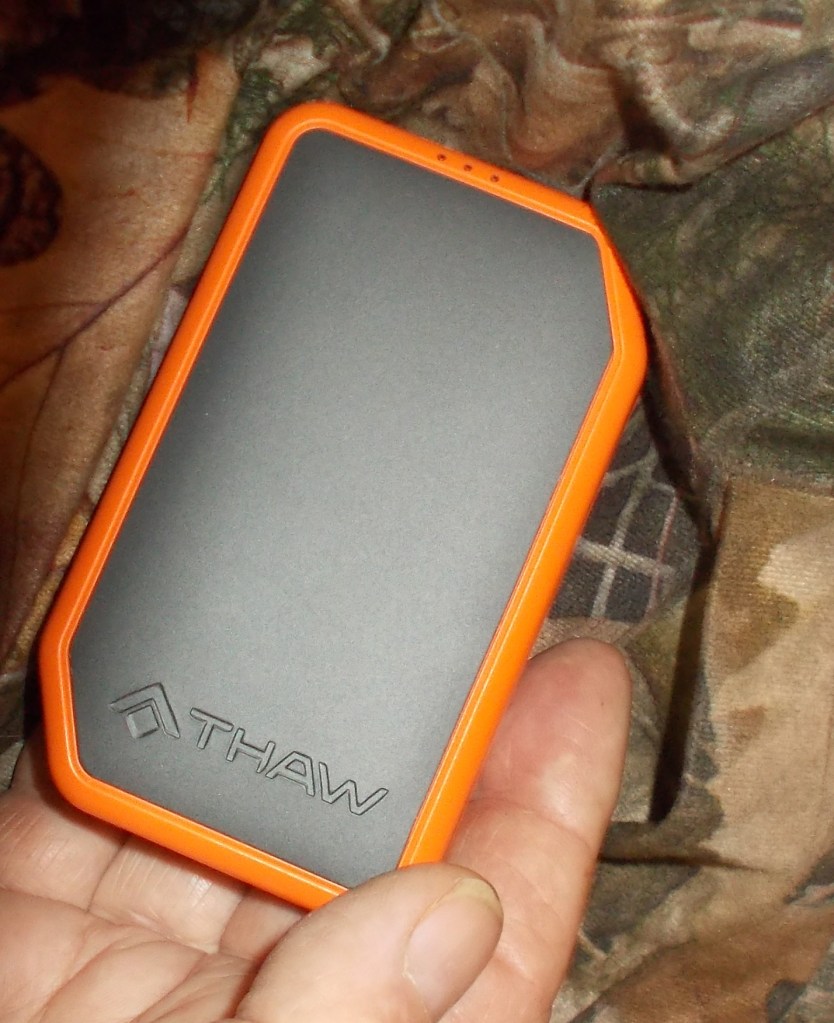
What can I say? Charge it up, stick it in your pocket and turn it on when you get to the boat on a frosty morning, have your ice-holes drilled or whenever it’s needed. (If the low heat setting works for you, turn it on and forget it most of the day – it will last 7 hours (they say) and produce 113 degrees (Fahrenheit) of heat. I seldom turn it to the medium or high setting (high is 140 degrees), but I do turn it on and off since there’s no fuel or fuel sticks to ignite. The cell phone sized handwarmer goes from cold to warm in less than a minute. That’s the 5K version. The 10K version produces the same heat but lasts nearly twice as long or provides surplus power to use its other features.

The handwarmer is a multi-tasker since it has a small, but bright, LED flashlight and a port to plug in a power cord to recharge a cell phone or other electronic device needing a boost. I’ve tried the light – it’s bright, similar to the one on my cell phone. I’ve never had to jump-start my phone, but I assume it would work.

Check out the handwarmers and other THAW products at http://www.thaw.acgbrands.com. Purchase them there, at retailers or at Amazon and other online sellers.

THE BAIT SHACK

Reviewed by: CAPT. MIKE SCHOONVELD

Whether it’s perch fishing at this time of the year, crappie fishing through the winter months, walleyes in the spring or when or where hungry fish are found, the best bait many times is fresh minnows. Why not? The first rule of the lake is “big fish eat little fish” so minnows are a top choice.

Sure, there’s something to be said about duping a fish with some sort of lure or artificial creation that is usually designed to look like a minnow. Some of them are supposed to smell like a minnow or swim like a minnow or wink it’s eye like a minnow – but real minnows do all this automatically.

Just stop by a bait shop on the way to the lake and pick up a couple dozen, better make that three or four dozen. It’s not that you are going to catch that many perch or crappies, it’s that minnow buckets are notoriously hard on live minnows. By the time you get the boat in the lake, it’s likely to find a floater or two in the container. By the time you are fishing for the last few fish needed to make your limit, you may be hoping to hook that last keeper before the minnows are gone. I’ve been there.

 So was Mathew Davis, owner of Whisker Seeker Tackle – a company with a large collection of tackle designed to meet the needs of catfish anglers. What? Catfish in the Great Lakes? Sure there are, but my guess is far more are caught incidentally than on purpose.

 Yes, catfish anglers do fish with minnows, as well as relying on a variety of other baits, including chicken livers, nightcrawlers. Many of the largest cats become predators as they grow and they eagerly chase down shad, panfish, skipjack and other species. You didn’t think big catfish got big by eating chicken livers or night crawlers, did you?

 These big baits for those fishing for big cats are even harder than shiners or fathead minnows to keep healthy in a minnow bucket. That’s why Davis went to work on his ultimate bait container, the Bait Shack.

Two things cause “bucket death” to baitfish of any species. Oxygen depletion and (at least in the summer months) and excessive heat cause as many minnow deaths as fish hooks and perch, some days.

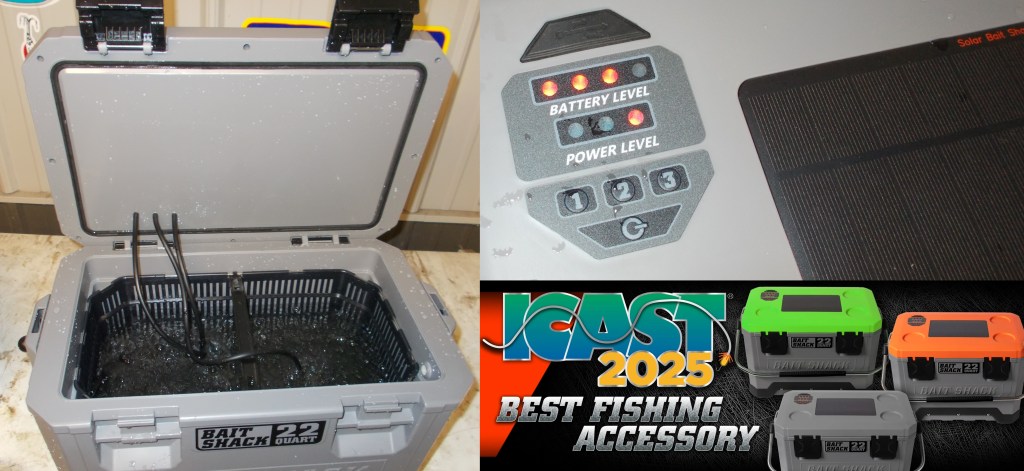
 Keeping the minnows cool is simple enough, put the minnows in a cooler and keep the lid shut. The better the cooler, the easier it is to beat the heat. So Davis started with the best – one of those roto-molded, heavy-duty brutes designed to keep products chilled for days, not hours. That’s what Davis started with when designing his Bait Shack, but to deliver a steady supply of life-giving oxygen, he incorporated heavy-duty aeration pumps built into the cooler’s lid and powered them with a long-lasting, rechargeable lithium battery. Don’t need that much power – use it to plug in or recharge your phone.

 The coolest thing is the Bait Shack is solar powered. A solar collector on the outside of the lid keeps the battery charged all day (and all night) – and then all day the next day. Don’t worry about changing batteries or plugging it in. If it’s parked where photons from the sun (or a lightbulb) will strike the solar charger, they charge the battery, keeping it in the game. Stick the unit in a closet or your trunk, the battery will stay charged for up to 10 days before the three bubbler tubes cease bubbling. Done with it? Drain it through a convenient drain plug near the bottom on the side.

  This is a brand-new product, unveiled at last summer’s ICAST (2025) where it won the “Best Fishing Accessory” award in the New Products Showcase. Currently, available at www.whiskerseeker.com, it will be showing up at retailers and online outlets across the country and on the internet very soon.

SHIMANO TECHNIUM TROLLING ROD

Reviewed by: CAPT. MIKE SCHOONVELD

Leave it to Shimano to come up with a new line of fishing rods designed specifically for the salmon/steelhead/sturgeon anglers. Why? Thousands of Great Lake anglers rely on (and swear by) their Talora trolling rods and wouldn’t trade them for anything.

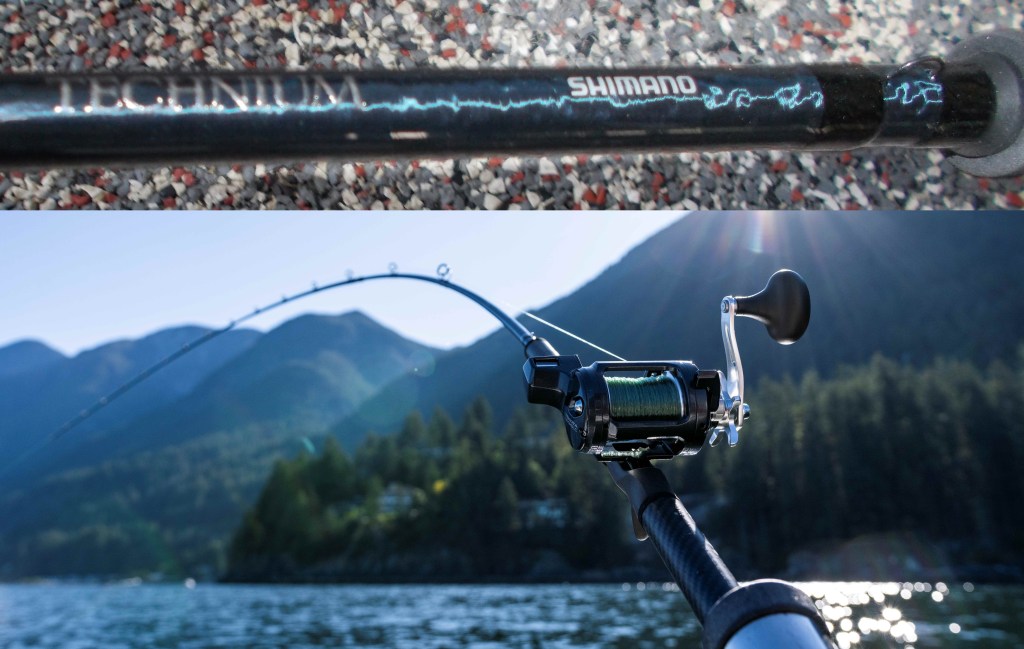
When I picked up the new Technium Trolling Rod at the recent ICAST show I checked twice to see if the rod was in the wrong slot. It felt more like one of the latest carbon fiber rods than one of the Talora rods I’m used to handling. Actually, according to the Shimano rep I grabbed to explain the difference, there is a good “dose” of carbon fiber in these new rods as well as a Talora “legacy.” I don’t like to dive too deep in engineering in my reviews so let’s just leave it at the various models of Technium Rods are made from a fusion of the TC4 fiberglass (featured in the Talora line) and carbon fiber to make the rods lighter and slimmer than any salmon trolling rod I’d ever held – even the 9-footer moderate action rod I put to use as a braided-line diver rod.

Even if you mix your rod choices, the Technium will be a standout. Instead of the basic black rod blank, they’ve managed to imbue each rod with a holographic sort of blue sparkle reminiscent of waves or perhaps lightning. Pretty darned cool looking! 

I used my 9-footer with a #1 (Medium) size Dipsey both with and without the ring. The bend in the rod at salmon trolling speeds was perfect. Most of the bend was concentrated in the top third of the rod when trolling, leaving plenty of backbone in the middle section to make the diver snap open at the strike of a fish and hold up to a tight drag when a big king or steelhead is latched on down below. That mid-rod strength also helped when the fish were pulled close to the stern, giving enough muscle to both steer the fish (as much as is possible) and keep the head of the fish up while it was pulled those last few feet in range of the landing net.

I wasn’t sure about the carbon fiber handle on the trolling model Techniums, but in use, I learned to love them. I didn’t have to “assist” many of my customers, helping them pull the rods out of the holders when a big fish was on the end of the line. The handle is hard and slick and will slip out of the rod holder with a minimum amount of effort. The reel seat tightens on the reel nicely and it has a second tightening “nut” on it that keeps the reel seat from loosening. Cool!  

Speaking of reels, I paired the rod with a Shimano 600 Tekota A, line-counter reel to make a sweet combo able to handle the biggest fish in the lake with the sensitivity to have fun when pulling up cohos and “prince” salmon, those feeder-kings still a year or more from their potential size. I use 30-pound test Power Pro on my braid diver reels and the rod’s sensitivity shows when something is “goofy” down below – like having a shaker on the line or if the dodger or flasher isn’t rotating properly. 

I don’t expect charter captains or avid recreational Great Lakes anglers to toss their Taloras overboard and switch to the Technium sticks, but when it comes time to get a new rod for one reason or another, take a look at the Technium Rods at https://fish.shimano.com/landing and buy them where ever Shimano rods and reels are sold. 

MAD SCIENTIST TACKLE


Reviewed by: CAPT. MIKE SCHOONVELD              

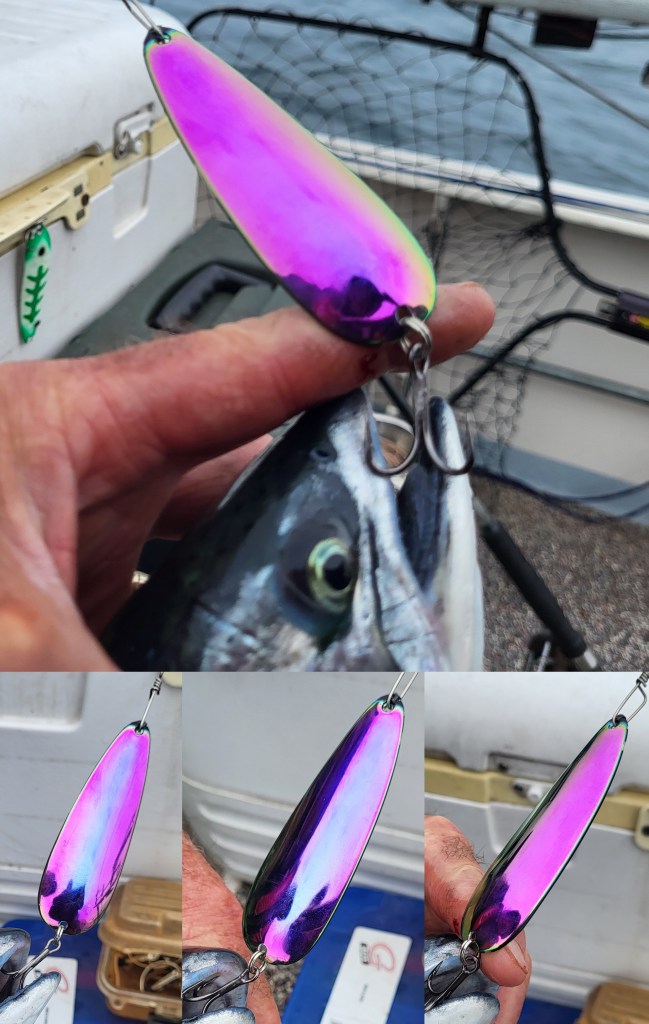
When the guys at RLVNT Sunglasses sent me a pair of sunglasses to try, they slipped in a couple of spoons they thought I’d like to use. This line of tackle is ever-expanding but what they’ve done (and are doing ) is use the light-bending properties of the films and coatings they use in their lenses and apply them to their lures.

                Depending on how much and at what angle the light strikes the finish on these lures, the color of the reflected light changes. You see it and the fish see it. So instead of seeing a traditional paint job which only varies whether the lure is in direct sunlight or shade, or a metallic finish that just reflects when sunbeams hit it, the lure changes color continuously.

                The one I used shimmered from dark purple to pink to bright blue and regularly caught the attention of passing cohos. I loaned it to a friend to take to Lake Nipigon and he crushed the lake trout using it. Other films produce other hues and excel in conditions from stained or off-colored water to crystal clear. (And don’t think their casting spoon is only for casting. It trolls perfectly with a loose wobble.)

                The Mad Scientist lives in Minnesota – often called Walleye-sota – and firmly in the winter ice-belt. They produce a bevy of lures (all with their proprietary finishes) suitable for panfish or pike (salmon or trout) wherever they swim. Made in America, sold online at www.madscientist.technology, in retail stores and other online outlets. 

ISMART PORTABLE TOILET

Reviewed by: CAPT. MIKE SCHOONVELD

“**it Happens,” but luckily, most of the time, for most people, with a bit of planning, “it” can happen – more or less on schedule. Most of the time, a quick stop at a restroom before heading out for a day on the lake does the trick or a more or less comfortable delay until the end of the trip makes the time actually on the water **it-free. Then there’s the other times when the fishing schedule didn’t coincide with your body’s schedule. Suddenly, it’s time.

If you are fishing on a sizeable boat that has “indoor plumbing,” problem solved. For most of us on smaller boats hopefully, there has been some advance planning about this. The answer is having some sort of portable potty on board. A stiff-sided bucket is about as simple as it gets – there are also portable toilets costing a couple hundred dollars. Both are somewhat appropriate for various situations.

For most Great Lakes anglers, there are several other options – and luckily, a solution towards the less expensive end of the available types is often suitable. One of these is a portable toilet sold by Lee Fisher Sports. Basically, it’s a toilet seat that fits on a five-gallon bucket. Buy the seat only and hope it fits nicely atop a bucket you already have; but beware, all buckets are not identical. Buy the seat and the five-gallon bucket both from Lee Fisher and you know the top will fit the bottom. If your boat doesn’t have a storage area that will fit a five-gallon bucket LFS has 3.5-gallon buckets (only 11.5 inches high) that the seat will fit and the shorter bucket may store more easily.

 I got the ISMART Portable Toilet “combo” to put on my boat – their deluxe model – which features the bucket, closable lid, TP holder and sturdy pair of handles. When **it happens on my boat, the deluxe model is what I want.

 You do as you wish, but my ISMART Portable Toilet is not a multi-tasker. I don’t use the bucket assembly for other purposes. I have a storage area in which it fits and I keep the TP, some heavy-duty can liners, a bottle of hand-cleaner and some paper towels stowed inside the bucket for when it’s needed.

This unit is listed as an “Amazon’s Choice” at Amazon.com but I encourage you to visit www.leefishersports.com just to check out the hundreds of other fishing and outdoor products they carry.

RAPALA GOLD MINERS

Reviewed by: CAPT. MIKE SCHOONVELD

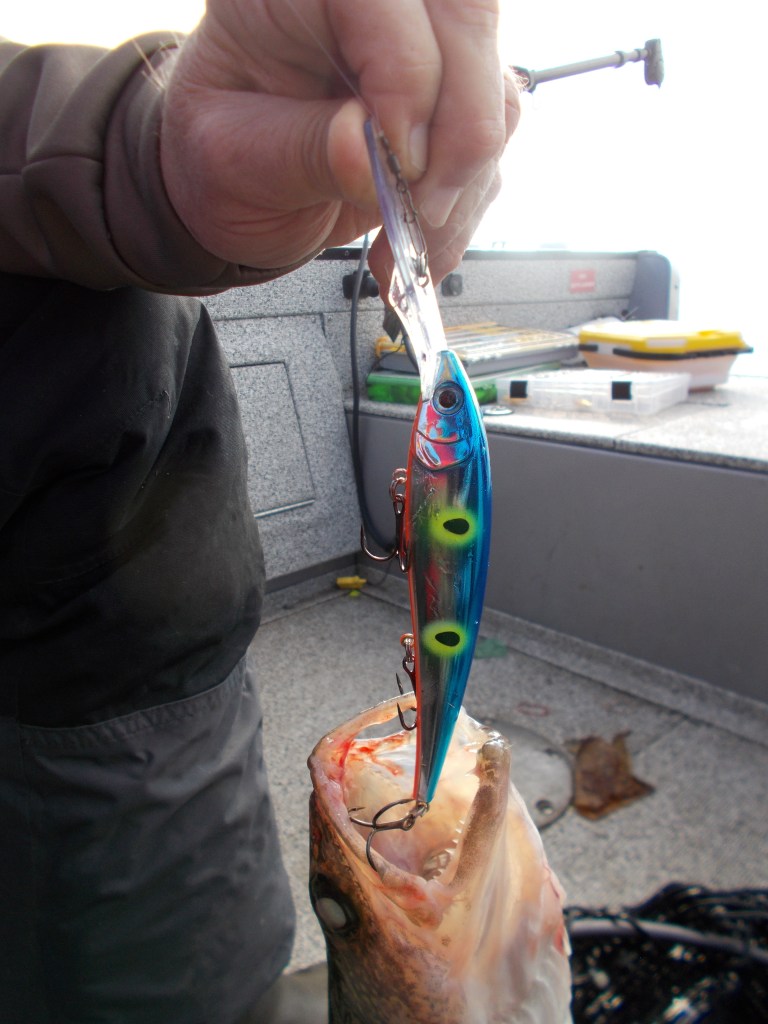
One of my most exciting finds at the 2024 ICAST show was at the Rapala booth when I spotted a new lure they call the Gold Miner. At first I thought it was another variation of the Rapala’s Deep Husky Jerk, Pradco’s deep diving Bandits and others of those types of lures, but then I noticed one thing that set them apart. The lip at the front of these lures are larger than most other deep divers and indeed they do dive deep. Like a miner digging deep to find gold nuggets or veins of ore, the Gold Miner easily dives to 30 feet to get down to walleye gold in Lake Erie and other deep lakes.

I was able to score some of the Gold Miners and put them to work during Lake Erie’s Fall Brawl in early November last year. The marks on our screen showed far more fish deeper than 30 feet than in the 20s.  The only way to get our Bandits and other deep divers down to them was to go with the 50 + 2 method and even then we were putting out 100 feet of line after clipping on the Snap Weight.

Gold Miners haven’t yet been added to the Precision Trolling Data app, so we were deploying them the old fashioned way – trial and error. The first thing in the morning the Gold Miners started scoring with only 100 feet of line behind the planers. By mid-morning we were setting them back 120 and our final fish at high noon came on a chrome/blue Gold Miner set back 140 feet.

Check out the array of available colors at www.rapala.com. They will soon be available everywhere Rapala lures are sold (if they can keep them in stock.)