MACKENZIE’S FISHERMAN HAND SCRUB

Reviewed by: CAPT. MIKE SCHOONVELD

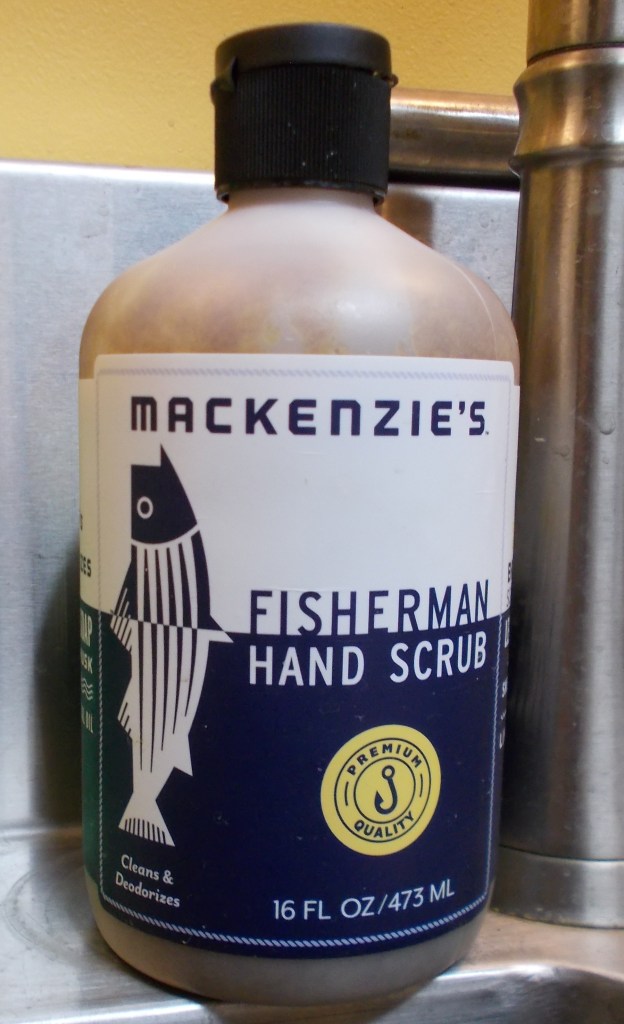
I will admit the first time I squirted a teaspoon or so of Fisherman Hand Scrub out of the handy squeeze bottle, I was less than impressed. I know what a liquid or gel type hand soap is supposed to look like. It should be clear, or perhaps tinted an electric blue or green; perhaps a creamy pearl color. This stuff looks like something that comes out the nether-end of a lake trout that has been feeding on gobies.

That was the end of my negative opinion. I had just finished cleaning enough Lake Superior lake trout planned to be the dinner entrée for an eight-man crew at Moss Island Lodge, Ontario. I don’t know what the lakers had been eating, but like all lake trout, these were slimy on the outside, slimy on the inside and fresh enough to still be pumping blood on the fish cleaning table – all of which coated my hands.

I sprayed off my hands while cleaning up the fish cleaning area, delivered the fish to the chef and grabbed the bottle of Fisherman’s Hand Scrub I’d brought along for the trip and had set by the kitchen sink. That’s when I found out the FHS comes out of the bottle as a gritty looking, light-brown goop.

I gave it the sniff test first, thinking perhaps it had spoiled on the long, hot drive to Canada. It actually smelled just fine with a firm hint of lemon. I continued and immediately noticed the gritty feel as I scrubbed my hand, reminiscent of the pumice infused hand cleaner I use after I’ve been working on greasy lower units or other machinery. The grit (actually, ground up walnut hulls) is more coarse than pumice and is just one of the natural ingredients blended into the recipe.

It’s not a high-suds producing product, but it quickly cleaned my hands and left them scent free immediately – and I gave them a second good “sniff-test” fifteen minutes or so later once the lemony smell subsided. My hand remained fish-smell-free. It passed my test.

A couple day’s later while I was packing for the trip home, I grabbed the bottle of FHS to take home with me. That evening, the camp-cook asked the group if anyone had seen the Fisherman’s Hand Scrub. We were having a fish boil that evening and the cook was prepping the fresh trout for its turn in the boiling caldron.

 “You like this stuff, eh?” I said in my best Canadian accent as I dug the bottle out of my duffle.

 “Oh, yeah,” he said. “I’ve been using it not only for fish, but it cleans off the onion, the bacon and all the other smells I get on my hands here in the kitchen.”

 I left him the rest of the bottle instead of bringing it home with me. Once I was home I ordered another bottle, using my Amazon Prime account so I got free-shipping. I could have gotten it for the same price but with shipping costs at www.fishermanhandscrub.com. Check out the other Mackensie’s “made in America” products as well.

VEXAN LIL SUPER CISCOES

Reviewed by: CAPT. MIKE SCHOONVELD

It must suck to be a shad. Every predator fish you share the lake or river with wants to eat you. That’s why I enjoy being at the top of the food chain when it comes to fishing. I know if I want to catch a fish to eat – and I’m not particularly picky about the fish I eat – I know where ever I’m at and whatever fish I want to catch, a good choice of lure to show to the fish is a shad-imitating lure. That’s what caught my eye when I found the Vexan booth at the ICAST show last summer. Among the rods, reels and other lures on display was a concise collection of shad-shaped diving crankbaits called Rattin’ LIL Super Cisco.

I tried fishing for cisco with them last fall at Grand Traverse Bay with little success, but that’s the only time and place they didn’t score. They did catch a steelhead and a lake trout in the bay. I caught plenty of cohos on them in southern Lake Michigan and using them with the 50 + 2 Method on the Precision Trolling App got them down to Lake Erie’s walleye last spring. The Chrome Perch color scored well early in the day and we did just as well with the Diesel and Kitty Kat patterns when the bright sun started penetrating into the depths.

Check them out at www.vexan.com. They are available at WalMart, Amazon.com and other outlets. 

TRIKA RODS

Reviewed by: CAPT. MIKE SCHOONVELD

There are three reasons to buy a high-dollar fishing rod. In no particular order, 1) They work better. 2) They last longer. 3) They are prestigious.

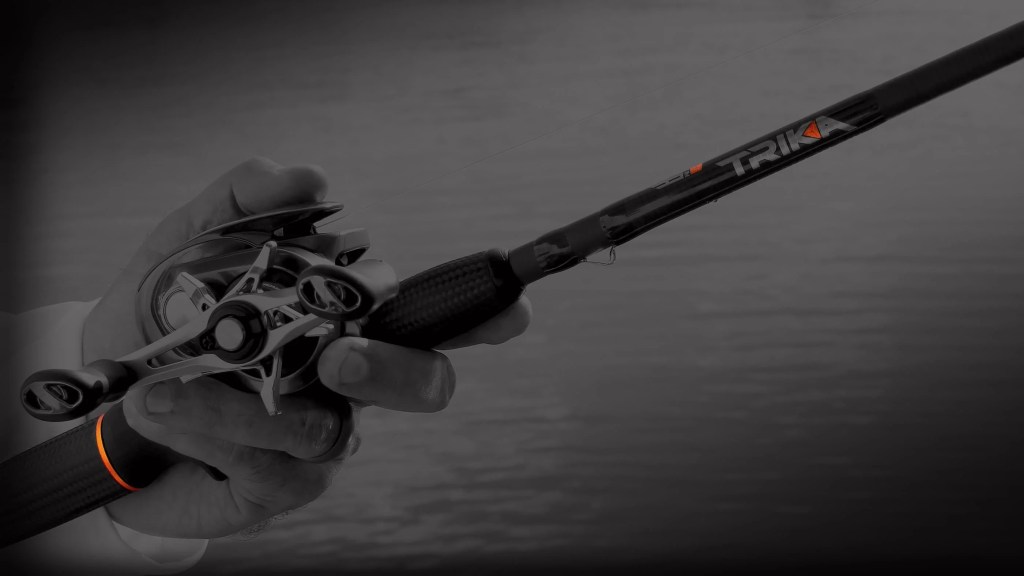
To most anglers, #3 is least important. There are solid arguments for both #1 and #2. Trika rods are built to satisfy #1 and #2 – time will tell if they become a prestigious brand.

Trika is a new product from an established company – established, that is, if you are a bow or crossbow hunter. The same company makes Ravin Crossbows, often listed at the top of “best of the best” lists. Where’s the similarity? Many of the components of their hi-tech crossbows are made from the same materials – composites, carbon-fibers – and exacting processes it takes to produce the best quality fishing rods right here in the USA.

I checked this out before I said yes to accepting a pair of Trika (one casting rod, one spinning rod) to put to the test last summer and write about in this Tackle and Toys column. During the summer, a friend of mine and I put these to the test in different places, conditions and styles of fishing their builders never imagined.

One of the unique features of Trika rods is though they have seven models of casting rods and five spinning rods, each is priced at $299. The sales hype on their website (www.trika.com) states independent tests show Trikas weight slightly less than their high-end competitors, they are twice as sensitive and they cast 23% farther.  

The tests my friend and I put them to were less specific. Between us, we fished Lake Michigan, Lake Superior, Lake Erie and some inland lakes in Ontario for salmon, lake trout, walleyes, bass and pike. Some of the fishing was “conventional” where we were casting lures or jigging and getting a hands-on appreciation of the weight, feel, sensitivity and fish-fighting capabilities of the rods. Some of the test was unconventional, to say the least. I used the 7’7” casting rod as one of my downrigger sticks most of the spring for salmon and trout in Lake Michigan and on a trip to Lake Erie.

This was my best chance to see rod in action on bigger fish, and I did. It caught lakers to 18 pounds and browns to eleven pounds in that position, as well as bunches of cohos. Most telling, however, was at Lake Erie, I didn’t mention to my fishing companions there was anything “special” about the rod I positioned on the port-side out-down. My other ‘riggers had similarly sized Ugly Stick ‘rigger rods. After reeling in a solid five-pound walleye the angler commented he’d thought the fish was twice as big. “It felt like it was huge,” he said. There’s not much sensitivity in an Ugly Stick.

I too, noticed the sensitivity in both the casting and the spinning rod when I used them more conventionally. I’m sure the sensitive feel was magnified because compared to the rods I normally fish with, the Trikas were much lighter. Though whisper-light, however, neither rod felt undersized, when a good sized fish was on the line.

For scenario #1) It passed the test. Time will tell how if measures for #2, though it does carry a one-year satisfaction guarantee and lifetime warranty. Number three? That doesn’t matter to me. 

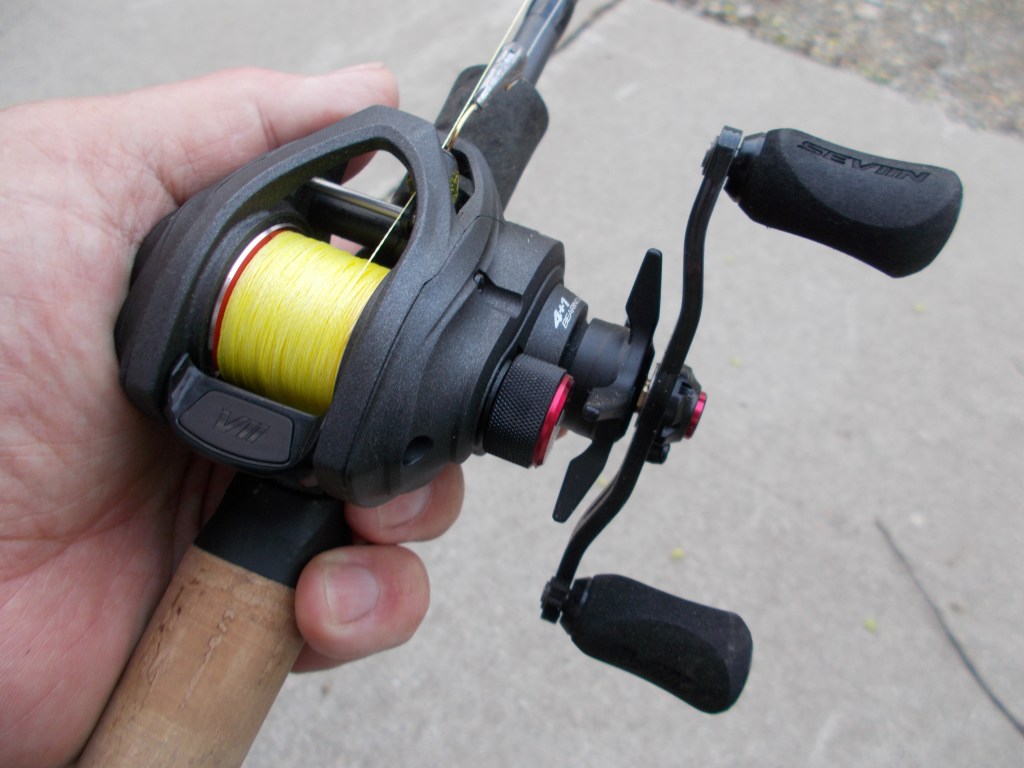
ST. CROIX SEVIIN GF SERIES CASTING REEL

Reviewed by: CAPT. MIKE SCHOONVELD

For many, Ford’s F150 is the pick-up to which other such trucks are measured. To many, walleye anglers, Lund boats are the watercraft to which other such boats are measured. To many anglers, from bluegill lovers to wicked tuna catchers, St. Croix rods are the fishing “sticks” that all other brands of fishing rods need to measure up to for quality.

So when St.Croix decided to add a line of fishing reels to match to their rods (or to be used with other rods), I had little doubt they’d measure up with the best reels available. I had little doubt, but seeing (and using) is the way to know for sure. The model I selected to pair with a St. Croix Bass X casting rod I already own is the GF Series with the 7.3:1 gear ratio. It’s also available in
6.6:1 or hi-speed 8:1:1 in left or right hand versions.

I used this combo for an early autumn trip to Minnesota inland lake where it handled baits sized for perch to pike, both casting and jigging. Later in the fall I jigged and trolled for deep water ciscos and lake trout in Grand Traverse Bay. It gave me flawless performance on every cast, every drop and on every fish reeled in.

In talking with Josh Lantz, the media rep for St.Croix, he told me, “SEVIIN Reels aspires to deliver anglers with the most reliable and dependable reels available.” He said, “St. Croix didn’t jump into the reel business, our engineering teams examined and tinkered with every component to ensure the quality would match the reputation St. Croix has established in the fishing industry.

To this end, the SEVIIN team designed and built its very own testing laboratory inside the St. Croix factory in Park Falls, Wisconsin. Here, purpose-engineered, custom testing equipment continuously performs 12 distinct tests on every production run of its GF Series baitcasting reels. Specific individual tests include 1) temperature, 2) humidity/salt spray, 3) chemical resistance, 4) ultraviolet exposure, 5) dunk, 6) trip lifecycle, 7) gear endurance, 8) drop, 9) line guide retention, 10) pinion engagement, 11) gear strength and 12) drag performance.

Number six is most impressive to me. The trip lifecycle test consists of putting GF Series low-profile baitcasting reels through 200,000 cycles on a custom-engineered and precision-constructed instrument within the testing laboratory. A cycle consists of depressing and then releasing the thumb bar, then re-engaging the spool with a partial turn of the handle. I don’t know how many casts I make on an average fishing trip, but I’m sure it will take me several years to get to the 200K cycles number and when it does, I expect it to continue on and on. Seviin Reels are now widely available at a modest price in tackle stores, at online outlets including Amazon.com or at http://www.seviinreels.com..


CUDA LAMPREY CUTTERS


Reviewed by: CAPT. MIKE SCHOONVELD

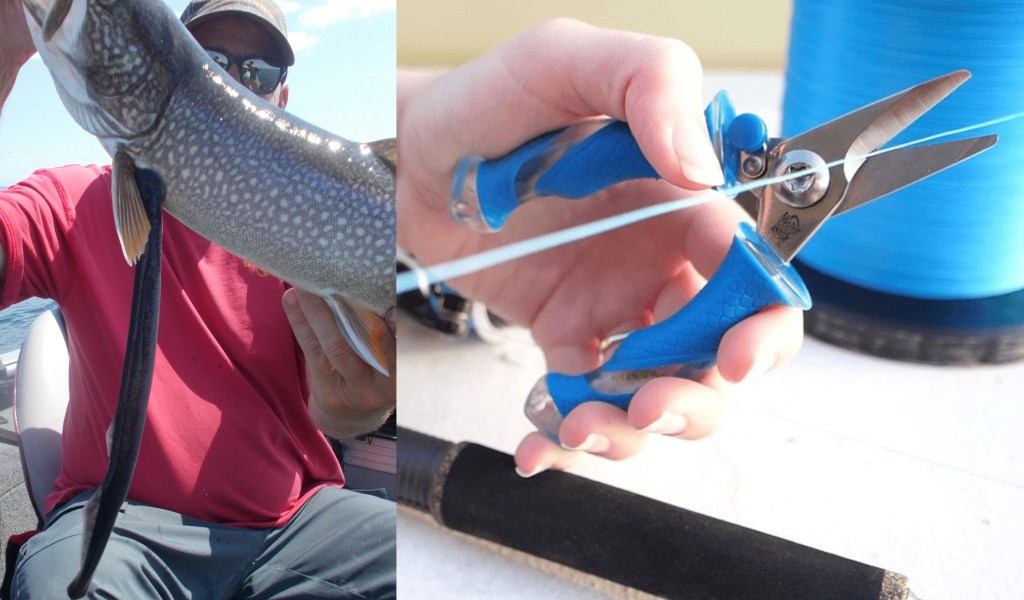
I only used this name because the first day I had the Cuda 5.25” Titanium Bonded Mini-Snips on the boat, the first thing they were used for was to decapitate a sea lamprey that came aboard on one of the fish we caught. Also, I called them lamprey cutters because the long name given this tool by Cuda seemed a bit cumbersome.

 When I first saw the cutters, using them to cut monofilament or fluorocarbon line didn’t pop into my head, either. What I thought of was that they’d make a perfect tool to snip the gills in the fish I planned to keep just after I caught them so the fish would bleed out as it died. Fish treated that way taste better in the long run, partly because they don’t have any blood coagulating in the meat and partly because the fish don’t have to be rinsed as thoroughly after being filleted. Bleeding the fish also makes clean-up at the fish cleaning station much easier.

 A pair of sturdy scissors is often the tool of choice for me and other anglers to cut through the gills but it takes a pretty hard squeeze to make the snip with most scissors. Notice how on the “lamprey cutters” the handles are large-hand-sized and the blades on cutters are relatively short. That delivers more power with less grip-strength needed. In use, (whether on the gills of a walleye, salmon or when beheading a lamprey) and easy squeeze does the job.

 They also do a perfect job of cutting mono and fluorocarbon line (and do a pretty good job cutting braid, as well.)  

 All the Cuda-brand tools I’ve ever used were well built and so are these. Cuda says the stainless steel parts of the tool are titanium bonded with zirconium blades. That means they are tough and sharp and will stay that way through many lamprey beheadings, gill clippings and years of cutting fishing line.  

 Cuda’s 5.25 Mini-Snips are widely available in retailers’ fishing tools sections, at online sellers or direct from Cuda at www.cudabrand.com.

SCOTTY 452 GEAR CADDY

Reviewed by: CAPT. MIKE SCHOONVELD

If you ever watch a professional at work you’ll see that he or she usually has all the usual tools organized and close at hand. That goes for heart surgeons to electricians. The doctor probably has the scalpels, clamps and other tools arranged on a tray next to the operating table, the electrician often has a tool belt holding the screwdrivers, wire pliers and the needed tools for the job at hand.

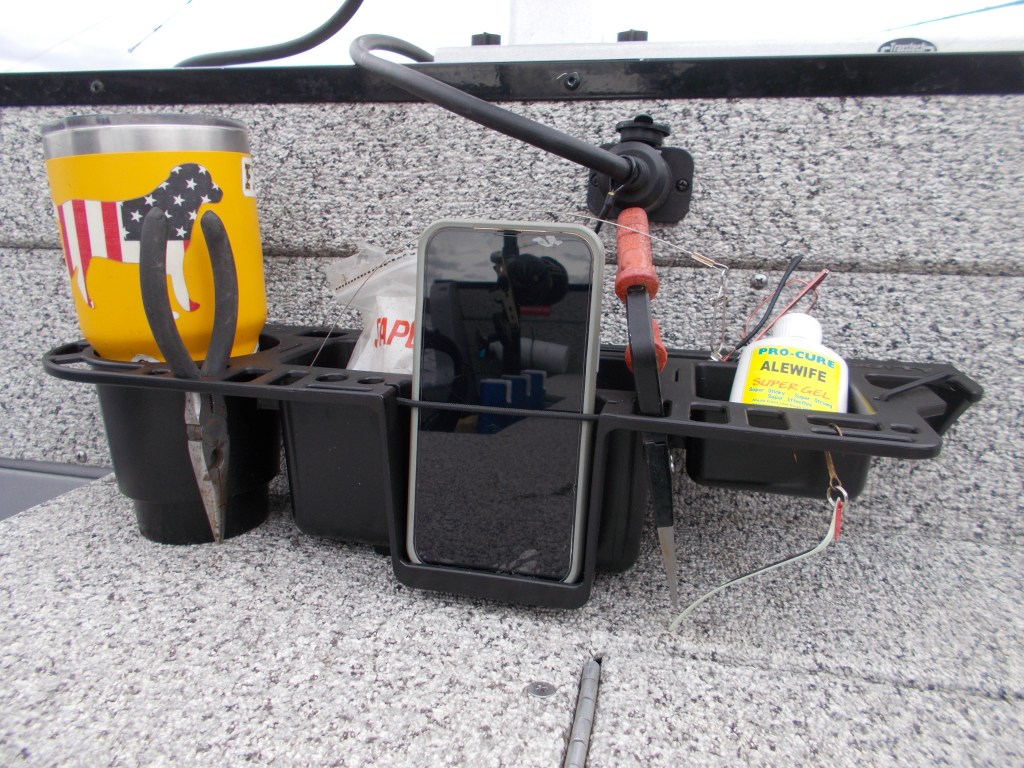
It’s equally important for anglers to have the tools they will or might need close at hand and considering the excitement and uncertainty of fishing on the Great Lakes, it’s also important to not have pliers, lures, line snippers and other cluttering the working area. “Scotty” as in Scotty Downriggers understands this and has added a variety of products to their line of ‘riggers and rod holders to help with the clutter. Newest of these is the 452 Gear Caddy.

It’s an organizer that attaches solidly into tracks or Scotty rod holder mounts, or it can be fastened in a convenient location with mounting screws. It can be a permanent fixture or can be repositioned depending on the style of fishing happening.

It has three recessed cavities, one is obviously a cup or beverage container holder, the other two are rectangular to hold any number of necessities, from bug spray to scent products. Add to this is multiple slots to hold knives, pliers, screwdrivers and other tools, or use the slots as lure hangers to keep the lures probably going to be needed or the ones just pulled at bay to allow them to dry or at least stay in one place before they are stowed away in the tackle box. A part of the caddy is magnetized, a great place to temporarily set hooks or swivels and keep them from disappearing onto the floor or elsewhere until they are needed.  

If you want to fish like a pro, be organized like a pro. Pick up a 452 Gear Caddy at retailers handling Scotty Downrigger products, at Amazon.com or at a variety or other online outlets.  Check out the Gear Caddy and other Scotty products at http://www.scotty.com.

STUBBY DODGERS

Reviewed by: CAPT. MIKE SCHOONVELD

I don’t know how long ago metal trolling dodgers were invented, but it was long before salmon were introduced to the Great Lakes. With minor variations these relatively flat slabs of thin brass or steel all looked similar and were built with nearly identical proportions. A six-inch dodger was about two inches wide; an eight-inch long dodger was a bit less than three-inches wide.

That’s why I noticed several of the bright orange dodgers dangling on the rods being readied for action on the boat being preparing to launch just ahead of me. I don’t know if the word, “stubby” is what I thought, but I did notice the dodgers were out of proportion compared to every other dodger I’d ever seen. They were proportionately wider than any dodger I’d ever seen – roughly only twice as long as they were wide.

A few hours later I returned to the marina to find the angler with the “stubby” dodgers just finishing his chores at the fish cleaning station and the pile of fillets being packaged showed he’d had a successful trip. When I got home that day, the mailman had delivered my latest issue of Great Lakes Angler magazine and it was in this issue I noticed the advertisement posted by Gold Star for Stubby Dodgers.

 Due to the time-zone difference between the Great Lakes and Washington state, I was able to call Kelly Morrison, owner of Silver Hoard Fishing Supplies (who makes Gold Star dodgers), to ask about them. Long story short, Morrison said their Stubbies had earned a solid following by West Coast salmon trollers and they were betting their advertising dollars they’d be a hit in the Great Lakes.

 By the end of the week, I had some Stubby Dodgers on my boat and about three minutes after I’d slowed to trolling speed I had a coho thrashing on a trolling fly trailing 18-inches behind one of the Stubbies. About three minutes after coolering that coho, there was another coho on the same dodger and fly pulled under by a Dipsy Diver. If that wasn’t convincing enough, though it took about 10 minutes, the same set-up caught the third fish of the day – and that set-up continued being the “stud-rod” for the rest of the morning.

There’s no better lure for early season cohos in Southern Lake Michigan than a six-inch flame-red metal dodger trailing a half-sized tinsel fly. Most of these cohos are caught within a few feet of the surface, but the dodger fly set-up will continue to work as the surface warms and the fish seek deeper water. Often, once the fish start foraging 30 or more feet deep, many anglers move to eight-inch dodgers to provide more “flash” attractant.

This was the condition when I started fishing Stubby Dodgers. I think the Stubbies boosted the flash to attract the fish but still imparted the same snappy action to the fly as the six-inch regular dodgers. I’m sold! I haven’t had the chance to use them in the early spring when the fish are shallow, but I think these might be a solid choice on those gray-spring days when a bit of extra flash could be helpful.

If you only want to try a couple of them, stick to the 077 Flame color, but they are available in over a dozen traditional colors including one which is quite novel. For me, my second-favorite “coho” dodger color is chartreuse with fire dots. The Stubby does come in that pattern, but there’s also one that’s painted Flame on one side, chartreuse/fire-dot on the other.

Find Stubby Dodgers at some retailers, at on-line sellers or order them direct at http://www.silverhorde.com.  

KASTKING KALIBRATE

Reviewed by: CAPT. MIKE SCHOONVELD

Most anglers know they need to change their line on a regular basis and most fishermen know quality fishing line is expensive. The two things that can help cut those costs is to purchase line in bulk spools instead of reel-filler amounts and don’t remove all the line on each reel every time it’s time to swap it out. 

 Few anglers use all the line spooled on a reel. If that happens you probably need a bigger reel. That line at the bottom of the spool may not be as good as new, but since it is never subjected to the subtle degradation by UV light and it’s never brutalized by being stretched, cast and other normal wear and tear of just being used, why change it?

 If you buy a bulk spool, how do you know when you have removed enough line? If you buy a 300 yard spool and you want to split it between two or three reels, how do you split it equally? The only way to do it with precision is to measure the line. There are tools to do this.

 One of the tools is not a line-counter reel. LC reels only measure the number of revolutions the reel’s spool makes and the changing numbers on counter are approximations – at best! A revolution of a half empty spool will only hold a small amount of line compared to a nearly full spool.

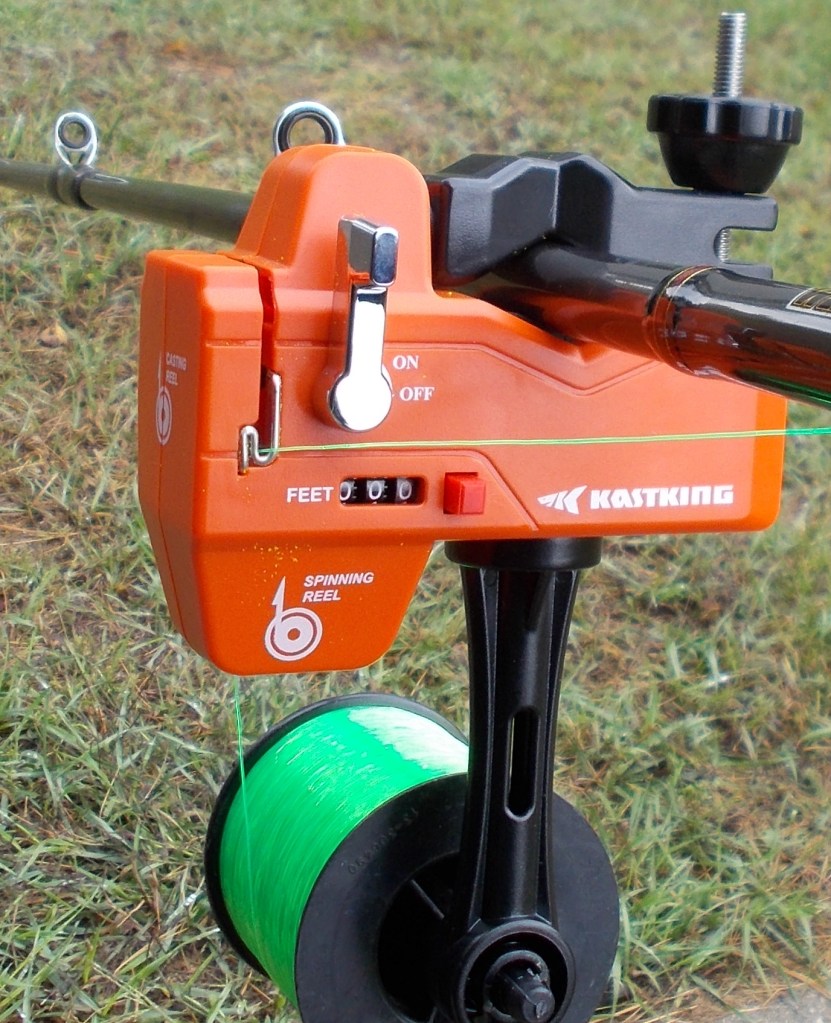
 One of the tools that will accurately measure the line spooling on or peeling off a reel is KastKing’s Kalibrate Line Spooler. (It’s designed to measure line being spooled on, but can easily be reversed to measure outgoing line.)  There are a lot of moving parts on this tool allowing it to be used for spooling with both spinning reels as well as revolving spool reels and on rods from heavy trolling to light carbon-fiber models – but it’s not complicated.

There are lots of line spooling tools available. Before I got the Kalibrate, I normally used a screwdriver punched through the arbor of a spool of line and clamped between my knees. There are a few line-counter tools that clamp onto a rod as well but the ones I’ve tried ranged from horrible to barely okay at best, for both ease of use and accuracy. The Kalibrate is the only model I’ve found that does both things and does both of them well.

The KastKing Kalibrate Tool is available at www.amazon.com or visit http://www.KastKing.com to see this tool and other KastKing products.  

PENN MARINER III (DIVER) ROD

Reviewed by: CAPT. MIKE SCHOONVELD

When I’m at the ICAST show or in tackle emporiums when I’m on away-trips to “salty” destinations, I’m often looking at a variety of saltwater gear. That’s not because I fish saltwater often enough to warrant owning a full set of ocean-fishing gear. It’s because there is a lot of stuff designed to be used in the salt that plays quite nicely in the Great Lakes. That’s what I was doing at the salty-section of the Penn booth at last year’s ICAST.

What I found was a line of rods called the “Mariner III Boat Conventional.” The display started with short little brutes-pretty much what I consider to be saltwater “boat” rods – but at the end of the display was a 9-footer, rated medium (by saltwater standards) that caught my eye. Most of the saltwater boat captains I’ve been with would have viewed a 9-footer as a pole vault stick. As a Great Lakes captain, I viewed it as a diver rod. I hefted it, wobbled it, gauged the bend and pronounced it diver-worthy.

Let’s look at a few of the details in this rod. First off, the rod is made of graphite and fiberglass. An all fiberglass rod would be heavy with a slow action, but it would be as tough as a pole vault stick. But by engineering it with both glass and graphite, the rod’s weight is reduced, it’s action is faster and it’s still plenty tough. That’s important for a diver rod since when the diver is being trolled, there’s a constant heavy strain on the rod and when a fish strikes the rod has to go from heavy strain to extreme.           

 Penn has fitted this rod with their own one-piece stainless steel Dura-Guides. Dura-Guides eliminate the need to fuse a ceramic or other type of insert to protect the frame of each guide. The extra-hard stainless is plenty durable for years of use with mono, fluoro or braided lines.

 The EVA Torque grips (another Penn exclusive) are substantial, plenty long to fit comfortably in any rod holder. The feature I’ve come to embrace is how the foregrip is triangular in cross section. That gives it a comfortable feel in hand and helps eliminate the rod from twisting when being gripped and the reel’s handle is being cranked.

 Penn Mariner IIIs are mostly available at retailers who handle saltwater tackle but you’ll find them at Amazon.com or at www.purefishing.com as well as at other online outlets at surprisingly affordable prices.

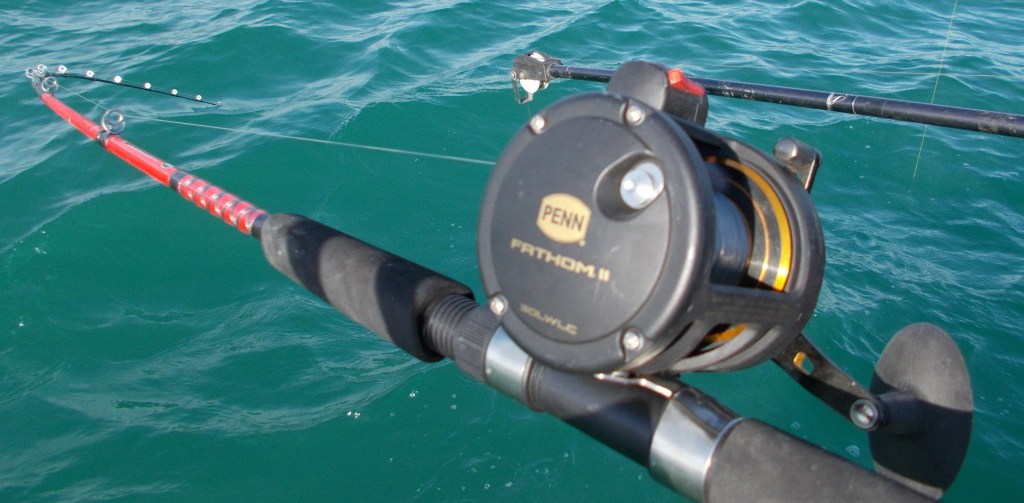
PENN FATHOM II 30LW LINECOUNTER REEL

Reviewed by: CAPT. MIKE SCHOONVELD

For Great Lakes salmon, steelhead and trout, using affordable rods is certainly possible, but skimping on the reel you clamp onto that rod can be a heart braker – and that’s even more important for diver reels than those used for ‘riggers or planers. Most “affordable” (spelled C-H-E-A-P) reels can’t hold up to the constant strain of pulling a full-size or magnum diver into the depths and then be able to smoothly become a fish fighting machine when a big king or an energized steelhead is at the end of the string.

 I could cut this review short by saying the Fathom II is up to both tasks. There’s more to it than that. I’ve never had a reel with a drag so sensitive. On too many reels, you can dial a drag to go from near zero to full strength in less than a half rotation of the star-wheel on the handle. That means if you need to loosen or tighten it just a bit, the star needs to only rotate a few degrees and especially, when in the middle of fighting a “big one” it’s easy to over-correct. Not so on the Fathom II. Backing off the reel from the setting I was using to near zero required 1 ½ revolutions of the star wheel.

 I like to adjust my diver reels so the drag is just holding firm as we are trolling, then give it a tiny bit more so when the fish strikes, the diver will trip and the fish can make it’s initial run on a smooth, medium drag setting. Tighten it up halfway through the battle and a bit more as most of the line is regained and the fish is pulled close to the boat.

 The handle is oversized, compared to most other reels and exceedingly comfortable to grip. With a full spool, one turn of the handle will crank on more than 30 inches of line. The clicker mechanism is solid, but not overly loud. The reel’s frame and housing is metal, not composite, so it looks, feels and is rock solid.

 I spooled-up with mono for early season fishing, then switched to braid as the fish went deeper. In early summer, when the fish headed to the depths, I respooled with 19-strand wire and switched to magnum divers to put them down to or below the thermocline. With a solid season of using this reel on every trip and catching countless fish, it’s still delivering “out of the box” performance and I have no doubt I’ll be able to say that again next year (and the next, and the next….). Check out the Fathom II at www.pennfishing.com. They are available at many retail outlets and through many online outlets including Amazon.