COLORED TACKLE TRAYS

Reviewed by: CAPT. MIKE SCHOONVELD

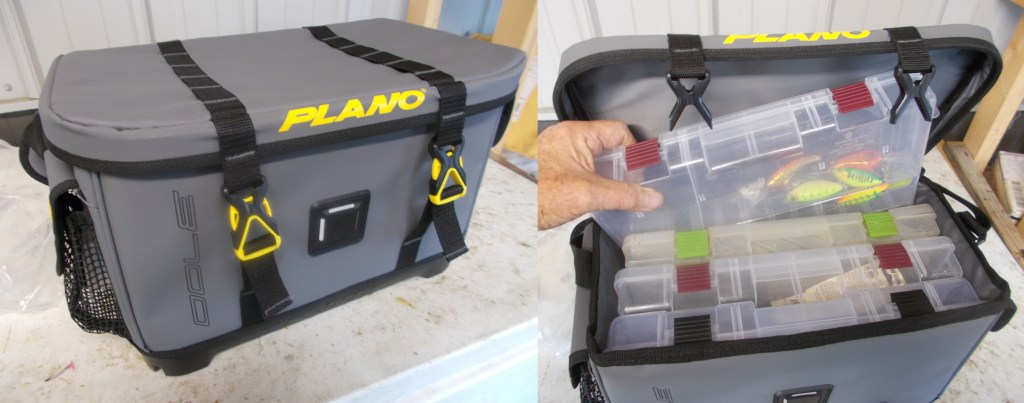
I’ve often written articles and reviews extolling the “wonderfulness” of the 3700 StowAway boxes from Plano. One clue that extols their perfection is the number of other manufacturers that make copycat products to try to grab a tiny share of the market.

When I visited the Evolution Outdoors booth at the ICAST show last summer, the rep I talked to didn’t hide the fact their Tackle Trays are based on the popular Plano StowAways. Their trays are the same size, just as solidly built, but with one easily notable difference. They come in colors! 

That’s the reason I stopped by their booth in the first place. Evolution Outdoors had a variety of other products on display. I’m sure most of them are terrific, but it was the tackle trays that instantly caught my eye and instantly flashed through my mind about how handy the various colors would be on my boat.

 I stow most of my crankbaits and other tackle in 3700-sized boxes on my boat. The lures and gear I plan to use on a specific day are put in an accessible storage area, but there are always others – the one’s I might use – tucked away in some other compartment where I can pull them out if needed. Unless I have them all labeled (which I usually don’t) I often have to pull out two or three boxes to find the one I want. When one of my fishing companions is looking for one of them, it’s worse.

 With boxes in several colors, if I know the glow in the dark stickbaits are in the green box or the Flicker Shads are in the purple one, it gets real easy to find the right box. “Check in the hatch under your seat and pull out the pink box,” I can say.  I get the right box. (I do admit to posting a cheat-sheet note in a couple places on the boat until I learned the color-code.)

Available in seven different colors, they are also available in 3600 and 3500 sized boxes. Check them out at www.evolutionoutdoor.com. They are available online and carried by Dunham’s stores throughout the Great Lakes area. 

YAKIMA SPINFISH

Reviewed by CAPT. MIKE SCHOONVELD

It’s a long story of what led me to be at Lake Erie last year, stuffing a three-inch Yakima SpinFish with sardines packed in Louisiana Hot Sauce. Previously I’d used oil-packed sardines to add scent and taste to these lures on Lake Michigan and I’d proven these “meat-packed” lures were solid salmon and laker lures. I actually didn’t even mean to include the SpinFish in the assortment of crankbaits I was taking to Ohio with me.

But I did, and my brother pulled it out of the tackle box thinking it was a Yakima Mag Lips. We had a Mag Lips working well on the port side, why not put another on the starboard side planer? 

When I saw the package Brother Al had pulled out I explained that though the banana-shaped lure he’d grabbed looked similar to a Mag Lips, they were miles apart in action. The Mag Lips is a diving crankbait – the SpinFish doesn’t dive. They just spin round and round, supposedly like a crazed or wounded baitfish swims. On Lake Michigan I always rigged them behind a flasher and used a downrigger, diver or weighted long line to put them at what I hoped was a productive depth. Additionally, I explained, they are designed to be stuffed with bait – sardines, tuna, herring or something else to leave a scent trail through the water.

Al pointed at the port side diver and said, “We haven’t caught anything on that Dipsey so far today. There are some sardines in the snacks cooler, so let’s try it.” Alan is stubborn so I knew there was no arguing with him. I showed him how to pull the SpinFish apart to add the sardines and tied the fluorocarbon leader which comes with each SpinFish to the Dipsey Diver.

Rigged and ready, Alan reset the diver rod with the “Red hot spinny.”  That’s not what we called he SpinFish at first, but when it elicited bites on a steady basis, one walleye after another, that’s what we renamed it – both because of the color and the hot-spiced sardines. Was it the lure? The action? The hot sauce? I doubt the Tobasco added as much attraction as the sardine juice washing out of the lure, but what ever it was, the walleye loved it.

Will this be the next “hot lure” craze to hit Lake Erie and other walleye hot spots?  I doubt it. But there will be several SpinFish in my lure assortment the next time I head over to Lake Erie.  SpinFish come in several sizes, a multitude of colors and are widely available at tackle shops and on-line sources. See them all at www.yakimabait.com.

RAPALA R12 HD CORDLESS FILLET KNIFE

Reviewed by: CAPT. MIKE SCHOONVELD

I used to have two thoughts when I’d show up at a busy fish cleaning facility and see people standing on a wet concrete floor holding an electric knife plugged into a 120V power outlet. Thought number one – “That looks dangerous!”  Number two – There’s a guy who doesn’t know how to sharpen a fillet knife.

            I imagine Paul Bunyan had two thoughts the first time he saw some lumberjack sawing down a tree with a chainsaw. “That looks dangerous.” And the next thought, “There’s a guy who doesn’t know how to sharpen an axe.”

            I now admit to being a frequent user of electric fillet knives. When Rapala came out with a battery powered, cordless fillet knife, my fish cleaning method changed and I realized why those “plugged-in” knife wielders risked electrocution every time they caught a mess of fish. It dawned on me there is a reason why bakers use electric mixers to kneed dough, carpenters use power tools instead of hand tools and that even the sharpest axe won’t fell a tree as easily as a chainsaw.

            I loved the cordless Rapala knife, but as a charter captain, I clean a lot of fish and I soon learned the original Rapala cordless knife was not heavy duty. I went through motors, switches and batteries often enough that I kept spares on hand, just like I keep spare reels, line and lures.

            So when Rapala came out with an all new design with an HD in the name, I “hopefully” gave it a try. It’s heavier, runs more smoothly and after a whole season both the batteries and the motor are still giving “right out of the box” performance.

I know on my other power tools, the rechargeable batteries nowadays are better than those of just a few years ago. That’s certainly seems true with the battery durability and run-time on the R12 batteries. Since the unit comes with two batteries, I purposely left one in the handle long enough to run it down. It cut a week’s worth of salmon and lake trout at the end of May and then went on a walleye trip to Lake Erie the next week. It conked out on the fourth day.  I didn’t check the recharge rate but Rapala says it only takes an hour.

            Speaking of the recharger, I like that this one has three indicator lights giving an at-a-glance status of the charging battery. I also like the thumb activated on/off switch. It’s right where I naturally place my thumb on the knife handle.

            What I really like is the speed. I don’t know the cycles per second rating of the corded models but I’d guess the R12 is two or three times faster than the original cordless Rapala. I was at a public cleaning station in Sheboygan last summer and a fellow across the table from me using a plugged in electric knife looked up when I triggered the R12 and said, “Good Lord! Is that an electric knife or a chainsaw?” 

            I loaned him my R12 to use on his last two fish. He smiled, said thanks, cleaned up quickly and drove away fast. I think he was heading to the tackle shop to buy an R12 for himself. They are available at many retail and online stores as well as from the Rapala website: http://www.rapala.com.

NESCO VS 12 DELUXE VACUUM SEALER

Reviewed by: CAPT. MIKE SCHOONVELD

I have a love/hate relationship with vacuum sealer machines. I love them because if you have limited freezer space there is no other “nearly” foolproof method of freezing fish with “nearly” zero freezer burn so compactly.

            I hate them because of the “nearly” and when it comes to the vacuum sealing, it’s the machine doing the sealing that determines the extent of the “nearly.” I’ve never used a “home” model that nearly always sealed perfectly. The worst ones I’ve used produced a good seal only about half the time when packaging fish. None have ever produced a perfect seal every time for me. I’ve also often found packages which appeared to have been perfectly sealed when put in the freezer, had lost their seal after a few weeks or months.

            So when NESCO offered to supply me with their VS 12 Deluxe Sealer to use and evaluate, I accepted, but I told their representative, I would be approaching the project as a skeptic.  So far, much of my skepticism has proven to be unfounded.

            An early November trip to Lake Erie provided me a good supply of “test fish” for my evaluation. An opening day buck provided some venison loin chops and late season mallard breasts are now vacuum sealed and packed away in my freezer.

            In all, my wife and I have packaged 32 meal-sized portions of the fish, duck and venison. The two-stage vacuum pump in the VS12 sucked the air out of the packets in a few seconds at which point the machine automatically switches to the sealing phase which takes about 15 seconds more. We used the “double” seal mode so instead of a single “weld” at the top of the pouch, two separate seals are melted across the width of the pouch. The instructions indicate this is best for “moist” products like we were packing.

            It also has normal and low vacuum settings. Low pressure is for sealing things like dry cereal or other crushable items. Normal is for everything else.

            Our results were perfect. All 32 packages sealed perfectly the first time, and after being in the freezer for a several weeks, all the packages still in the freezer remained tightly sealed. So far, five-star results!  Good Housekeeping magazine rated the VS 12 number one in head to head tests against nine other top brands.   

            We did our sealing with pouches and packaging material rolls sold by NESCO. NESCO says other brands of bags or rolls will also work with NESCO machines and NESCO packaging material looks and feels identical with Foodsaver and Cabela’s bags I’ve used previously.

            I thought about waiting six months or a year to open these first pouches we produced to test their longevity, but I was impressed enough with the NESCO VS 12 that I’ll give it my conditional “seal’ of approval for now (pun intended). I didn’t want to hear from GLA readers who had been shopping for their first vacuum sealer or thinking of replacing the one they are currently using with a message like.  “I wish you’d done this review earlier before I bought a brand X,Y or Z machine.”

              NESCO products are widely available at online and retail outlets or directly from NESCO at: http://www.NESCO.com.

GILL WINTER JACKET

     Reviewed by: CAPT. MIKE SCHOONVELD      

There are a lot of really good “ice-fishing” jackets on the market and if you make a check list of all the important attributes of them you’ll see things like: High-tech insulation, durable outer layer, full-cut sizing to allow layering, ample pockets in the right places, a slick lining to allow easy on and off, adjustable cuffs and others.

            What’s often missing is waterproofing. Makes sense since most ice fishing isn’t done in a rainstorm or is done inside some sort of shanty or portable shelter. Why go to the expense of using the same waterproofing layers or fabric treatment needed by duck hunters or early or late season open water anglers? 

            It’s that lack of waterproofing which makes using an “ice fishing” specific insulated jacket (or jacket and bibs combo) a poor choice for the earliest open water action on the Great Lakes. Whether it’s the Fall Brawl in late November on Erie or ice out brown trout in Door County, Wisconsin, cold water anglers need all the features important in an ice fishing coat along with a waterproof outer shell.

            I used a Gill Winter Angler Jacket for my end of season fishing last year and when my boat slides off the trailer in mid-March in search of early season cohos here in southern Lake Michigan, I’ll be sliding back into my Winter Angler Jacket. (I also have matching bibs.) I fish out of an open boat several days a week and seasonal March winds and April showers guarantee precipitation from above as well as spray from choppy waves as I head for the warm water hotspots that concentrate the cohos. From my experience last fall, I know Gill’s multi-layer XPLORE waterproofing technology in the outer shell of the jacket will be up to the task.

            If, like me, you are a function over fashion kind of person you’ll appreciate it comes only in “graphite” color – basically black. While I think a bright red, yellow or other color of suit looks good, I know from experience, after a few trips, after a few flopping, bleeding fish, perhaps spill or two of coffee, that gaudy garb can start to look a little used. I also know, when the sun is shining, those sunbeams are being absorbed by my black coat to add a measure of warmth.  

            All the other boxes mentioned earlier are checked, as well. Well thought out pockets, cuffs, lining, insulation, hood closures, zippers and storm flaps make the Gill Winter Jacket a perfect choice.

Want to try Gill yourself? The Winter Jacket (and other Gill products) are widely available or order them online straight from the Gill website with a discount:

At checkout, use the discount code- CAPTMIKE10 – for 10% off your order at gillfishing.com

NORTHLAND’S COFFIN SPOONS

Reviewed by: CAPT. MIKE SCHOONVELD

The end for most of us will be a short ride in a coffin. The end for many fish in the ice belt this year is a short ride up through the water column on a coffin.  A Coffin Spoon, that is – a new offering from Northland this season. It’s actually the newest addition to Northland’s Buckshot series of jigging spoons. All of these have an imbedded rattle chamber to add sound to the baits and the Coffin Spoon has a tail “flipper” added to the hook-end of the spoon to make this spoon the loudest of the Buckshot line as well as providing a bit more flash. 

            This can be a solid factor all season long and ice-experts especially like loud flashy baits at first and last ice when the fish are often most active. They also know both flash and noise can be the key to wake up the fish on those days when the fish are being reluctant biters.

            When I first heard of the Coffin Spoons, I just thought it was a clever name to catch the attention of fishermen as much as the fish. It is clever, but these spoons got the name due to being shaped like a coffin. 

            I don’t know if Northland’s lure designers came up with the name first and then shaped the spoon or if they made the spoon and someone realized it resembled a coffin. Neither is important in the end. The ice season was in full swing at the time of this writing and reports are, “the fish are slamming Coffin Spoons.” 

            They are available in 1/8 oz, 3/16 oz, 1/4 oz and 3/8 oz sizes and in a dozen fish-catching sizes. Check them out and/or buy them at http://www.northlandtackle.com or find them at retail or online tackle emporiums. 

WEIGHTED STEEL LINE


Reviewed by: CAPT. MIKE SCHOONVELD

          The good thing about copper wire fishing line is it catches fish. Actually, that’s the only good thing about copper wire fishing line. Other than that, it’s a pain in the ass to use. I think it hates me. Even when I carefully pay attention to the copper when I’m spooling it off the reel, it regularly manages to “swell up” on the reel’s spool. Sometimes I can carefully reduce the swell; just as often, one loop slides under, over or across one or more others resulting in a copper wire backlash more puzzling than a Rubic’s Cube.

             Each kink does two things: one, it weakens the wire; two, each kink, minor bend or spiral in the copper wire between the rod tip and the lure increases line drag as it pulls through the water and decreases the depth the lure on the end will troll. The reason for using copper wire is to stealthily put lures in productive depths.

            Increasingly, I’d been hearing of anglers using Weighted Steel Line (from Torpedo Fishing Products) as a substitute for copper wire. I was skeptical of it.

            For one, steel is slightly less dense than copper. All else being equal, when comparing the depth capability of trolling with a steel wire and copper wire of equal diameter, the copper will troll deeper. But “all else” isn’t equal.

            For one, the strands of copper used to make copper fishing line are coarser than the strands of steel used to make Weighted Steel. More important is the aforementioned drag on the copper line from the inherent kinks, spirals and slight bends in copper as it pulls through the water. Stranded steel doesn’t have these minor spirals and curves as it pulls through the water. In essence, though the diameter of Weighted Steel is very close to the diameter copper trolling wire and the steel weighs less, due to the way the steel “slicks” through the water, the depth capability is nearly identical. 

            Since the depth is similar, the advantage of Weighted Steel is it doesn’t hate me!  Deploying it is no harder than setting out a lead core line. In fact, I often hand a Weighted Steel rig to novices fishing with me with the simple instruction, “Let this one out.”  Would you do that with a copper line rig? 

            Connecting Weighted Steel to backing or to a fluorocarbon or monofilament leader is a bit different than with copper. Torpedo makes a “Termination Kit” to facilitate this. It’s basically a wire crimp and wind-on swivel. Fine, if your reel’s level wind guide is wide enough for the tiny swivel to pass through. It’s not so fine on several of my reels with narrow level-winders.

            I solved it by attaching a short length of 100# braid to the end of the Weighted Steel using an Albright knot and then tying a double-uni to connect wire to the backing or leader. These connections wound on my reels with no problem. 

            Consider this. I’ve never heard of anyone who tried Weighted Steel going back to copper wire. Many (like myself) spooled one reel with Weighted Steel as a test, then quickly bought additional spools of Weighted Steel to switch all their coppers to Weighted Steel.            

Weighted steel is available at many retail and online sources (including Amazon.com) or straight from Torpedo Fishing Products at www.torpedodiver.com.

BOW BELL ASSEMBLY

Reviewed by: CAPT. MIKE SCHOONVELD  

Over 20 years ago my boat’s trailer came with a single roller where the bow of the boat snugs up to the winch stand. It never dawned on me there was anything else available until I was helping a friend load his boat and I saw his bow had a pair of “cones” on the outside of the bow roller support. Maybe I’d seen other boat trailers similarly equipped, but I’d not paid attention to them.

What I did pay attention to was how easily, when my friend nosed his boat up to the trailer, the “side-scoops” helped center the boat’s bow perfectly and protected the boat’s hull if (when) the boat was nosed up to the winch stops a bit off center when power-loading. I’ve since learned these cones or scoops are properly called “End Bells,” at least that’s what they were called on the C.E. Smith website where I found a set of bells that fit my trailer.

My original bow roller was made of black rubber and over the years, I’d replaced it as needed with similar rollers. C.E. Smith does offer black rubber End Bells, sold separately, but since my current bow roller was showing some hard use, I decided to get a complete Bow Bell Assembly which includes both the center roller and the end bells. As long as I was replacing everything, I elected to get a blue assembly made of Thermal Plastic Rubber. The price was the same, it dressed up the front of the trailer a bit, and the blue (or other color) thermal plastic is tougher than the black rubber.  It makes loading my own boat easier, is easier on the bow of my boat and is something I wish I’d found years earlier. 

Check them out at http://www.cesmith.com. 

GILL LANGLAND TECHNICAL HOODIE

Reviewed by: CAPT. MIKE SCHOONVELD            

I’ve written previously about the “middle” layer cool and cold weather fishermen and women need to incorporate into their apparel layering scheme. Basically, a person needs to have a base layer that wicks sweat and natural skin moisture away from the skin and an outer layer that is breathable to allow that moisture to escape to the atmosphere. The middle layer is the clothes between the base layer and the outer parka or jacket.

I’m also a guy who loves to wear hoodies. I don’t often put the hood up to keep my head warm, but even in the down position, the hood keeps my neck warm and the cold breezes from blowing down my my collar. I love the kangaroo pouch as much as the hood. I a hoody’s rugged look and wear hoodies for work, play and most anytime the weather is suitable.

Most hoodies are cotton or cotton blends and will absorb water like a sponge. They make a horrible middle layer.

The Langland Technical Hoodie looks and feels like any other well-made hooded sweatshirt, but instead of being a poly-cotton material, it’s made from a synthetic fibers imbued with Gill’s unique XPEL stain resistant technology. What’s that?

 When I was looking at the hoodie at the Gill booth at ICAST the rep spritzed some water on the garment to show how it the spray would just bead up and roll off. It’s not waterproof – you’d get wet in a rain shower – but it’s resistant to casual sprays like when boating on a choppy day, or when hosing things down at the fish cleaning station. I’ve also learned in actual use it repels fish blood and slime as easy as it does plain water.

Since it’s what I call ABC (anything but cotton) when comes to cold weather layering, the cloth is a perfect middle layer, allowing and even helping moisture from the base layer continue it’s journey to the outer layer where it can escape, preventing the cold weather angler from getting clammy. When you need to shed a layer, it’s still doing the job.

When I’m wearing a hoodie, I use the pouch pocket almost continuously. This hoodie comes with a special feature inside the pouch in the form of a zippered pocket perfect for stowing your phone, wallet or car keys where they are handy but zippered safe and secure. 

Note: I like my hoodies to be a bit on the baggy size and other Gill products I’ve worn seem to run a bit small. I ordered mine a size larger than I’d usually wear and it’s a perfect fit.  

Want to try Gill yourself? The Langland Hoodie (and other Gill products) are widely available at Amazon or other retail and online sources – or order them from the Gill website with a discount:

At checkout, use the discount code- CAPTMIKE10 – for 10% off your order at gillfishing.com

DH CUSTOM BAITS (AND KNIVES)

Reviewed by: Capt. Mike Schoonveld

I’m not dissing the paint jobs that come on production model lures. It’s amazing to think of the work it takes for a manufacturer to paint either wild-looking patterns like fire-tiger on a single lure while painting others so exactingly detailed they look almost real. Then realize these patterns (and dozens of others) have to be recreated countless thousands of times for each model and size of lure.

That is amazing, but most mass produced lures are put to shame when compared to the work of custom lure painters who create one of a kind patterns they invent or collaborate to create for other fishermen. One of these custom painters up in the heart of the western walleye belt is Dane Heid who can put your favorite pattern (or one you invent) on any lure – or pick one of the DH Custom Baits’ proprietary patterns he paints on popular bass and walleye baits.

An option I’d never thought of previously however, was to have Dane (or another custom painter) create your favorite paint scheme on something else. Then I saw a pic on TargetWalleye.com of a group of filet knife handles Dane had painted in popular walleye patterns. They were beautiful – almost too beautiful to use.

I instantly wanted one but not to just add to my fish cleaning kit and dazzle fellow knife wielders at fish cleaning stations. I wanted one to add to the “outdoorsy” decor of my office/work room/man cave. So I sent Dane a magnum “original” Hot ‘n Tot and a filet knife, asking him to paint each of them in a matching Blue Tiger color. Once I got them back, I mounted them in a shadow box.  

If you want a custom painted lure of any color or want some other item painted to look like your favorite lure, contact Dane at http://www.DHCustomBaits.com. He does fabulous work at a reasonable price.