STINGRAY DIVING WEIGHTS

DSCN0506

Reviewed by Capt. Mike Schoonveld

            In areas of Lake Erie where the major forage is emerald shiners, walleyes and other predators are particularly receptive to striking stick baits. Stick baits are also particularly productive in other areas of the Great Lakes in places or at times when smelt are available.

But stick baits by their nature are shallow running lures. Sure, there are deep diver stick baits such as Reef Runners or Jr. Thunder Sticks that will dive deeper than a straight Rapala or Rattlin’ Rogue but the action of the deep divers is completely different and often just won’t turn the trick.

There’s not a place on the Great Lakes where spoons aren’t the lure of choice at least at some times of the year. Spoons by their nature aren’t deep runners. Most of the Great Lakes trolling spoons are flutter type and can only be used with a weight, diver or downrigger to get them under the waves.

There are plenty of ways to present a spoon or stick bait deeper than it will dive on its own. Put a weight ahead of it, run it on a downrigger, wiggle it along using copper or leadcore line. All will work and depending on the situation may be the presentation of choice.

Another option, however, is using Stingray Divers from Church Tackle. These mini-divers come in three sizes and all of them will work with the size and type of lures normally used on the Great Lakes. The largest size will even pull six-inch, coho-sized dodger and fly combos. The smallest, #1 Stingray is black, the #2 is bright orange and the largest, #3 is chartreuse.

The larger two sizes have four holes in them. The front two holes are attachment places for the line to rod, the other two are attachment points for the leader. They come with snaps, but I don’t think they would run much different if the line or leader is tied direct. Connect line or leader in the different holes to make it troll shallower or deeper. Hook it to the lower connection points and the Stingray is mostly just an in-line sinker. Tie to the upper tow point with the main line and the upper leader connection hole to get the maximum dive.

Guessing the depth any sort of diver will achieve is better measured more by “rules of thumb” than by printed dive charts. Change the trolling speed, change the lure being trolled, change the diameter of the line, the type of line being used or vary the amount of line deployed and the trolling depth will change. Church “suggests,” however, the large Stingrays (size #3) will dive at a two to one “line length/depth achieved” ratio, the mid-mini (size #2) is three to one and figure four to one when using the mini-mini, size-one Stingray. It’s a starting point.

Stingrays are widely available in tackle shops, at on-line retailers or at www.churchtackle.com.
832 ADVANCED SUPERLINE

832

Reviewed by Capt. Mike Schoonveld

Braided fishing line has been around since I started fishing a million years ago. Back then it was high-tech stuff made of miracle fibers called nylon or Dacron. Monofilament was soon developed that made these early braided lines nearly obsolete – Dacron and nylon braids are used these days mostly by guys who don’t have cell phones or email addresses.

In the 1990s new fibers were invented to weave into fishing lines. These were quickly adopted by geeky guys who believed the Internet was something likely to catch on eventually. These lines, made from fibers with bunches of X, Ys and Zs in their chemical names, were dubbed “super-lines.”

I guess I was one of those geeky guys since the two major attributes touted by makers of super-fiber lines appealed to me – they were (and still are) nearly zero stretch and crazy-thin for their strength. I could see advantages to both details. At the time, the only zero-stretch, relatively skinny line available was stranded steel wire.

The first generation super-strands left much to be desired at best and some were absolute junk. But they took hold and we are now in the fourth, fifth – perhaps 10th generation. Now, these lines are simply called generically, braided line. Few brands are perfect though most are pretty darned good, these days.

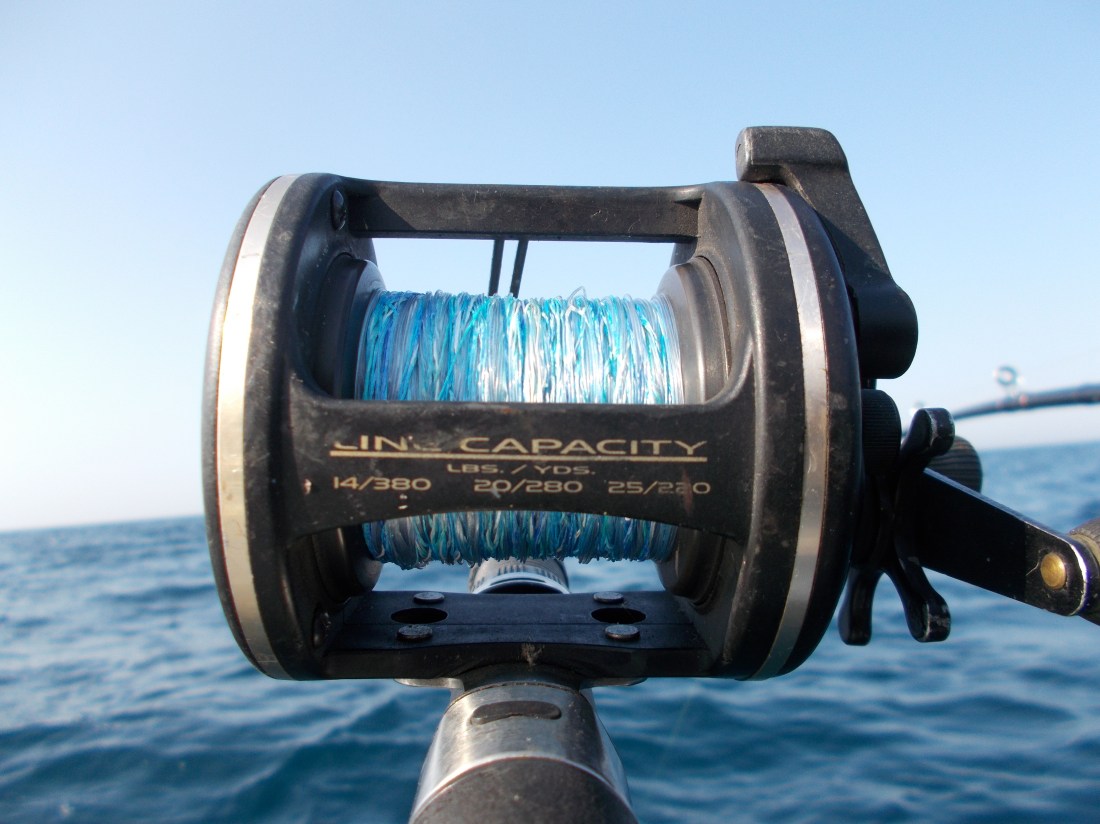
There’s a place for braided line on my boat from early spring to the last trip of the season. Depending on the when, where and how I’m trolling, a few, to as many as every reel I’m employing are spooled with braid. Last fishing season I spooled two of my downrigger reels with Sufix 832 Advanced Superline. It proved to be as close to perfection as I’ve ever used.

I spooled up with 20 pound test, in the Coastal Camo color. I like hi-vis lines and the bright-light blue Coastal Camo is easy to see and looks cool! It’s thin and smooth. I don’t know if it’s the thinnest or smoothest but it’s seems as slick or slicker than others I’ve used and performs “thinner” than other extremely skinning, but somewhat textured braids.

I downrig with braid anytime I’m sending the lures deeper than about 40 feet to reduce blowback and to facilitate tripping the release when or if needed. With little blowback and no stretch in the line, popping the line free from the release is easy when my ‘riggers are set even deeper than 100 feet. Explain how to do that with mono.

Catch a fish that deep on traditional mono and all the angler feels is a weight on the line. With braid, it’s more fun. Every fin-wiggle, head-shake and tail-pump transmits up the line, whether the fish is a small fry or the biggest catch of the day.

I’ve had plenty of hi-vis braids that worked well, but after a few trips, their bright color fades like new blue jeans in a hot washer. After a couple of months, the Coastal Blue is still as vibrant as when I wound it onto the reels.

I’ve used braids that were equally smooth, but the smooth seemed to be at the expense of abrasion resistance. On those, scuffs and easily-apparent fibers coming loose where I attached the line to releases, rubber bands or planer boards made me suspect of the strength of the abraded spots. I’ve not seen that with the Sufix line.

We had a typically bad dose of fish-hook fleas where I fished last summer. Normally, FHFs and braid are a terrible combination. The fleas easily hook the thin line. “S832AS” wasn’t immune, but with light or medium infestations it was slick enough to allow the line to be reeled in without clogging the rod tip. Being smooth and thin made manually removing the flea-snot clumps easier than on braids with thicker and rougher weaves.

When you are respooling for the 2019 season, grab a spool or two of Sufix 832. You’ll like it!

THE BRELLA

brella


Reviewed by Capt. Mike Schoonveld

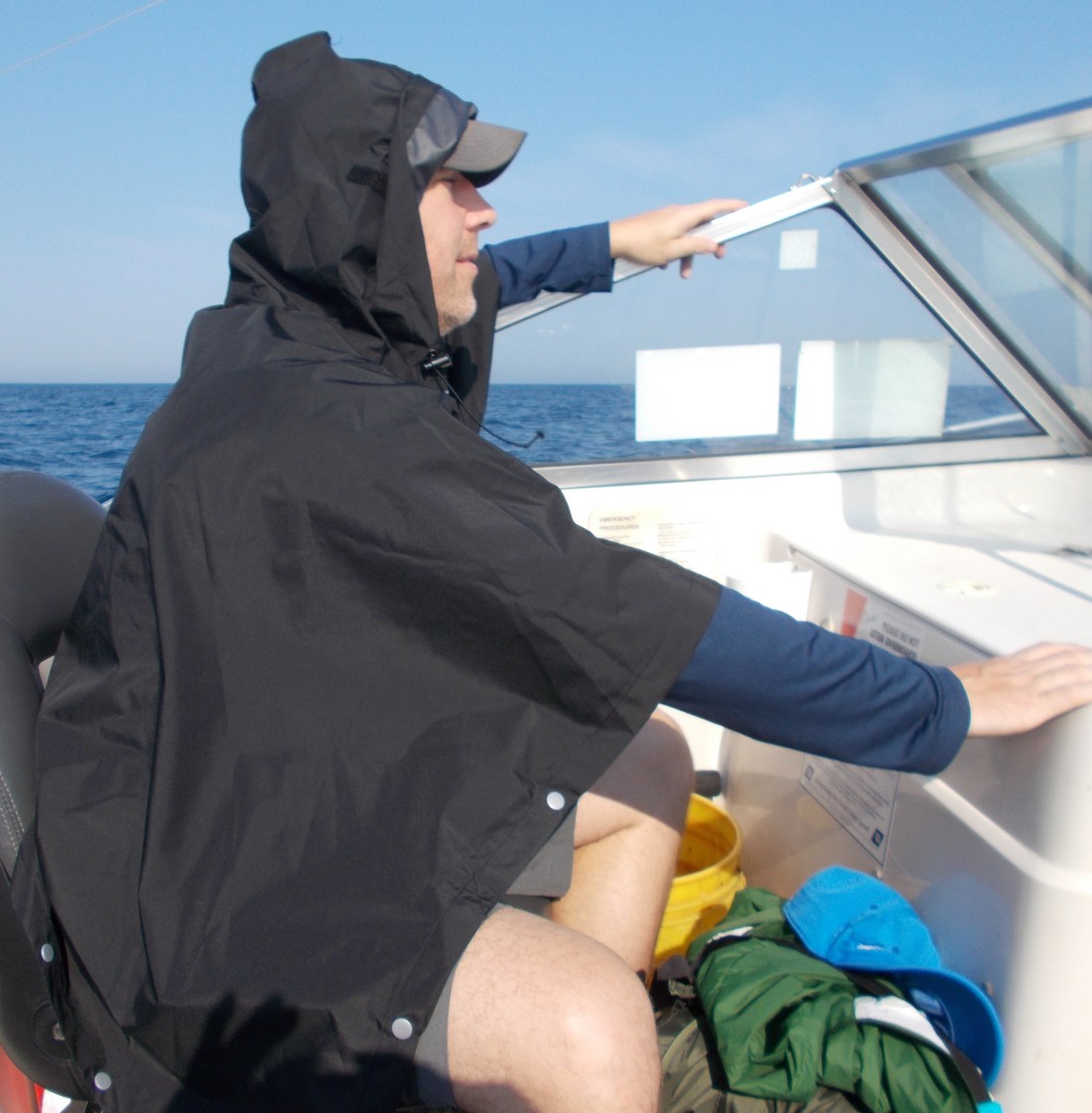
The Brella (a take off on “umbrella”) is perhaps the ultimate rain poncho. I’ll be the first to admit most rain ponchos are far from acceptable for fishing or most any other outdoor activities on a rainy day. The old, military style ponchos were big and bulky. When I was in the Boy Scouts I weathered (more or less) downpours in those Army surplus “shelter-halves” more than once. They were better than nothing.

I’m not so sure those thin plastic, “emergency” ponchos which fold into pack about the size of my smart phone are better than nothing. Most aren’t even as thick as a garbage bag. In fact, I’d rather fashion an emergency rain suit from a garbage bag as rely on one of those pocket ponchos.

The Brella is neither and it does fill a niche. If you are in a rain storm, suit up. Nothing is going to weatherproof you better than a quality pair of waterproof bibs and parka. However, if you are in a boat on a choppy day and a bit of spray is coming over the side the Brella may be perfect. I goes on easily and fits over anything. If you just need to run from the parking lot to the store on a rainy day or face any other situation involving a brief exposure to a shower or spray and you don’t want to slice up a perfectly good trash bag, give a Brella consideration.

It’s made of a fully waterproof, layered, breathable material like most high-end rain suits. It features a two-position hood either to maximize protection or to give adequate rain protection without hindering peripheral vision.

Stream fishermen wearing waders may find the Brella nearly tailor made for them on a rainy day. It absolutely won’t bind at the arms and it’s large enough to use over waders or a small backpack. The snaps along the bottom keep it from flapping loose in a breeze regardless of what’s being worn under it.

This is another  test product I regret showing my wife. She quickly absconded with the sample Brella provided for me and now I have to get another one for myself. Available at www. brellabrella.com.

HUCK PERFORMANCE BUCKET

bucket1


Reviewed by Capt. Mike Schoonveld

I can’t remember the last time I was on a boat that didn’t have a plastic, five-gallon bucket on board. There are two buckets on my boat every trip, each one serving as a multi-tasker used as a trash container, fish bucket, minnow bucket, wash bucket, clothing container, seat, sea anchor and no doubt they’ve served other uses in the past.

Neither of my buckets are particularly old since mine, like the ones on your boat, were originally designed to be disposable containers, delivering paint, pickles, driveway sealer or a thousand other consumer products, five gallons at a time. They did their job admirably for the initial user and serve me on my boat for a time until they split down the side, the bottom cracks, the wire bale breaks off or something else happens to render them one more disposable plastic item heading to the recycler or a landfill.

Though they do the job for which they are made very well, they are less than perfect for all the jobs Great Lakes fishermen put them to on their boats. The wire handles never break loose at a good time. Side or bottom cracks are usually found in on-the-job situations. How many fingernails have you broken trying to lift a bucket by the ridges on the outside of the container or when tipping the bucket to pour out the contents and attempting a finger-hold on the tiny flange around the bucket’s bottom?

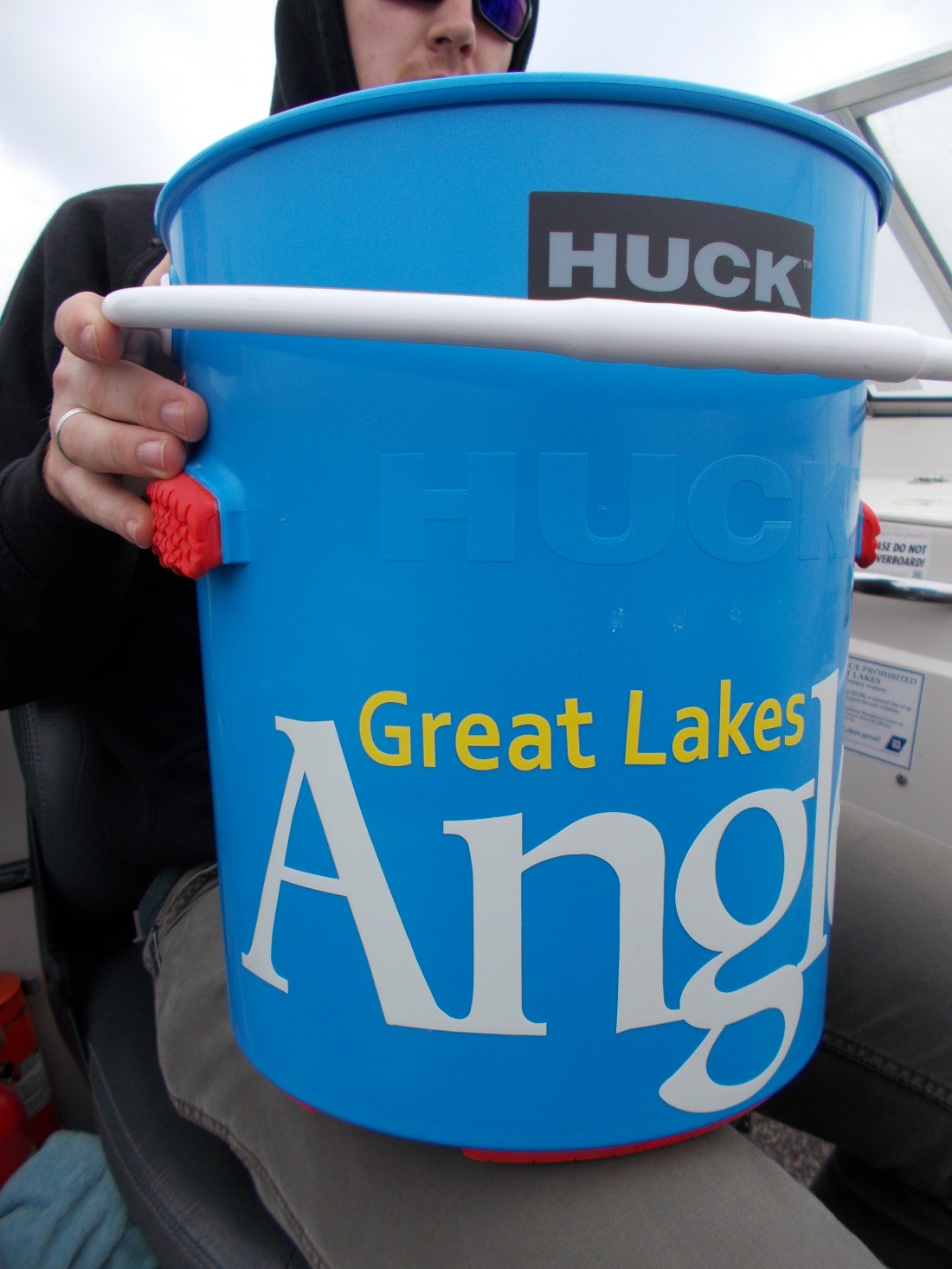
The guys at Huck Performance Buckets recognized both the handy aspect of a good five-gallon bucket and its shortcomings. They’ve created the ultimate five gallon bucket. It’s thicker, stronger, with Vibrum rubber finger grips on the side, rubber feet on the bottom and   bale-type handles that won’t break when you put five gallons of anything on the inside. They come in a variety of colors and can be customized with the name of your boat or any other logo (such as Great Lakes Angler, shown here). Check them out at www. thehuckbucket.com.

SEAQUALIZER RELEASE TOOL

SQ

REVIEWED BY CAPT. MIKE SCHOONVELD

No one releases a fish with the hope it will die. If you want it to die there are plenty of ways to kill it with more certainty than gently slipping it back into the water. But don’t fool yourself if you think catch and release doesn’t kill some fish. It always does.

Whether you are catching tiny brook trout and releasing them back to their shady stream or mighty tarpon, never even pulled from the water some C&R fish – hopefully, only a tiny percentage – but some of them, are so stressed, or perhaps bleeding, or have so much lactic acid built up in their muscles, they’ll never recover.

Here in the Great Lakes there are two culprits working against successful catch and release of fish caught from deep water. Fisheries biologists call them thermal-stress and barotrauma.

Thermal stress occurs when a fish is pulled from the cool depths into the warm water near surface faster than it can adjust internally.

Catching a fish swimming deep in the water column results in barotrauma, caused by the rapid change of water pressure. All Great Lakes fish have swim bladders filled with oxygen. When reeled up from the depths, this bladder expands larger and larger.
I’ve seen perch caught 60 feet deep with their stomach pushed out of their mouth by an over-inflated swim bladder. I’ve seen lake trout caught from 100 feet deep come unhooked just as they are pulled near the surface only to bob up to the top like a balloon. I’ve seen lake trout, caught and released, bob on the surface like a balloon and have found cohos, kings and steelhead in similar straits.

Most of these “floaters” are no more than seagull fodder. To better ensure C&R survival, the swim bladder has to be deflated using one of two methods. Popping the bladder, or “fizzing” the fish with a hollow needle can let out the excess air but unless its done correctly, fizzing is usually fatal.

Several devices have been invented to lower these fish back down into the depths and free them in cooler water deep enough to recompress the fish’s air bladder. The best tool I’ve ever seen to do this is the Seaqualizer.

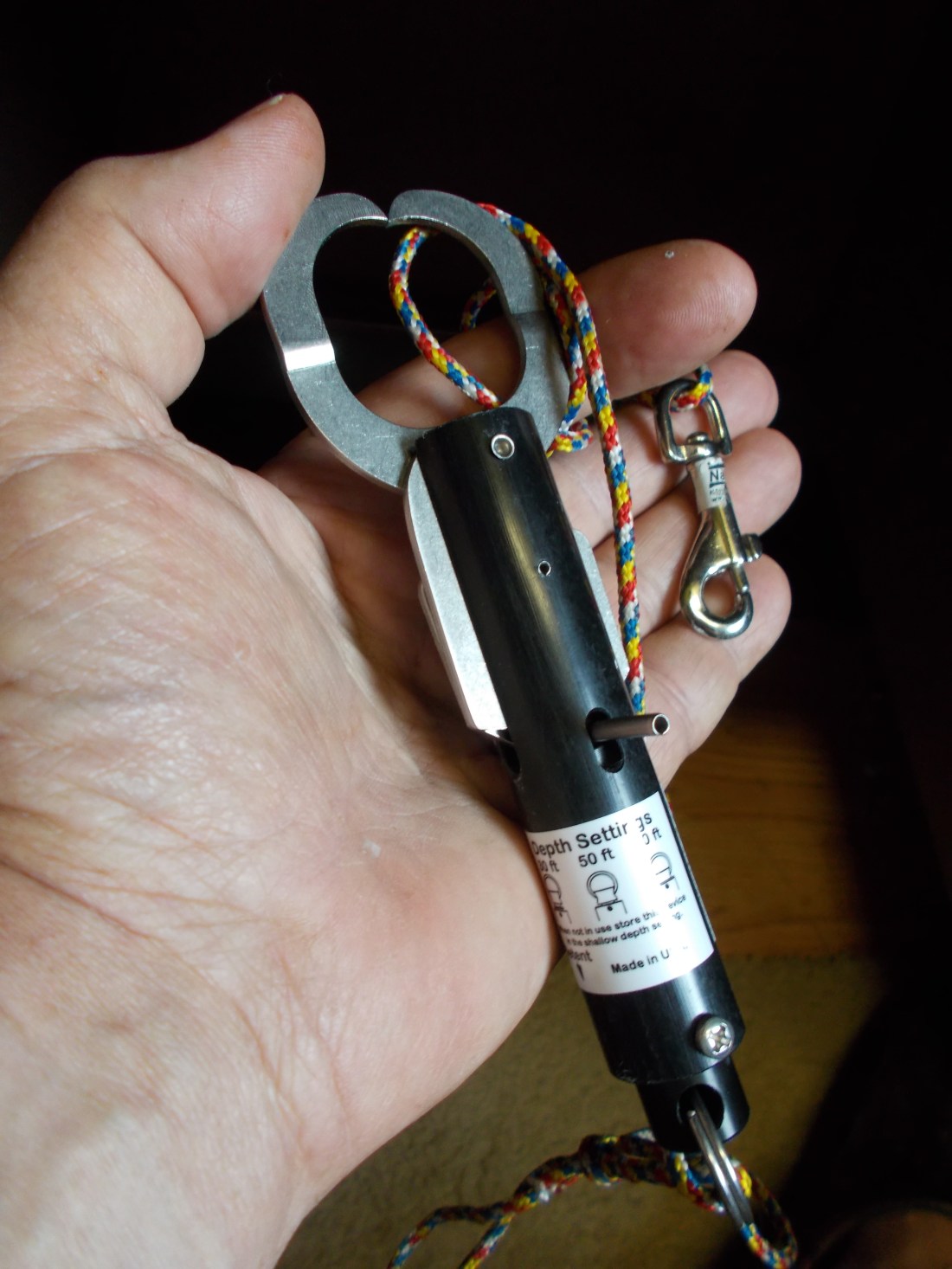
It’s basically a miniature boca-grip style device which will clamp onto a fish’s jaw. Unlike a boca, which uses a trigger to release, the Seaqualizer has a pressure activated release mechanism. The one I got – the “Striper” model can be adjusted so the jaws trigger open at 30, 50 or 70 feet.

Here’s how I use it when I catch a laker (or shaker salmon) I want to release. I’ve connected the Seaqualizer to a four-foot cord with a stout snap on the end. The snap connects to a downrigger weight or release. The Seaqualizer is clamped to the fish’s jaw, then the fish is dropped into the water and I hit the down switch on the ‘rigger. I lower the weight down to 35, 55 or 75 feet (depending on how the Seaqualizer is set) then bring the weight back to the top. The Seaqualizer is open, the fish is released.

Do the trout, salmon or other fish released this way survive? I can’t answer that. But I bet more of them do than the ones bobbing on the surface as I troll into the distance.

http://www.seaqualizer.com


GUPPY SNAP WEIGHTS

guppy

REVIEWED BY CAPT. MIKE SCHOONVELD

     Employing lead core lines has become a staple method for most Great Lake trollers. It’s partly a technical tactic and partly voodoo science since no one knows just what the lure is doing back there under the waves. I know guys with multiple lead core outfits on their boats. They have set-ups loaded with two colors (10 yards per color), three colors, four, five and more, including some who still use lead core lengths longer than 10 colors to get their lures to the depth the fish are active.

I can’t afford to carry that many separate outfits and I don’t have space for all of them if I could. However, Offshore Tackle’s Guppy weights easily turn one leadcore outfit into two the way used them last season.

Guppies (a.k.a. Pro Weights) come in sizes from 1/2 to 3-ounces and if you get the Pro Weight Kit, you’ll get some of each size along with some OR16 Snap Weight Clips. All of these have uses, but to get more for the ‘core, choose the 3-ouncer and attach one of the OR16s to it.

 
There are so many configurations of where to snap the extra weight, what affect placement would have on the depth and how the lure on the end would behave you’d need a phone app to keep track of it. Then alter the trolling speed, swap to a different lure and everything would be changed anyway.

So I just go by “rule of thumb” and usually that’s well good enough. My rule of thumb is a four-color can behave like a six-color, a six-color can become a nine-color, a ten-color can approximate the depth potential of a 15 color. It’s simple math I can do in my head – no phone app needed.

 
To make a six-color behave like a nine, simply let out three colors, attach the three-ounce Guppy weight to the line, then let out the remaining three colors and troll it behind the boat, on an in-line planer or as I do, on big planer boards. Again using easy math, if you want your ten-color to act like a 15, let out half the colors (five) attach the three-ounce Guppy, then deploy the rest of the lead core.

I get added versatility out of each lead core outfit on my boat. I get the snake-like presentation lead core gives the lures. I get more fish and those fishing with me don’t have to crank in as much lead core line each time one of those Guppy-‘core fish bites.

CORDLESS KNIFE SHARPENER

smith

REVIEWED BY CAPT. MIKE SCHOONVELD

     Sharp knives work better, easier and more safely than a dull knife. Regardless of how a knife is used, using it dulls it. Obviously, carving marshmallows is going to be friendlier to a knife blade than other uses, like filetting fish. Personally, I cut far more fish than marshmallows so I spend more time keeping my knife blades sharp than the ‘mallow slicers and I’ve tried dozens of tools over the years.

Some do a great job, but are cumbersome. Some are highly portable, but don’t do quick or satisfactory job. Some take almost brain-surgeon-like skills to use, others are nearly foolproof. None are perfect.

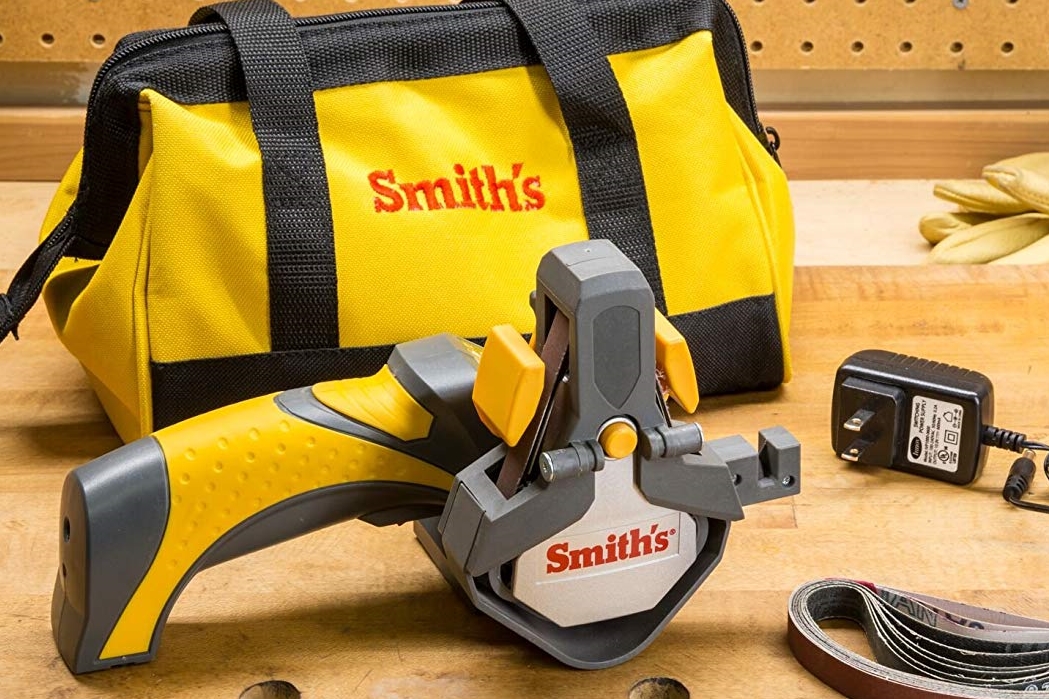
When size and portability are not an issue, my current favorite sharpening tool is now a cordless, rechargeable sharpener from Smith’s Consumer Products (www.smithsproducts.com). In the field, I rely on sharpening steels or hand-held ceramic lappers to keep knives sharp or touch them up, if needed. At home, however, I use the cordless sharpeners to absolutely return my knives to “as new” condition. I could make a razor from a butter knife with it. The Smith’s sharpener has a guide to hold the knives at a precise angle and relies on power-driven, abrasive belts to do the sharpening.

To sharpen a butter knife, start with the coarse belt, then switch to the medium grit belt and finish with the 600 grit fine belt. Most filet knives that haven’t been abused can be sharpened and touched up with just the fine grit belt but if your knife has been used and abused you may need the medium grit first, then polish it smooth. The belts interchange in seconds.

RAPALA CORDLESS ELECTRIC KNIFE

rap

REVIEWED BY CAPT. MIKE SCHOONVELD

Electric knife? I used to be a manual knife purest and viewed fish cleaners who used electric knives to be people who didn’t know how to sharpen (and keep sharp) their conventional knives. Besides, I always questioned the sanity of someone who would stand on a wet floor and plug a hand-held appliance into a 120V electrical outlet. An additional “besides” is I often clean fish in locations where there’s no electrical outlet.

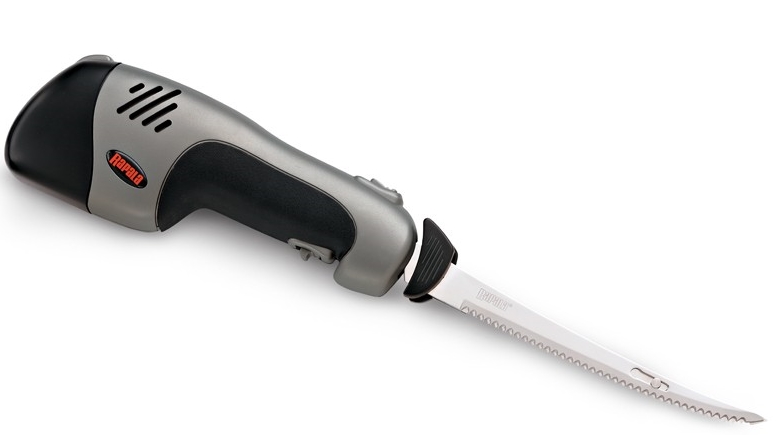
I still think the above is partially true. However, I’m no longer a purest. I now own a Rapala Lithiom Ion Cordless Fillet Knife.

There are two methods of cutting a filet off a fish. One involves cutting over the ribcage, but not through the ribs, then carefully cutting around the ribs until the boneless filet is freed from the fish. The second method (the one I normally use) is to cut through the rib bones, free the filet, then trim the rib bones from the filet.

This works terrific on the kinds of fish with relatively easy to cut rib bones like salmon or pike. A sharp filet knife will slice through salmon ribs with very little resistance. Other species, like walleye, steelhead, lake trout and others – not so much.

The changing fishery on Lake Michigan has made lake trout an increasingly important part of my catch and for a longer period during the season. “It may be time to give up those puritan knife opinions,” I thought – and then added, “if there’s a battery powered option.”

There are several brands of rechargeable knives and after looking at on-line reviews of popular choices, I chose the Rapala Lithium-Ion Cordless model. My experience with rechargeable drills and other tools taught me those li-ion batteries are much superior to nickel-cadmium rechargeable power-packs of a few years ago. They are more powerful and last much longer.

I love it! I (mostly) have given up my electric fillet knife bias. There’s still great satisfaction in producing a perfect filet with a good sharp knife and that’s still all I use for salmon and or other easy-to-cut fish. When I have a load of lakers to cut up – or a whack of walleyes – out comes the electric.

The battery is supposed to last 80 minutes. I’ve never run it down enough to even notice a power drop though I only recharge the Li-Ion power pack every four or five outings.

I really appreciate the trigger comes with a shotgun-like safety button and I always use it when I’m attaching or removing the blades.

These knives are widely available at retail and on-line sellers or buy direct from http://www.rapala.com.

OUTDOOR EDGE FILET KNIVES

RFkit

REVIEWED BY CAPT. MIKE SCHOONVELD

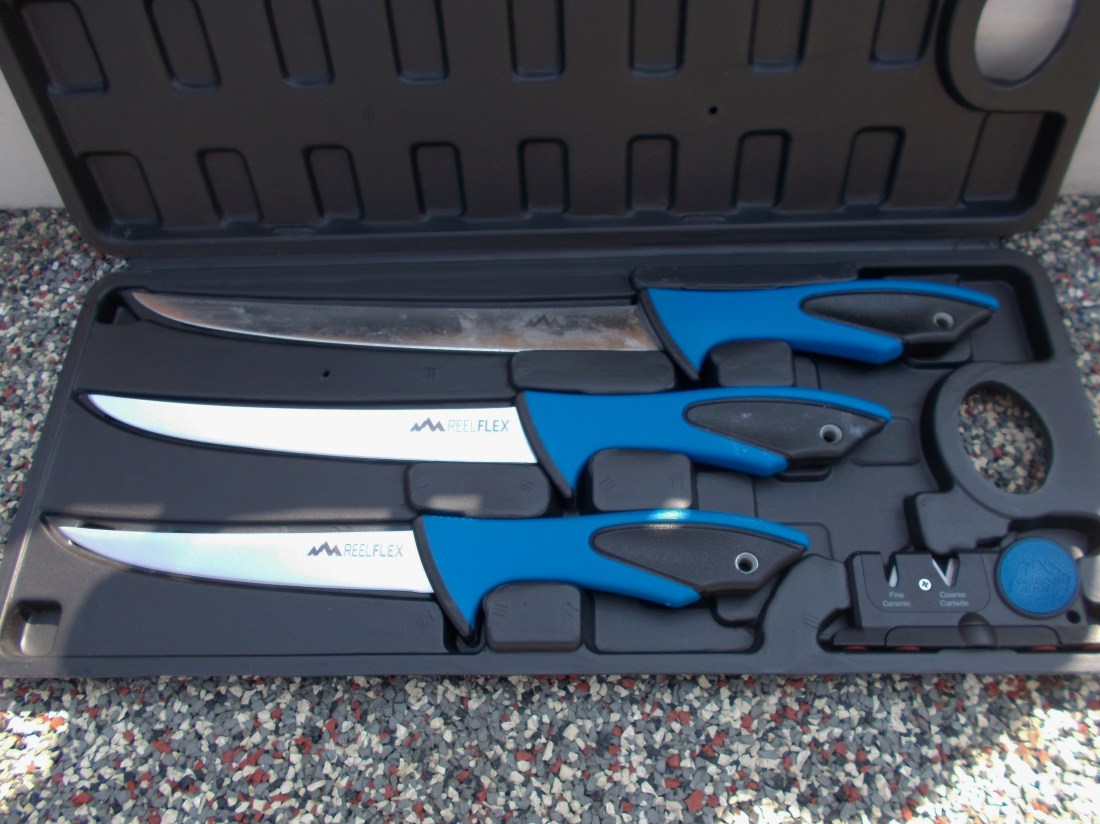
I have a new set of filet knives on my boat, thanks to Outdoor Edge. The handy carrying case contains one knife sporting a six-inch blade, a mid-sized, 7.5-incher and the Mac-Daddy has a 9.5 inch blade. The set is called the ReelFlex Pak and includes a simple, ceramic sharpening tool. Individual knives can be purchased separately.

The one I use the most is the 9.5-incher both because I am normally cutting up fairly good sized fish salmon, steelhead and lake trout and I prefer a longer knife rather than shorter. When I’m filleting panfish or smaller fish like walleyes or pike, I do use the smaller knives. If I could only select one I’d opt for the big-boy. I’d rather clean an 8-inch bluegill with a 9-inch knife than face a 20+ salmon with a 6-inch blade.

Reel-Flex knives have a rubber-like TPE handle for a secure grip and as their brand name suggests, the blades on these knives are more flexible than many other brands I’ve been used. How much flex a person needs in a filet knife blade is a combination of personal preference and what the person gets used to using.

Flex in a fillet knife is important. Try butchering a fish with a non-flexible butcher knife sometime and you’ll understand why better than I can describe. The flex helps the fish cleaner guide the knife up, down, in and out along the backbone and around fins – getting the maximum amount of meat off the skeleton. In my hand, the flexible blade really shines when skinning the filets, allowing the knife to slide easily between the meat and skin along the full length of the slab.

Individual knives and/or kits are available at retailers or on-line at http://www.outdooredge.com or amazon.com.

CASE TRIBAL LOCK KNIFE

CTL

REVIEWED BY CAPT. MIKE SCHOONVELD

Unless I’m flying on an airplane and subject to a TSA search, there will be a folding knife – a pocket knife – in my right hand pants pocket. Some people are wedded to their cell phone; I’m wedded to my pocket knife and have been since long before it became illegal to fly the friendly skies carrying a Barlow knife.

     I’ve actually owned several Barlow-style knives, a folding knife which dates back to the 1700s. George Washington carried one. Why not? It fit almost all the criteria I deem important.

     A pocket knife should be medium in size. A tiny penknife may fit the pocket more unobtrusively, but it’s going to be too small for many of the jobs I’ll ask it to perform. A big folding lock-back hunting knife will certainly fit in a pocket, but there’s a reason most come with a belt sheath. They are too big and may be oversized for delicate tasks.

      A pocket knife should have a pointy tip. These are “jack of all trades” tool and depending on the task at hand, a dagger-like tip may be as important as a sharp blade.
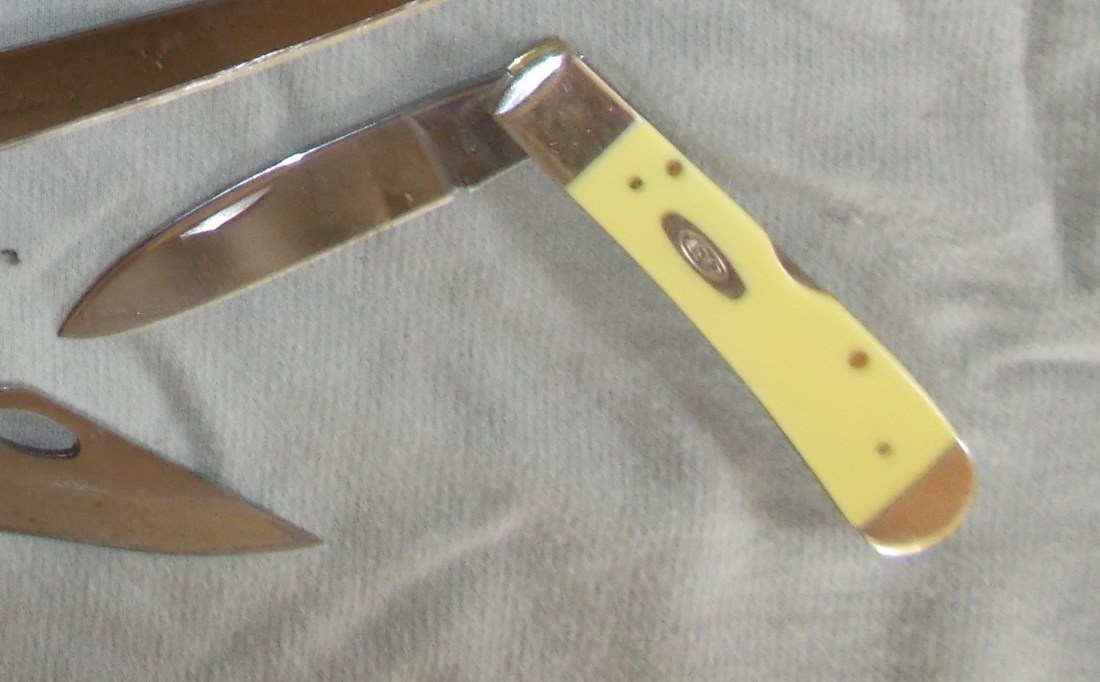
The knife in my pocket right now is a Case Tribal Lock. I chose it because of the above criteria and others. First, you can’t beat the quality. Case knives date back to 1889 and there are knives they made over a century ago, still in every day use.

     The CTL is a bit longer than other pocket knives I’ve used but it makes up for it by being thinner and less bulky since it’s a single blade model. I don’t notice it’s in my pocket unless I stick my hand in there to check for it.

     On my boat, the 3 plus inch blade is more appropriate for most of the chores it’s called to do. An example is the time I managed to snap the blade off the filet knife I was using and finished filleting a 20-pound king salmon with the pocket knife.

     The Tribal Lock is available in several handle types and colors. I chose the yellow synthetic handle for only one reason. It’s easily visible. Most of my past pocket knives became knives of the past because I used them, laid them down and walked away. Then they walked away (or were helped.)

      I do like the fact the Tribal Lock has a blade that locks open. I like more the “unlocking” procedure is simple and easy. I’ve used non-locking folding knives hundreds of times with scant few incidents or close calls, but with a blade as sharp as this knife has, the locking feature is welcome.