REEF RUNNER RIPSHAD

Ripshad

Reviewed by: CAPT. MIKE SCHOONVELD

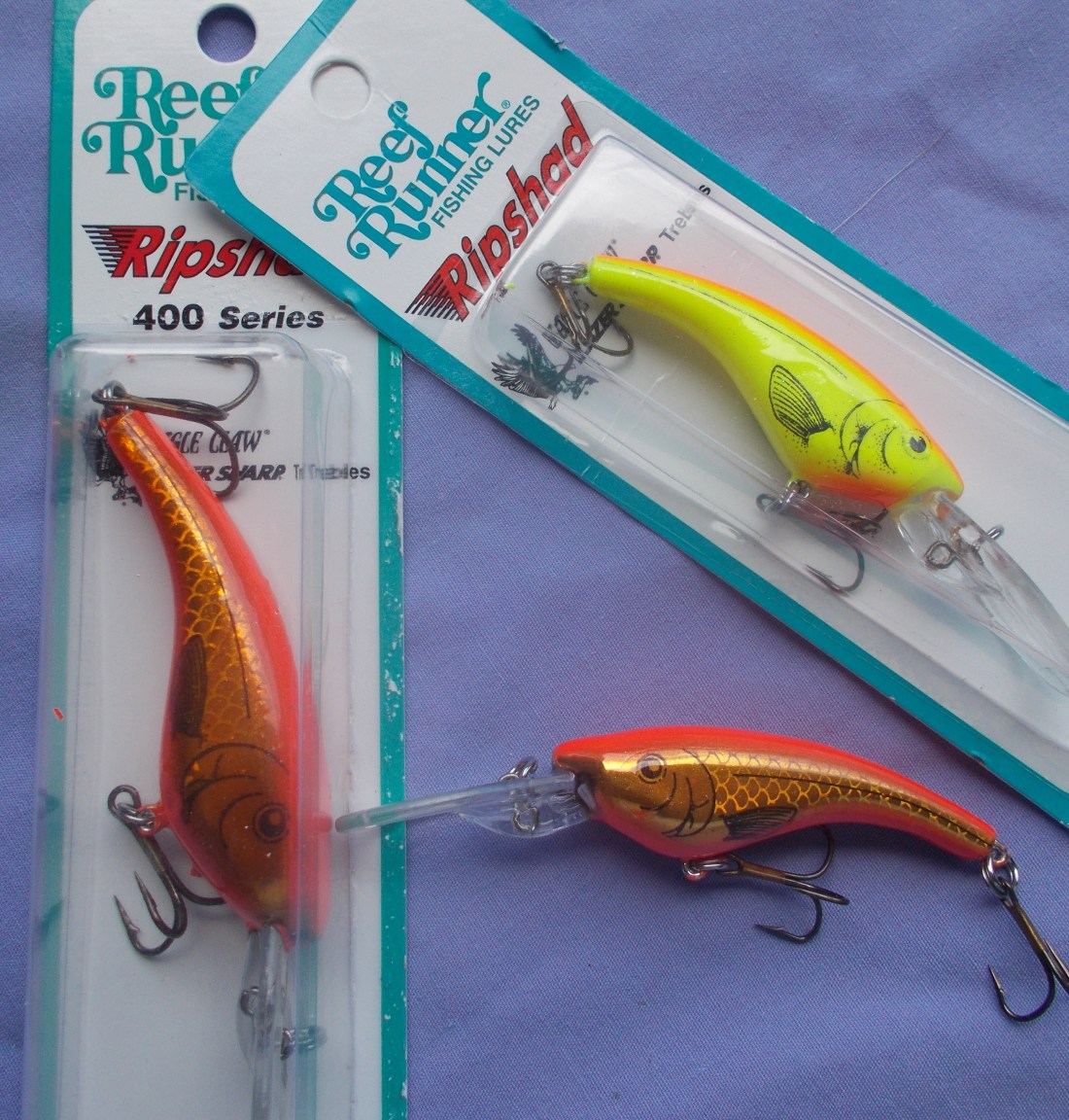
Reef Runner lures are synonymous with fishing in Lake Erie, dating back to the days when if you weren’t pitching a weight-forward spinner and giving it a 12 or 15 count before starting your retrieve, you just weren’t in the game. Next came the Cicada to jig up those pre-spawn ‘eyes on the reefs between Port Clinton and West Sister and that morphed into the namesake Reef Runner and Ripstick “crankbaits.” I put the quotes on crankbaits because both of these lures were designed more for trolling than cranking. The cranking only came when turning your reel handle to crank in the walleye hook-locked to the Reef Runner you’d been towing behind your planer boards.

Plenty of Lake Erie fans have successfully transported their arsenal of Reef Runner lures to other lakes (both Great and smaller) to catch walleyes and most every other predator fish at one time or another. It was only natural for the Reef Runner team to paint up some of their Lake Erie rooted lures with colors more popular for other species in other places than for their walleye rich home waters.

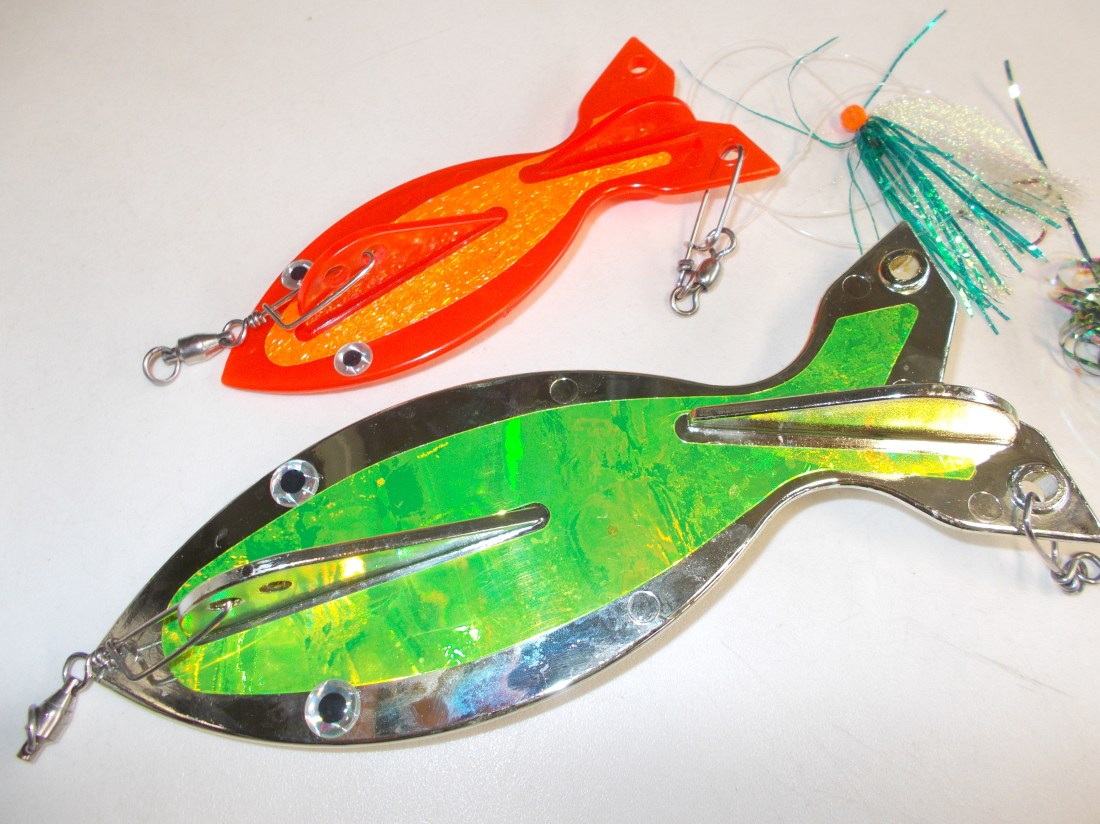
It was a successful ploy. For me, early season coho in southern Lake Michigan are my “most caught” crankbait fish. When I got a supply of RR Ripshads (both 200 and 400 series) in the Hot Tamale, Flame and Goldfish colors in late winter, they had me longing for Indiana’s spring coho spree to get underway.

I found the 200 Series perfectly sized for March and early April fish when the fish are smaller and the water still very cold.   Once the water hits the mid-40s, a switch to the larger, 400 series paid off. Both of these sizes are capable of diving down to walleye depths with ample amount of line deployed, so I paid attention to the amount of line I put out behind the planer tether. I often set them with only 20 feet of stretch to keep them in the top seven or eight feet of the water column where the most active fish are often found.

Widely available in retail stores, you can also purchase them online at http://www.reefrunner.com as well as other online outlets.
SCENTFLASH TRIANGLE FLASHER

mack1Reviewed by: CAPT. MIKE SCHOONVELD

I love to write reviews of products which I first view with a dose of skepticism but in actual use, my skeptical attitude gets a rude and quick adjustment. Such was the case when I got a ScentFlash Triangle Flasher from Mack’s Lures.

First, I’ve never been and few other Great Lake salmon and trout guys are triangle flasher fishers. Our flashers and dodgers rotate and spin or wobble side to side to attract the fish close enough to spot the fly or other lure trailing along behind. The wiggling or wobbling is what gives the “action” to the trailing lure. A triangle flasher just spins and gives basically zero action to the trailing lure.

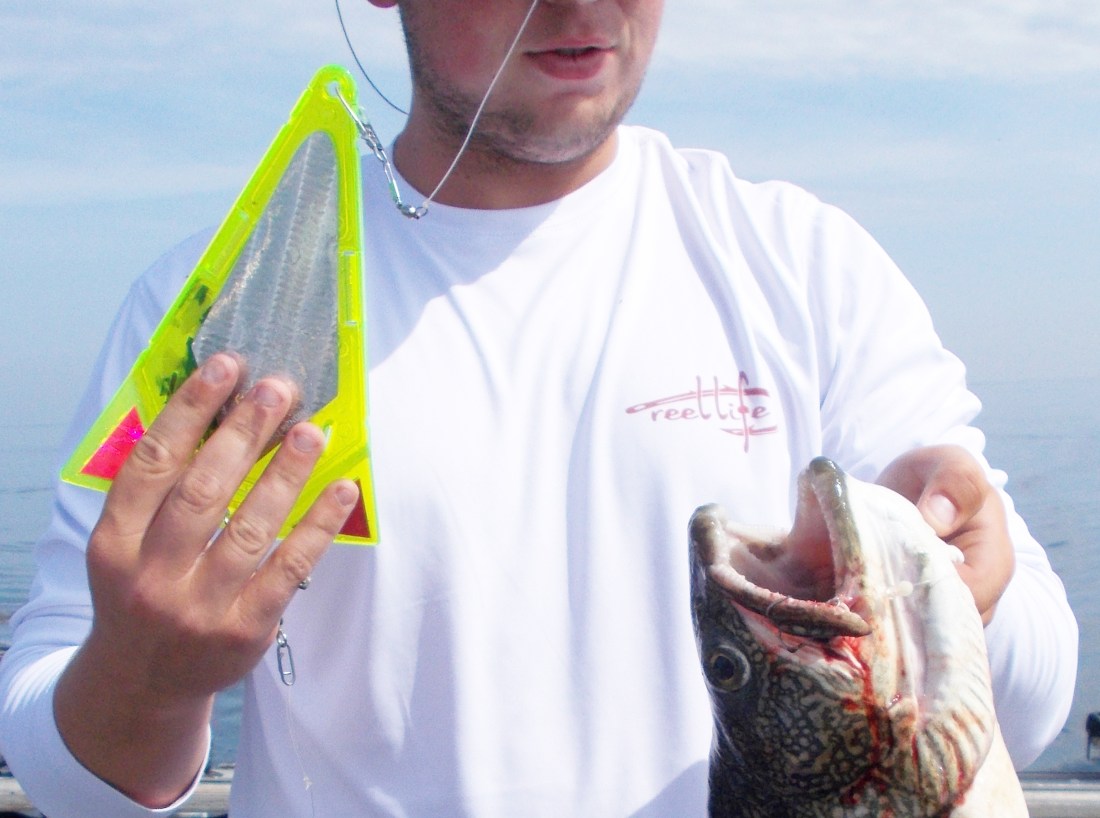
The difference between the ScentFlash Flasher and other brands is the Mack’s version snaps apart revealing a narrow cavity inside into which an absorbent pad (included) can be added. Any number of fish attractant elixirs can be applied to the pad, the flasher snapped back together and now, the attractant leaves an odor trail.

Because of my skepticism, I toted my sample flasher along with me for several trips before actually putting it to the test. I pulled it out one day when coho were being caught in the top half of the water column with what seemed to be a solid layer of lake trout feeding under them. Catching fish was not a problem.

With about an hour left to fish, I pulled out the ScentFlash – a chartreuse blade with silver tape stickers model. I also pulled out a can of sardines packed in oil to use as the attractant. I smashed a sardine in the narrow scent chamber and snapped it shut. I put a green/glow spoon behind the flasher on about a 30-inch leader, attached the line to one of my back downriggers and sent the sardines, flasher and spoon down near the bottom. (I assumed the trout would be the most susceptible species.)

The results weren’t instantaneous – it took about 10 minutes for the combo to get bit. It wasn’t a laker, either, it was a chinook salmon of about 10 pounds.

“What were you thinking?” I asked the fish as I dislodged the hook. (It didn’t answer.) Neither did the coho salmon that bit the deep-set flasher/spoon a few minutes later and neither did the lake trout that finished our trip that day.

I was far less skeptical after that and I did further tests. (I also ordered a few spare ScentFlash Flashers from the Mack’s Lure website – http://www.mackslure.com).

I’ve stuck with sardines in oil to add the scent, but I’ve experimented with the lures to trail behind along behind the flasher. My “go-to” lure I usually run deep for belly-to-bottom lake trout is a dodger or flasher with a Spin-N-Glo trailing behind. Would the Spin-N-Glo work with the ScentFlash without it adding the side to side action? Yep! Would it work with a plug? I positioned a Freedom Tackle Cut Bait Plug (featured in the June/July GLA) behind it. Bingo – fish on!

Still to test, bottled scent products instead of sardines. But it’s hard to switch away from what is working.


BUBBA PISTOL PLIERS

bpliers2

Reviewed by: CAPT. MIKE SCHOONVELD

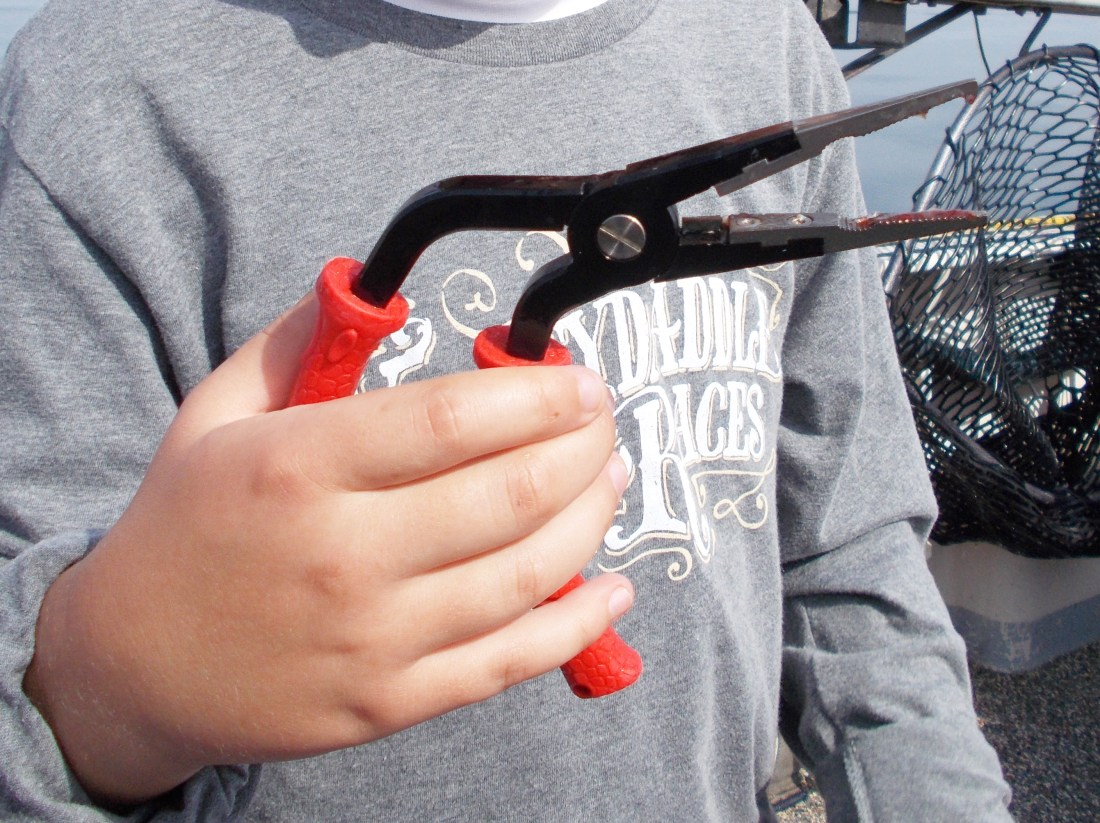
The actual name for this tool is the Bubba 6.5″ Pistol Grip Pliers. “Bubba,” besides the fictional name of one of Forest Gump’s friends and the nickname of many southern politicians, is recognizable in the fishing world as the brand name for a line of high quality fishing knives – Bubba Blades. So when Bubba expanded to start producing other fishing products, I was pretty sure the new tools would be both well designed and tough as nails.

I’ve had several pairs of bent tip boat pliers over the years. I liked them. I found the curved tip less than perfect for many needle-nose plier uses but they excelled at my number one use for them – unhooking fish. The pistol grip Bubba pliers looked to be a design worth investigating.

Bubba makes two models of pistol grip pliers (as well as conventionally shaped needle nosers), the 6.5 and a larger, 8.5 inch model. Other than size, the biggest difference is the smaller version has tiny, split ring opener “beak” at the tip. The split ring tool was what sold me.

It seems as though I need to work on a split ring every few trips so I do keep a split ring tool on the boat – squirreled away so I don’t lose them – squirreled away so they aren’t handy when I need them. Having the split ring opener right on the same pliers I keep in the working area of the boat where all the fish unhooking is done is helpful. I’ve used the ring opener many times.

I’ve used the pliers to unhook fish dozens and dozens of times and the pistol grip shape is the equal of the bent-tip shape pliers, facilitating a quick easy hook removal and actually helps keep my fingers away from the sharp teeth on salmon, trout and walleyes better than curved or conventional pliers. It’s especially true on those fish which are hooked deep in their mouth. The split ring beak does double duty when a particularly stubborn hook is encountered. The beak keeps the jaws from slipping off the hook when tugging harder than usual. Who’d have thought?

They are stainless steel so no rust on the pair I’ve used for the last two months or so. It has a sharp line/wire cutter which works well. The bright red handle grips are non-slip and comfortable – most important – and easy to see when it’s time to pull them out of my “junk drawer” where they are stowed when not in use.

Available in retail outlets, at http://www.bubbablade.com and at Amazon.com.


CUDA BRAID SHEAR

cudacutter

Reviewed by CAPT. MIKE SCHOONVELD

It wasn’t long after braided line became popular for all sorts of fishing anglers started seeing all sorts of tools designed to easily and efficiently cut braided line. Some were extremely sharp nail-clipper types (which didn’t stay extremely sharp). Some were battery powered “laser” devises – actually, an electrical spark generator or extremely hot wire which burned through the line as well as fingers and batteries.

The closest to perfection were scissors types but even with these, many were just cheap scissor blades fastened to some sort of supposedly fisherman-friendly handles. Often the friendly handles weren’t so friendly and the cheap blades seemed to chew through the line more than shear through it effortlessly.

So when the Cuda fishing tools rep handed me a pair of their 5.5″ Large Braid Shear, I was skeptical. It looked like a nice, well-built pair of scissors with a jaunty rubberized handle. It is just that but the devil is in the details. Look very close at the scissor blades and you will see “micro” serrations along the edges which are the devil’s detail that makes these shears a “cut” above all the others I’ve tried.

On non-serrated scissors-type braid shears, the line slips when you snip. Snip again and again – perhaps hold the line in place and gnaw through it or wish you had a laser-burner. The tiny serrations on the Cuda-cutters prevents the line from slipping and snip, the job is done – easily and every time!

Though they are called Braid Shears, they do a perfect job on mono or fluorocarbon line as well. Available online at http://www.cudabrand.com, Amazon.com or at many retail tackle outlets.

YETI TUNDRA COOLER

yeti1

Reviewed by:  CAPT. MIKE SCHOONVELD

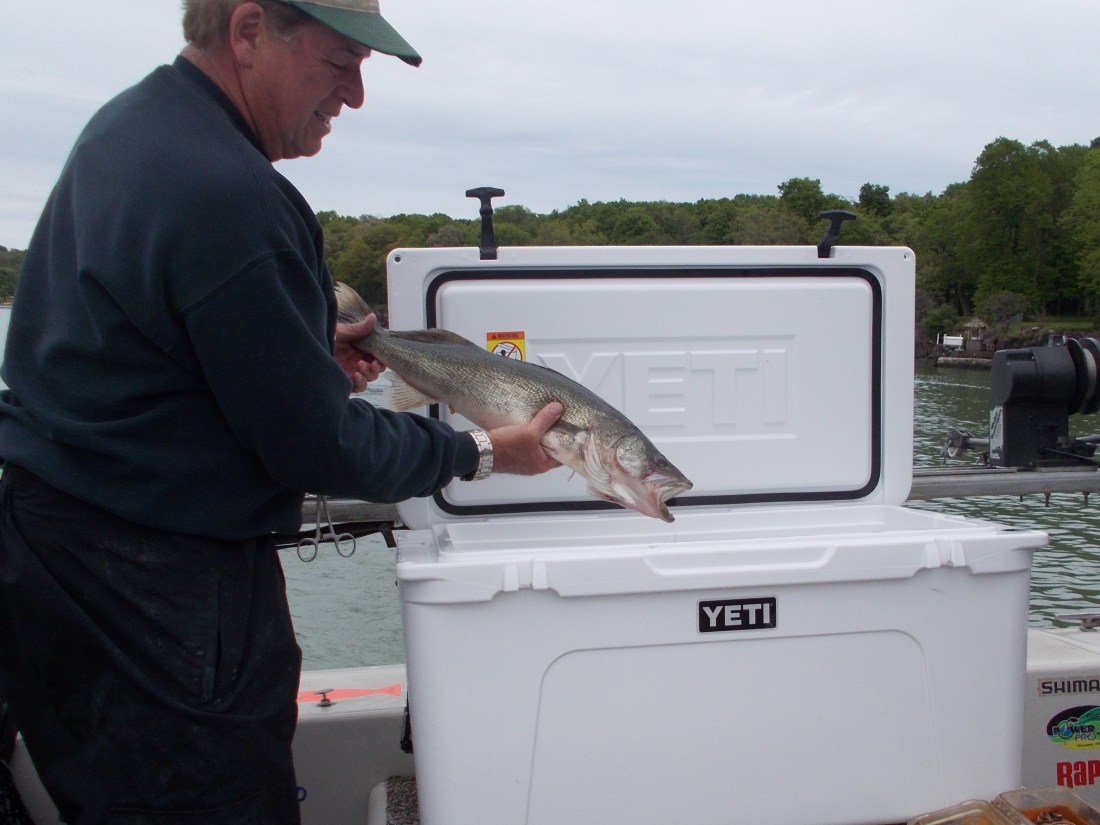
Most Great Lakes Anglers have had the problem of high temperatures thwarting their best guess about how much ice to poke in the cooler at the beginning of a trip to keep fish, beverages or anything else you need to keep cold all day – or on into the night. Most Great Lakes Anglers have had cooler lid cave-ins when some big guy thought the cooler you stowed on the back deck would make a good bench seat or even a medium sized guy used it as a step stool. Most Great Lakes Anglers with trailerable boats have probably had the problem of leaving home with an empty cooler in the boat and arriving with a cooler-empty boat or at least a cooler with no lid. Most Great Lakes Anglers haven’t had the problem of their cooler being accosted by a bear – well, maybe a few.

I know I’ve had all these cooler fails except a bear attack and over a decade ago, so had the Seider Brothers, founders of YETI. Roy and Ryan had a lifetime of being outdoors and a background in the outdoor industry – though not in coolers. What the Yeti guys did was imagine the ultimate cooler, then built it and then marketed it.

Others have copied them and soon there were several brands of extreme performance coolers available. None of these have been in the business as long as YETI. Some have come and gone since 2006 when the first YETI Tundra cooler popped out of the mold. The Tundra, still made in the USA, has stood the test of time and proved when Roy and Ryan’s idea to produce the cooler “they’d use everyday” was a sound business plan. Now, the YETI Tundra is the cooler to which all other coolers (performance brands or disposable brands) are compared.

Sure, you can slap a piece of plywood on top of one of the disposable cooler brands and stand or sit on it without crashing the lid. Sure you can buy extra ice – or an extra cooler with extra ice to make sure things stay cold over the long run. You can add extra durable hinges, extra foam insulation, replace cheap plastic handles with rope and make any cooler work better than when you drag it out of Walmart. You can also put a V-8 in a VW Microbus and make it go 130 miles per hour; but in the end, you are still driving a VW Microbus.

What can I say about he YETI I put on my boat? The hinges are great, the handles are great, a fat guy can sit on it, the ice and fish I put in it stay cold all day, its slick finish cleans up nicely whether it’s walleye blood or laker poo. I’ve not yet pitted it against a bear assault.

Sure YETIs are expensive. But they aren’t disposable. If you are a Great Lake Angler who wants the best, demands the most and understands the concept of getting what you pay for, check out http://www.yeti.com.


TROLLBUDDY PLATE UPDATE

TBclamp

Reviewed by: CAPT. MIKE SCHOONVELD

I reviewed the Trollbuddy Electronic Trolling Plate installed on an Angler Qwest Pontoon Boat in the last issue of GLA. Ordinarily, I wouldn’t return to an item so quickly but a couple of things came up sufficiently noteworthy to warrant a follow up in this issue.

First, I got the exact name wrong (my bad) in the previous issue. It’s “Trollbuddy” not “Trolling Buddy.” Additionally, there’s now an easier URL to use to get info about or buy a Trollbuddy Plate: http://www.trollbuddy.com. You can still type in http://www.lectrotab/trollbuddy as printed in the last GLA issue in your browser’s address bar to get to their site. Both URLs will land you on the same website.

Now the news! At the ICAST show Trollbuddy unveiled a new option available for those considering installing a Trollbuddy on their boat. The original Trollbuddy requires drilling mounting holes on the fins of an outboard’s or outdrive’s lower unit. The holes didn’t weaken anything, but some users are uncomfortable about drilling holes – either the process of drilling them or because of concern the presence of the holes would diminish the resale value of the boat or motor sometime in the future.

Now, there’s a “clamp on” bracket which securely attaches the Trollbuddy to the lower unit. No holes to drill.

I also had the chance to talk with Brad Dupuie about how the Trollbuddy is doing on his Angler Qwest. When we tested it for the last issue, the Trollbuddy was brand new on his boat and new to both of us. Now, Dupuie has had several month of using it on his ‘toon mostly used for walleye trolling on Saginaw Bay.

“It’s great!” Dupuie said. “I use it every trip and regardless of conditions, I can pin down my trolling speed within a couple of tenths of a mph. It’s proved to be rugged and problem free. I’d never even thought of putting a trolling plate on one of my boats before getting the chance to use the Trollbuddy. Now, I’d never consider not having one. It’s that good.”

If you want to see the original review online go to: http://www.fishgear.reviews and click on Trollbuddy Trolling Plate in the menu.

TOYOTA SEQUOIA

SequoiaReviewed by:  CAPTAIN MIKE SCHOONVELD

For us guys with boats which sit on trailers between fishing excursions, the major “toy” between the boat and the lake is the vehicle to which the trailer connects. The size of the boat dictates what size of tow vehicle is required, of course, but for most Great Lakes work, the vehicles need to be somewhat substantial.

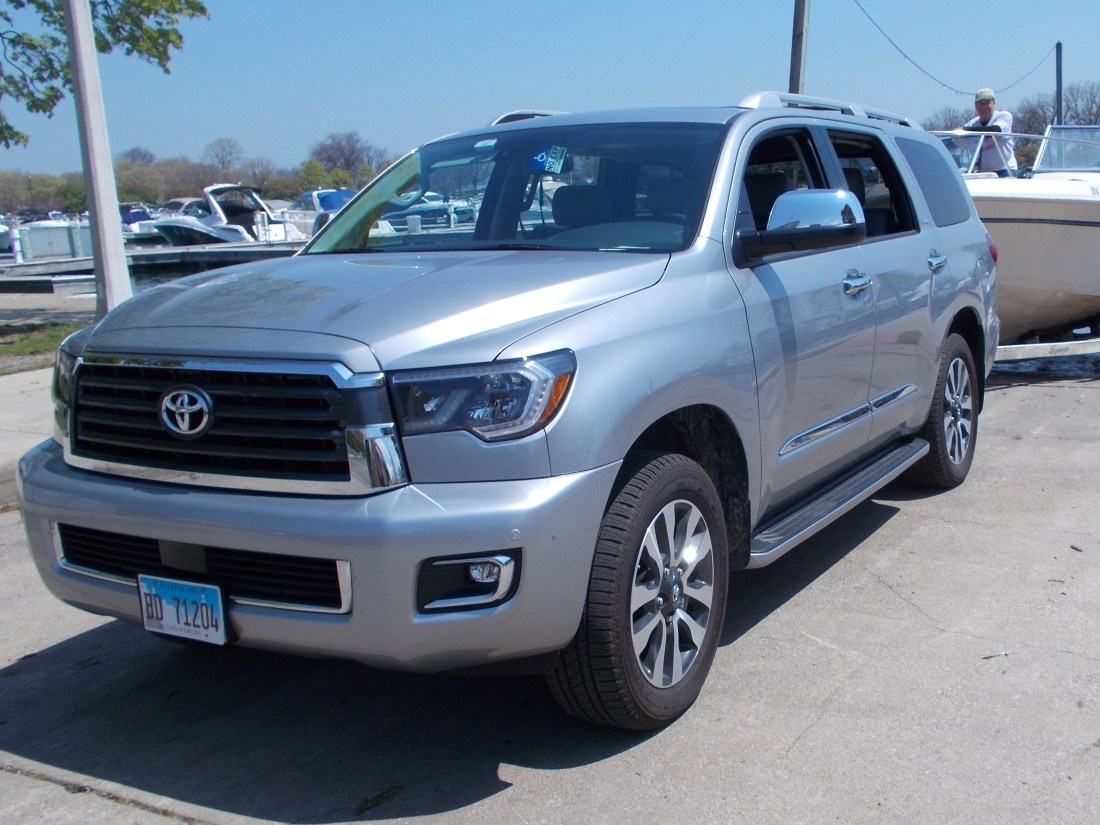
The Toyota Sequoia I used to tow my boat through four states last May was substantial. We traveled in Indiana, Illinois, Wisconsin and Ohio on roads which varied from gravel to six-lane expressways  The Sequoia Toyota furnished me for this test was the Limited version, fitted with a 5.7L V8 engine and 4WD to pull my boat up algae-coated boat ramps. Equipped with a 6-speed automatic transmission this full-sized SUV ran through the “gears” effortlessly whether going uphill or down, on the highway or in stop and go traffic on Chicago’s Fullerton Avenue heading for Diversey Harbor. (Long story why that trip was included.)

As are most vehicles these days, the Sequoia is fully equipped with more bells and whistles, lane change alarms, driving sensors to detect if you are driving unsafely or the guy in front of you is driving unsafely, bluetooth connections – in short, more on-board “toys” and other features than I was able to figure out how to use during my trip. I was more interested in how it handled my 5000 pound boat (and how my 5000 pound boat handled it) in real life driving conditions. It’s rated to tow more than 7000 pounds.

I was also more interested in how it handled the gear and luggage I needed for extended trips away from home, especially when three other anglers were along with me. One of the coolers we hoped to fill with salmon and walleye fillets went in the boat. The rest of our duffle stored inside with a small bit of planning. The second row bucket seats added some interior room since we could stow items between the seats. I didn’t even realize the truck came with a third row seat until my wife pointed it out and our whole group of six (sans boat) headed to the Brat Stop in Kenosha for dinner. 

All in all, the Sequoia is certainly a viable tow vehicle any on-the-go Great Lakes angler should consider when it’s time to upgrade. I certainly will. Rated 13 to 17 mpg on the mileage meter, it’s in the same league as other comparable brands and models. 

If there was one item to pick at on the Sequoia I tested it was the gas-gauge – gas tank capacity. For one, the tank capacity is 26 gallons. Pulling the boat, my instant mileage read out on the dash varied from 9 to 14 mpg depending on conditions and speed so about 10 to 12 actual. With that size tank, regular stops for gas is going to be required. (My regular tow vehicle gets the same mileage but has a 42 gallon tank.)

On my trip to Ohio, I knew the next travel plaza was just ahead and a few miles before getting there, the low fuel warning light came on. We made it more than easily. The pump kicked off when 20 gallons were added. I’m sure once I got used to how to gauge the accuracy of the fuel level indicator the smaller tank would be less disconcerting.

You can check out the Sequoia online (in various editions) at: http://www.toyota.com.


CHURCH TACKLE REVELATORS

Revelators

Reviewed by:  CAPTAIN MIKE SCHOONVELD

No one knows for sure what’s going through the mind of a salmon when it sees a fly, hootchy or other lure trailing along through the water behind a dodger or flasher. My guess is they see the flash and color of the attractor and think it’s the flash reflecting off the flank of another fish as it is feeding. If there’s food for one, maybe there’s food for two. Then the fish spots the lure behind the flash and nabs it, thinking it’s the baitfish the other fish missed or another baitfish in the school.

I’m probably over-thinking the ability of a salmon or trout to think, but if there’s a modicum of truth in my theory, I guess there was a modicum of reason when Dreamweaver decided to make their version of the plastic flasher (the Spin Doctor) into a cartoonish-looking fish shape. Cartoon or not, the Spin Doctor was a winner and soon other lure makers doctored up their own versions of the plastic rotating flasher.

Among those are the Revelators from Church Tackle. I had the chance to try out a few Revelators earlier this summer. (Actually, I’m still “trying” them as they’ve remained a solid choice the rest of the summer. )

The Revelators come in two lengths – 5 3/4 and 8-inchers. As with most flashers there’s a choice of plastic color for the blade – red, white, blue, chartreuse, black, chrome, gold, purple, copper and green. Of course each color of blade can be ordered with a dizzying number of reflective tape choices applied to each side. You’ll have to go to their website, http://www.churchtackle.com to see all the combinations.

I had no doubt the 8-inchers would match up well with other brands of flashers when I used them to pull full-sized flies for summer salmon and the occasional suspended laker. I was right. They performed flawlessly and many days I put one out at the beginning of the trip and it did it’s thing right on to quitting time. My best were chartreuse blades with silver tape patterns. Go with what works in your area.

When it came to testing the 5 3/4-nchers, I was a skeptic. Tens of thousands of cohos are caught using 6-inch metal dodgers trailing mini-sized flies every summer in southern Lake Michigan. Most of these are caught on the fluorescent red/orange models so I got the red shorty Reveleators with orange tape. At least I had the right color.

The 5 3/4-inch Revelators produced right along side my regular dodgers and flies each time I tied one on. I usually ran it behind a Dipsey Diver. The fun thing about lure testing comes when “further testing is needed.” The only thing more fun than testing lures is reeling in the fish they catch.

If anything, the Revelators shape is closer to the shape of a real fish than the other fishy-looking flashers available. If you think that makes a difference, you may or may not be over-thinking what’s going through the fish’s head when it strikes.

Available a many retailers and online sources or buy direct at: http://www.churchtackle.com

TROPHY HAUL LANDING NET by FRABILL

FraNet


Reviewed by: CAPTAIN MIKE SCHOONVELD

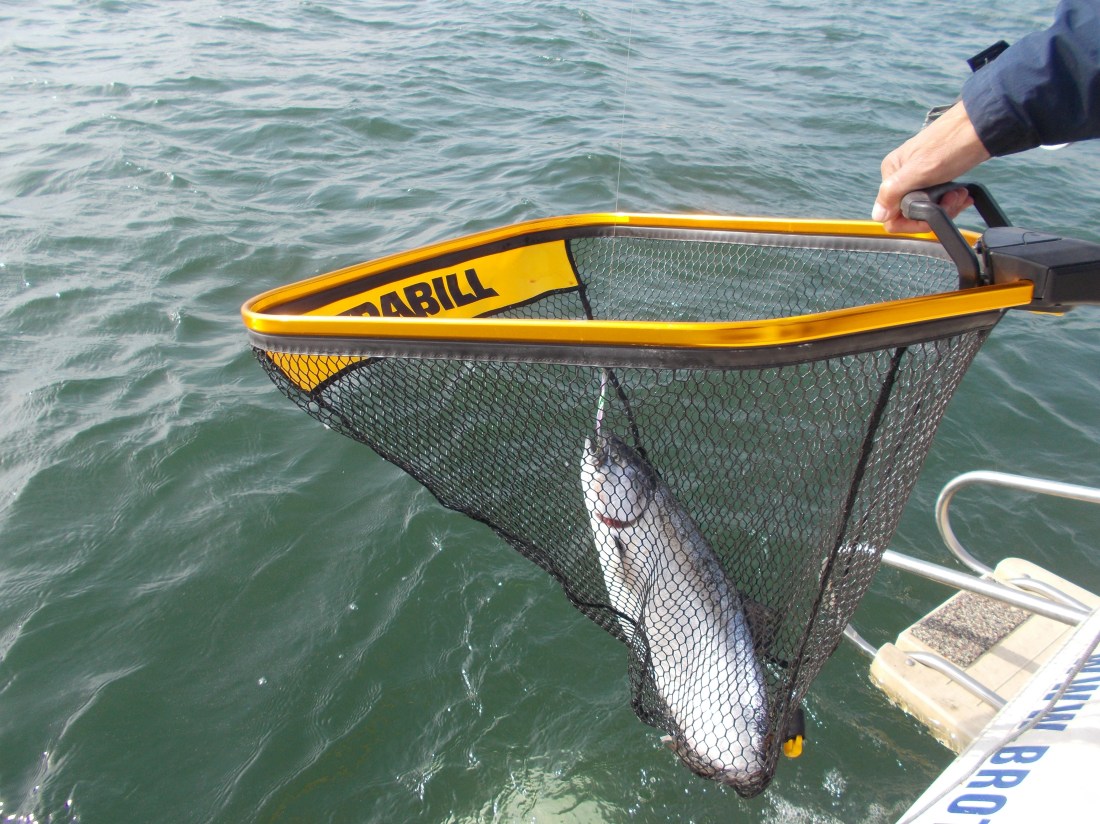
Fishing nets are one of the most underrated and overlooked pieces of gear in an angler’s arsenal. A net can make or break a day and be the difference between winning and losing a big tournament. Frabill’s new line of Trophy Haul nets, help anglers get the job done, get the fish in the net, get both fish and net into the boat and then get the fish and lure out of the net.

Frabill’s new advanced series of nets come in three variants, the Standard Trophy Haul, the Power Extend, and the Bear Claw. Constructed from anodized stainless steel each variation is built tough and made to withstand use in both fresh and saltwater. I had the chance to try out the Power Extend model with the large-enough-for-Great Lakes 24″ X 27″ hoop size.

More and more Great Lakers are heading out in smaller version, trailerable boats. Net size matters when your boat has limited space for people and gear. One way these guys cope is by having a net with an extendable handle. Shrink it down to a few feet in length when not in use, slide the handle out to full length when needed.

If you can do it. Most have a little round button to push which often requires a tool of some sort to push far enough to allow the telescoping action to work. The worst ones have a round handle and trying to line up the hole in which the little buttons have to nestle is nearly impossible.

Power Extend means just that. Push a button (a man-sized, no-tool-needed button) and the spring loaded handle extends to full length from three to six feet. That’s long enough to get the net way back there to scoop out the biggest laker, salmon or walleye.

If that’s the fish you just scooped, perhaps you need two hands to lift it up over the transom and inside the boat. If so, you’ll appreciate the yoke handle built into the rear of the hoop which gives a convenient grab-with-both-hands gripping spot to hoist the beast up and over rod holders, ‘riggers or across the outboard motor.

Conventional net baskets are simply a long round bag made of string or rubber. Millions of fish have been scooped with these so why change? Because thousands of fish have made last second escapes when the deep net, trailing behind the rim of the net grabbed a hook and pulled it free before the fish was over the rim. The Frabill net isn’t just a deep round bag.

It’s made of Frabill’s patented conservation netting, as much a rubberized fabric as netting material. It’s designed to minimize the amount of slime removal and scratching of the fish’s skin a knotted net can inflict – very important if the fish is destined to be released. More important for Great Lakers is the shape of the bag, while deep, is only deep at the rear of the basket so when the net-weilder is reaching out for the fish, the bag isn’t trailing out past the rear hoop. The rubberized fabric makes hook removal from the net an easy chore, as well.

The net is widely available at retail and online merchandisers or check out: http://www.frabill.com.

SEAQUEST GLOW SPOONS

sq1

Reviewed by: CAPTAIN MIKE SCHOONVELD

Seaquest has been a popular brand of spoons mostly found on boats in southern Lake Michigan for more than a decade. Richard Holm makes each one individually and sells them online (www.seaquestlures.com) and at winter sports expos in Illinois, Indiana and Michigan. A few area tackle shops stock them, as well.

He’s always had a few models of standard and magnum-sized spoons with either glow-in the dark paint or scallop tape highlights. Now he has produced a line with extended glow body tape, adorned with either ladder backs or scallop diagonal highlights.

 
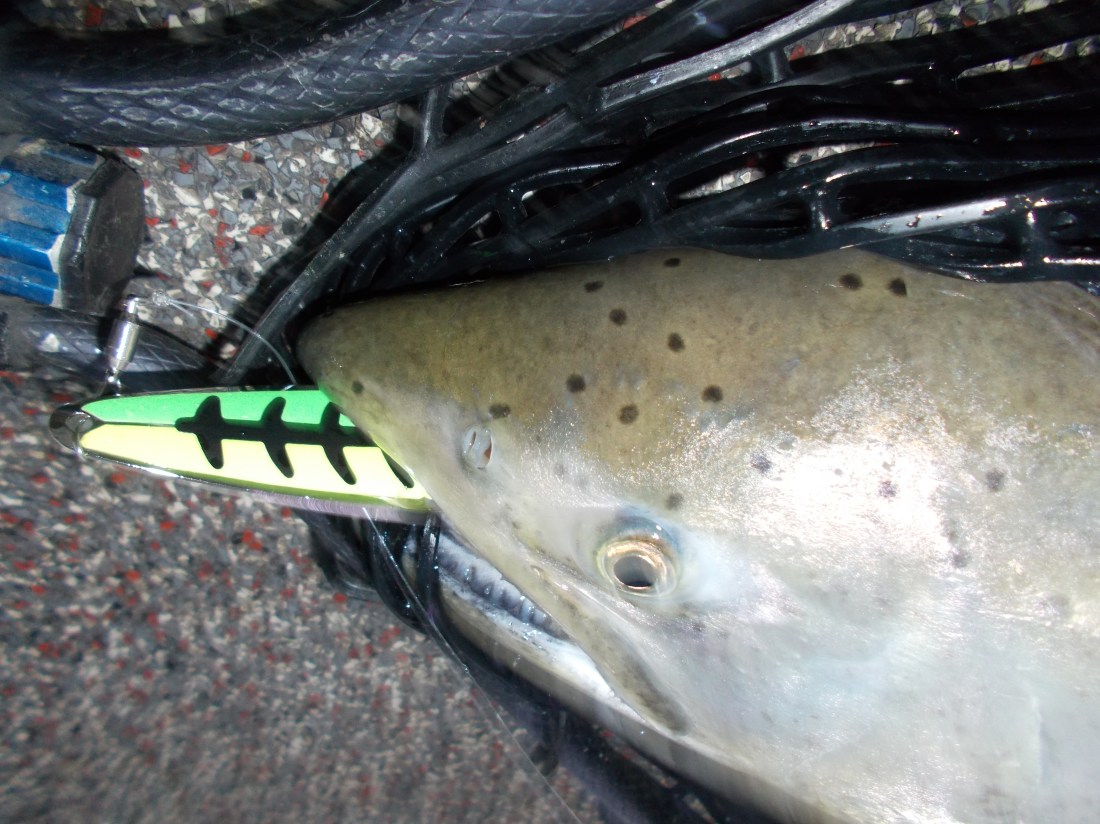
I like them because they catch fish and since Holm is a fisherman and no stranger to big fish, I know the hooks and rings are made of the finest quality. I keep telling him he needs to call them XTs for extra tough!

 
The new extended glow models were solid producers for me in the summer, offshore deepwater fishing where I usually fish, as well as near shore when fishing in the dark or dawn’s early light for staging kings. Check the Seaquest website for all the colors and patterns available.