FIREBRAND DEEP DIVER BANDITS

Reviewed by: CAPT. MIKE SCHOONVELD

Though plenty of people fish with Bandit Walleye Deep Diver lures for other species of fish and in other places than in the Western Basin of Lake Erie, there’s no doubt that’s where the Bandit is the king. Either that or the name “Bandit” has become the generic name for deep diving stickbaits like people wipe their nose with Kleenex, regardless of whether it’s a Puffs or some other brand of tissue paper.

If you are only going to buy one, you might as well get the top seller. “So what’s the top selling color?”  That’s what I asked one of the product people at PRADCO – maker of Bandit Lures – at last summer’s ICAST. He chuckled when he answered, “Clear.”  You might be surprised by that answer; I wasn’t and not because I think walleyes would be a sucker for a clear plastic lure. It’s because turning out popular lures in custom colors has become a cottage industry.

Rick Fascinato is one of those custom painters that has turned his hobby of customizing the lures for his own tackle box into a business to produce lures for yours. I’ve had the chance to fish with some of Rick’s Firebrand recently near the Bass Islands in the Western Basin, specifically his “Bandits” and they were the top producers for the trip. The one I’m holding was tied on one of my lines the first day of the trip and stayed there until the final fish was in the net a few days later. Others were solid producers, as well.

In fact, this photo is the “after” photo and though I’m sure the lure accounted for a half dozen walleyes each day or more, it still looks like new. One of the selling points of Firebrand products is each is given an epoxy coating to keep them looking good, fish after fish, even toothy ones like walleyes.

Firebrand Custom Baits isn’t all Bandits, either. Rick customizes trolling spoons, flashers, dodgers, Thin Finns and other baits in imaginative colors sure to peak the feeding instinct in any Great Lake predator fish. Give them all a look and order a few for yourself at https://firebrandcustombaits.ca/.
VICIOUS FISHING LINES

Reviewed by: CAPT. MIKE SCHOONVELD

I’ll admit when I went to the ICAST show I passed by dozens of booths displaying fishing line with hardly a second look. I have my favorites and with rare exception, when I fish with other brands on other people’s boats, it works quite well. It’s seldom that I spot something so novel or with some unique attribute that it stops me for a second look.

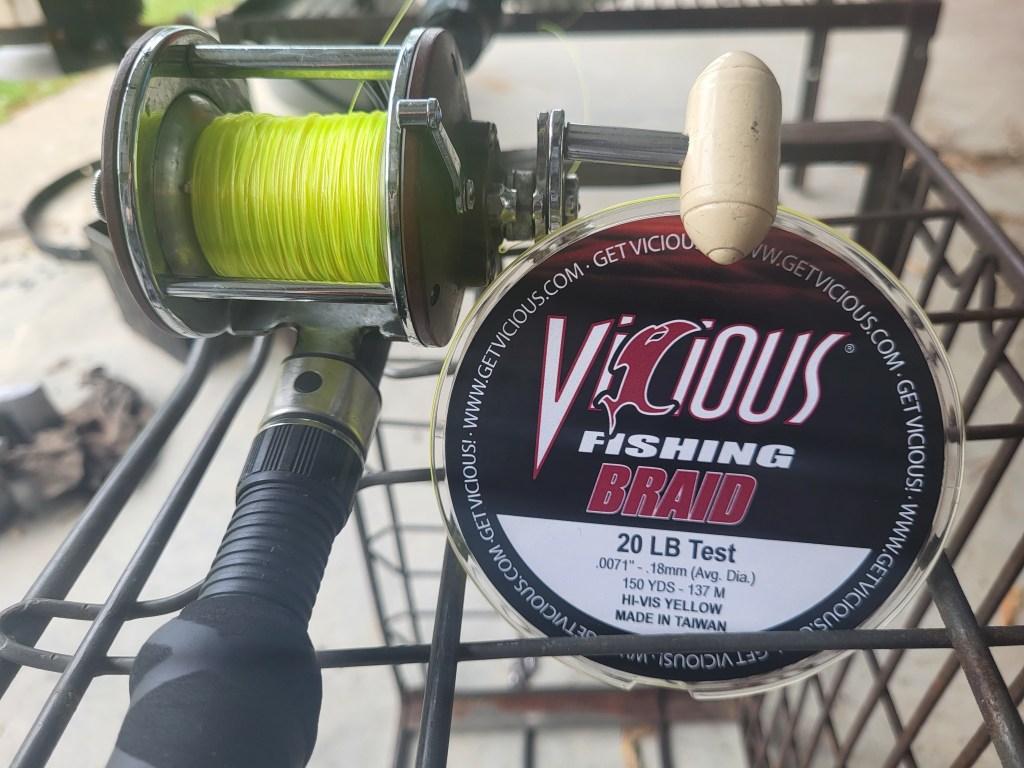
So why did I stop by the Vicious Fishing display? It’s because the Vicious Fishing company is headquartered in Indiana and I’m a lifelong Hoosier. If I didn’t do anything more, I could stop by and say hi. But I when I did introduce myself I was impressed by the line-up (pun intended) of line and options available. Vicious sells braid, monofilament and fluorocarbon in various strengths, spool sizes and colors.

Notice I say they “sell” fishing line, they don’t manufacture fishing line. Few brands of line are self-made, but that doesn’t reflect on quality. Certainly, some fishing line is made in the USA. Lots of it is made in China and often with lax attention to quality. That’s why experienced anglers shy away from “off-brand” lines that may be bargains in the store but disappointing on the line.

What the Vicious did was meet with line manufacturers in Japan and Taiwan and have them produce their lines to stringent specifications to ensure they perform as expected. I spooled up with Vicious braid, fluoro and mono on several of my reels when getting them ready for the 2024 season. I’m writing this review three months into the season and have found them to be all I hoped and equal to any other line I normally use.

Check out Vicious Fishing lines (and other products) at www.getvicious.com. You can buy them direct online as well as many other online outlets including Amazon.com.  Every time I hook a fish I’m relying on the line between the reel and the lure. The Vicious lines I’ve been using have never let me down. 

MACKENZIE’S FISHERMAN HAND SCRUB

Reviewed by: CAPT. MIKE SCHOONVELD

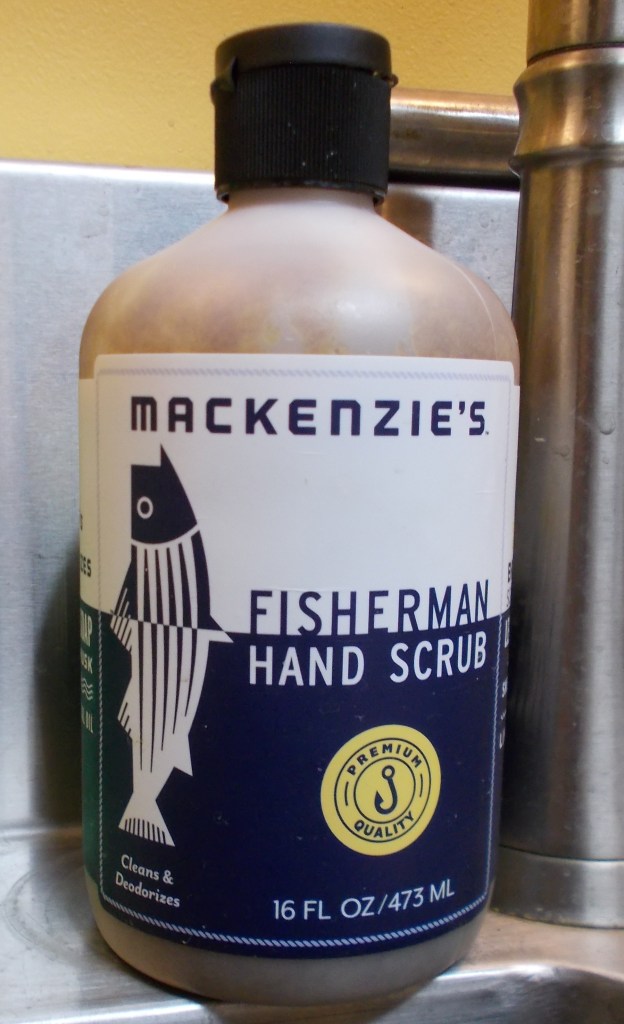
I will admit the first time I squirted a teaspoon or so of Fisherman Hand Scrub out of the handy squeeze bottle, I was less than impressed. I know what a liquid or gel type hand soap is supposed to look like. It should be clear, or perhaps tinted an electric blue or green; perhaps a creamy pearl color. This stuff looks like something that comes out the nether-end of a lake trout that has been feeding on gobies.

That was the end of my negative opinion. I had just finished cleaning enough Lake Superior lake trout planned to be the dinner entrée for an eight-man crew at Moss Island Lodge, Ontario. I don’t know what the lakers had been eating, but like all lake trout, these were slimy on the outside, slimy on the inside and fresh enough to still be pumping blood on the fish cleaning table – all of which coated my hands.

I sprayed off my hands while cleaning up the fish cleaning area, delivered the fish to the chef and grabbed the bottle of Fisherman’s Hand Scrub I’d brought along for the trip and had set by the kitchen sink. That’s when I found out the FHS comes out of the bottle as a gritty looking, light-brown goop.

I gave it the sniff test first, thinking perhaps it had spoiled on the long, hot drive to Canada. It actually smelled just fine with a firm hint of lemon. I continued and immediately noticed the gritty feel as I scrubbed my hand, reminiscent of the pumice infused hand cleaner I use after I’ve been working on greasy lower units or other machinery. The grit (actually, ground up walnut hulls) is more coarse than pumice and is just one of the natural ingredients blended into the recipe.

It’s not a high-suds producing product, but it quickly cleaned my hands and left them scent free immediately – and I gave them a second good “sniff-test” fifteen minutes or so later once the lemony smell subsided. My hand remained fish-smell-free. It passed my test.

A couple day’s later while I was packing for the trip home, I grabbed the bottle of FHS to take home with me. That evening, the camp-cook asked the group if anyone had seen the Fisherman’s Hand Scrub. We were having a fish boil that evening and the cook was prepping the fresh trout for its turn in the boiling caldron.

 “You like this stuff, eh?” I said in my best Canadian accent as I dug the bottle out of my duffle.

 “Oh, yeah,” he said. “I’ve been using it not only for fish, but it cleans off the onion, the bacon and all the other smells I get on my hands here in the kitchen.”

 I left him the rest of the bottle instead of bringing it home with me. Once I was home I ordered another bottle, using my Amazon Prime account so I got free-shipping. I could have gotten it for the same price but with shipping costs at www.fishermanhandscrub.com. Check out the other Mackensie’s “made in America” products as well.

VEXAN LIL SUPER CISCOES

Reviewed by: CAPT. MIKE SCHOONVELD

It must suck to be a shad. Every predator fish you share the lake or river with wants to eat you. That’s why I enjoy being at the top of the food chain when it comes to fishing. I know if I want to catch a fish to eat – and I’m not particularly picky about the fish I eat – I know where ever I’m at and whatever fish I want to catch, a good choice of lure to show to the fish is a shad-imitating lure. That’s what caught my eye when I found the Vexan booth at the ICAST show last summer. Among the rods, reels and other lures on display was a concise collection of shad-shaped diving crankbaits called Rattin’ LIL Super Cisco.

I tried fishing for cisco with them last fall at Grand Traverse Bay with little success, but that’s the only time and place they didn’t score. They did catch a steelhead and a lake trout in the bay. I caught plenty of cohos on them in southern Lake Michigan and using them with the 50 + 2 Method on the Precision Trolling App got them down to Lake Erie’s walleye last spring. The Chrome Perch color scored well early in the day and we did just as well with the Diesel and Kitty Kat patterns when the bright sun started penetrating into the depths.

Check them out at www.vexan.com. They are available at WalMart, Amazon.com and other outlets. 

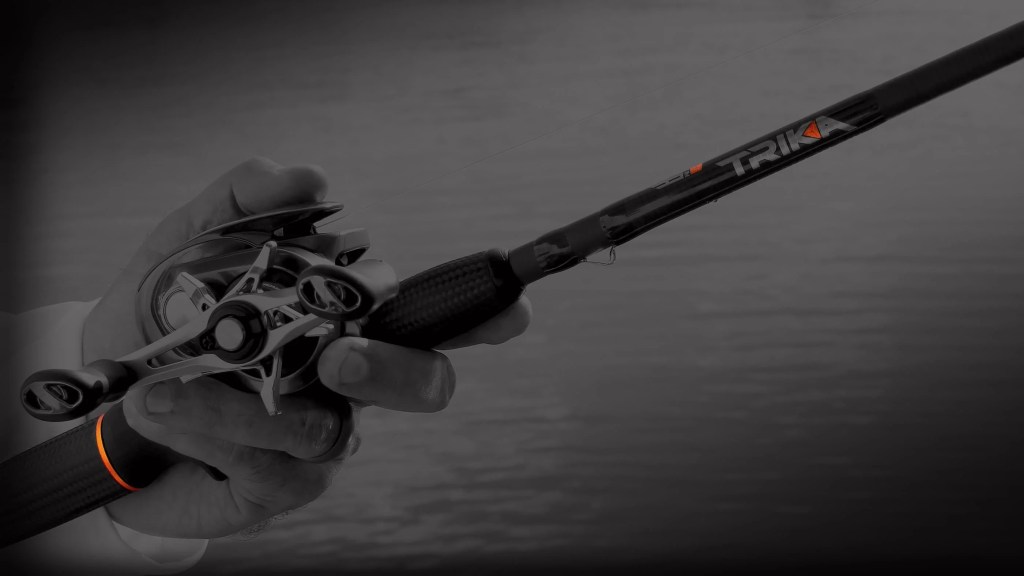
TRIKA RODS

Reviewed by: CAPT. MIKE SCHOONVELD

There are three reasons to buy a high-dollar fishing rod. In no particular order, 1) They work better. 2) They last longer. 3) They are prestigious.

To most anglers, #3 is least important. There are solid arguments for both #1 and #2. Trika rods are built to satisfy #1 and #2 – time will tell if they become a prestigious brand.

Trika is a new product from an established company – established, that is, if you are a bow or crossbow hunter. The same company makes Ravin Crossbows, often listed at the top of “best of the best” lists. Where’s the similarity? Many of the components of their hi-tech crossbows are made from the same materials – composites, carbon-fibers – and exacting processes it takes to produce the best quality fishing rods right here in the USA.

I checked this out before I said yes to accepting a pair of Trika (one casting rod, one spinning rod) to put to the test last summer and write about in this Tackle and Toys column. During the summer, a friend of mine and I put these to the test in different places, conditions and styles of fishing their builders never imagined.

One of the unique features of Trika rods is though they have seven models of casting rods and five spinning rods, each is priced at $299. The sales hype on their website (www.trika.com) states independent tests show Trikas weight slightly less than their high-end competitors, they are twice as sensitive and they cast 23% farther.  

The tests my friend and I put them to were less specific. Between us, we fished Lake Michigan, Lake Superior, Lake Erie and some inland lakes in Ontario for salmon, lake trout, walleyes, bass and pike. Some of the fishing was “conventional” where we were casting lures or jigging and getting a hands-on appreciation of the weight, feel, sensitivity and fish-fighting capabilities of the rods. Some of the test was unconventional, to say the least. I used the 7’7” casting rod as one of my downrigger sticks most of the spring for salmon and trout in Lake Michigan and on a trip to Lake Erie.

This was my best chance to see rod in action on bigger fish, and I did. It caught lakers to 18 pounds and browns to eleven pounds in that position, as well as bunches of cohos. Most telling, however, was at Lake Erie, I didn’t mention to my fishing companions there was anything “special” about the rod I positioned on the port-side out-down. My other ‘riggers had similarly sized Ugly Stick ‘rigger rods. After reeling in a solid five-pound walleye the angler commented he’d thought the fish was twice as big. “It felt like it was huge,” he said. There’s not much sensitivity in an Ugly Stick.

I too, noticed the sensitivity in both the casting and the spinning rod when I used them more conventionally. I’m sure the sensitive feel was magnified because compared to the rods I normally fish with, the Trikas were much lighter. Though whisper-light, however, neither rod felt undersized, when a good sized fish was on the line.

For scenario #1) It passed the test. Time will tell how if measures for #2, though it does carry a one-year satisfaction guarantee and lifetime warranty. Number three? That doesn’t matter to me.